

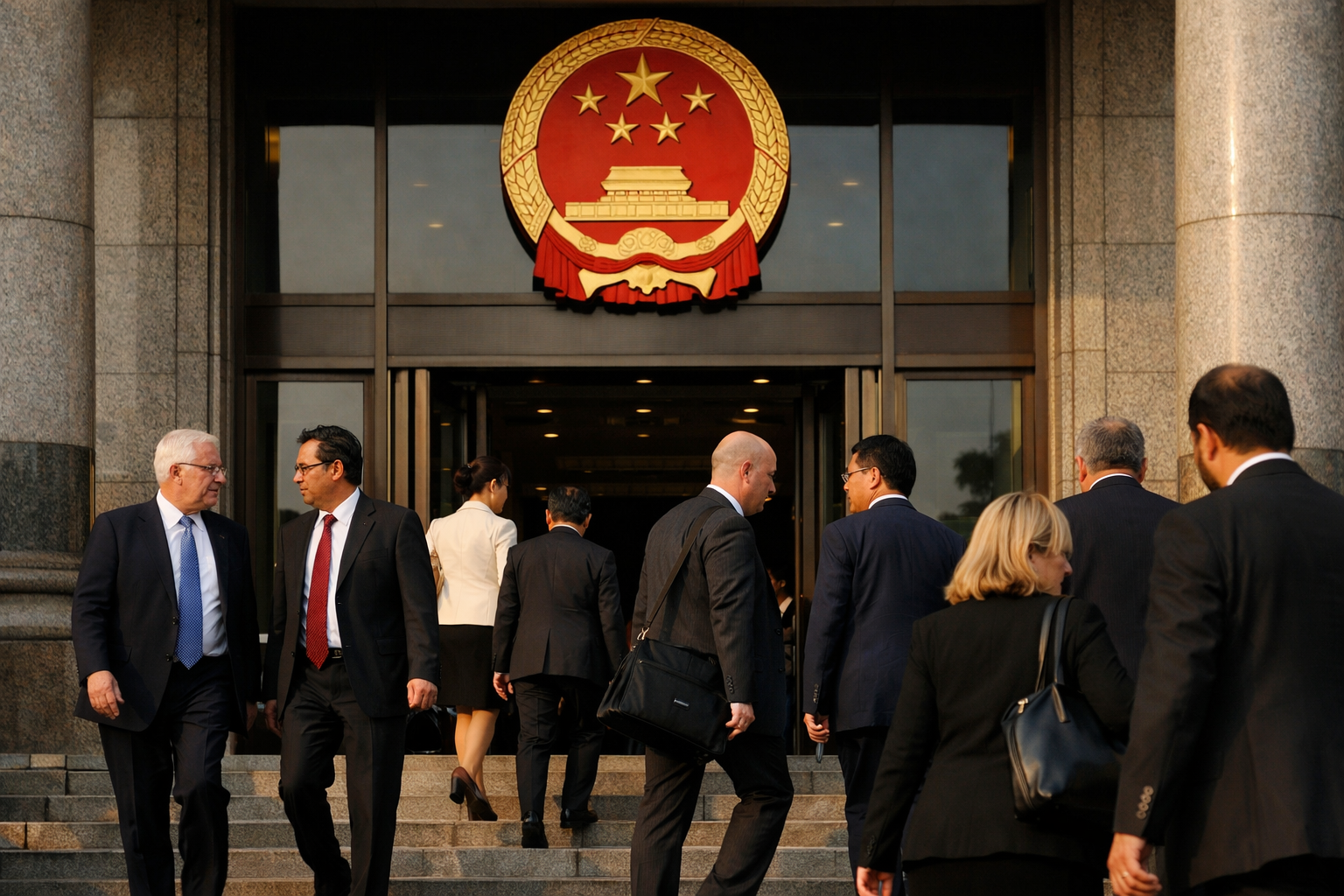
China’s recent reshuffle elevating a former ambassador to Mongolia has been presented by authorities as a targeted adjustment in the administration of Asian affairs. The appointment places a diplomat with direct regional experience into a more senior role within Beijing’s foreign-policy machinery, an operational choice that signals a prioritisation of bilateral and regional know-how in day-to-day diplomatic execution.
The change occurred within structures overseen by the Ministry of Foreign Affairs and the Central Foreign Affairs Commission, institutions responsible for translating national priorities into diplomatic action. Personnel moves of this kind typically aim to strengthen institutional capacity, improve coordination on specific dossiers and ensure that officials with on-the-ground experience can guide policy implementation across neighbouring countries.
Observers note that elevating a diplomat who previously served as ambassador to Mongolia underscores attention to relations with neighbours where trade, cross-border infrastructure and resource cooperation are active components of bilateral ties. At the same time, the promotion points to an emphasis on continuity within the professional diplomatic corps: career postings and rotations remain central to Beijing’s approach to staffing complex regional portfolios.
Despite the operational implications, the appointment does not, by itself, alter core strategic directions set by national leadership. Fundamental priorities such as safeguarding sovereignty, maintaining economic links and advancing long-term regional initiatives continue to be defined at the highest levels. Modifications in personnel can refine how those priorities are pursued, but substantive policy shifts generally require coordinated decisions across multiple state organs and senior political bodies.
In practical terms, partners and counterparties will assess the impact of the appointment through subsequent diplomatic activity, public statements and the conduct of bilateral meetings. For now, the elevation of a former ambassador to Mongolia represents a measurable change in the composition of Beijing’s Asian affairs team — an administrative recalibration intended to leverage regional expertise within existing strategic parameters.


