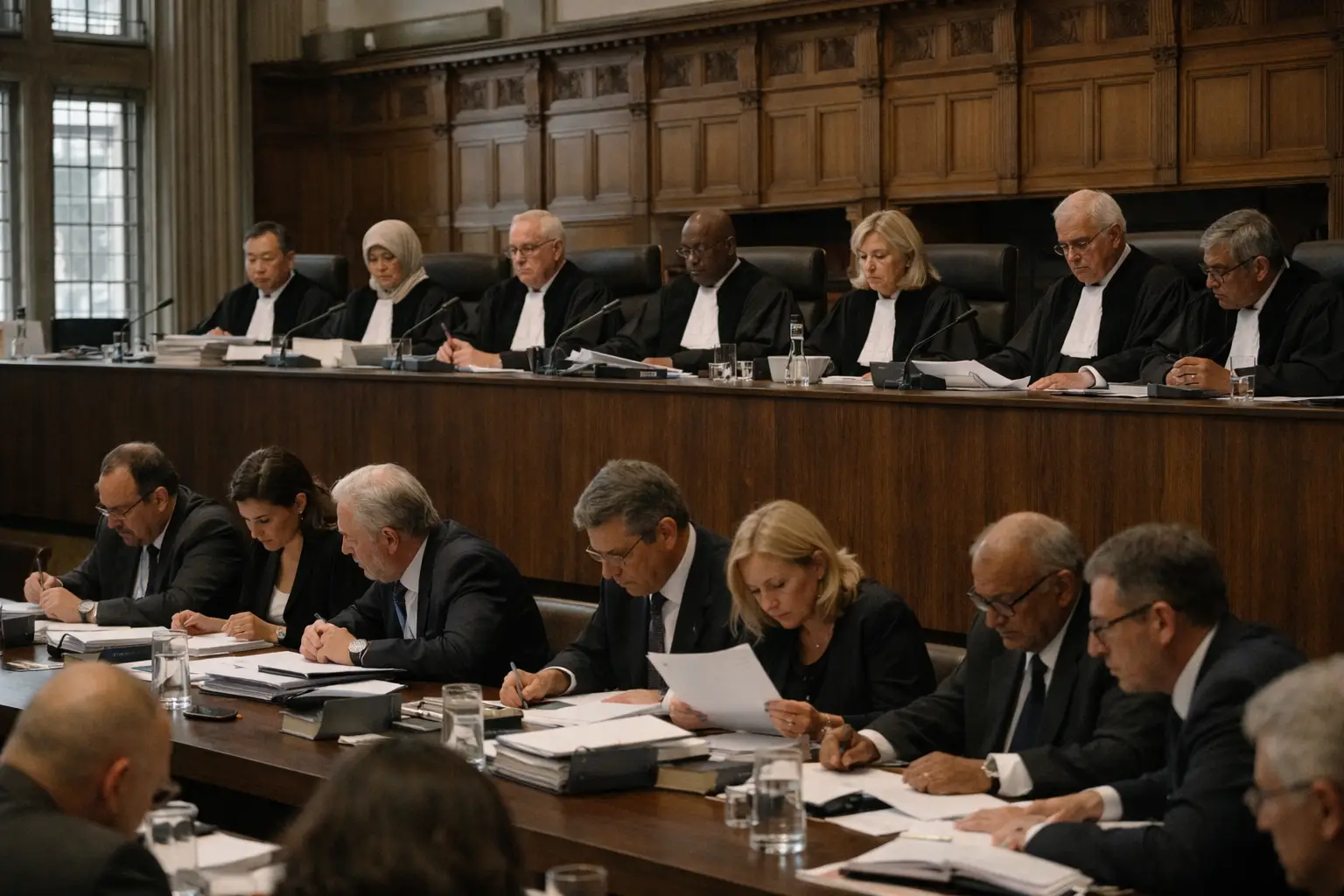
The Rohingya genocide case before the International Court of Justice has become one of the most closely watched tests of international law’s capacity to address mass atrocities. Brought by The Gambia against Myanmar under the Genocide Convention, the proceedings concern allegations that the Rohingya Muslim minority was subjected to acts intended to destroy the group, in whole or in part. For survivors, many of whom remain displaced, the case is not only a legal process but also an official forum in which their suffering is being examined by the world’s highest court for disputes between states.
The case has already produced significant legal steps. In January 2020, the court ordered provisional measures requiring Myanmar to prevent acts covered by the Genocide Convention, preserve evidence and submit reports on implementation. In 2022, the judges rejected Myanmar’s preliminary objections, allowing the case to move forward. Those decisions did not determine whether genocide occurred, but they confirmed that the dispute could be heard and that Myanmar had binding obligations while the case proceeds. The merits phase now carries broader implications for international justice, especially in cases where alleged crimes are committed inside a sovereign state but challenged through treaty obligations owed to all parties to the convention.
Any final ruling would have distinct consequences. If the court finds violations of the Genocide Convention, Myanmar could face binding legal findings and potential duties linked to prevention, accountability and reparation. Such a judgment would also strengthen the record for other international and domestic efforts concerning crimes against the Rohingya. If the court does not find that the legal threshold for genocide has been met, the result would not amount to a denial that grave abuses occurred; it would reflect the specific and demanding definition of genocide in international law, including proof of special intent. That distinction is central to the case and to how its outcome will be understood.
The proceedings also matter because the Rohingya crisis remains unresolved. Hundreds of thousands fled Myanmar’s Rakhine State during military operations in 2017 and found refuge in Bangladesh, while others remain subject to severe restrictions. The legal case cannot restore destroyed villages, reunite families or reverse years of displacement. Its significance lies elsewhere: in establishing responsibility under a treaty designed to prevent and punish genocide, and in showing whether international courts can still act when political solutions remain limited.
For survivors, no judgment can erase what was inflicted on their community. Yet the case may shape how the law records those events, how states understand their obligations, and how future atrocity prevention is pursued. At a time when accountability mechanisms are often slow and contested, the International Court of Justice remains a venue where the language of law is being applied to one of the most severe human rights crises of recent years.