

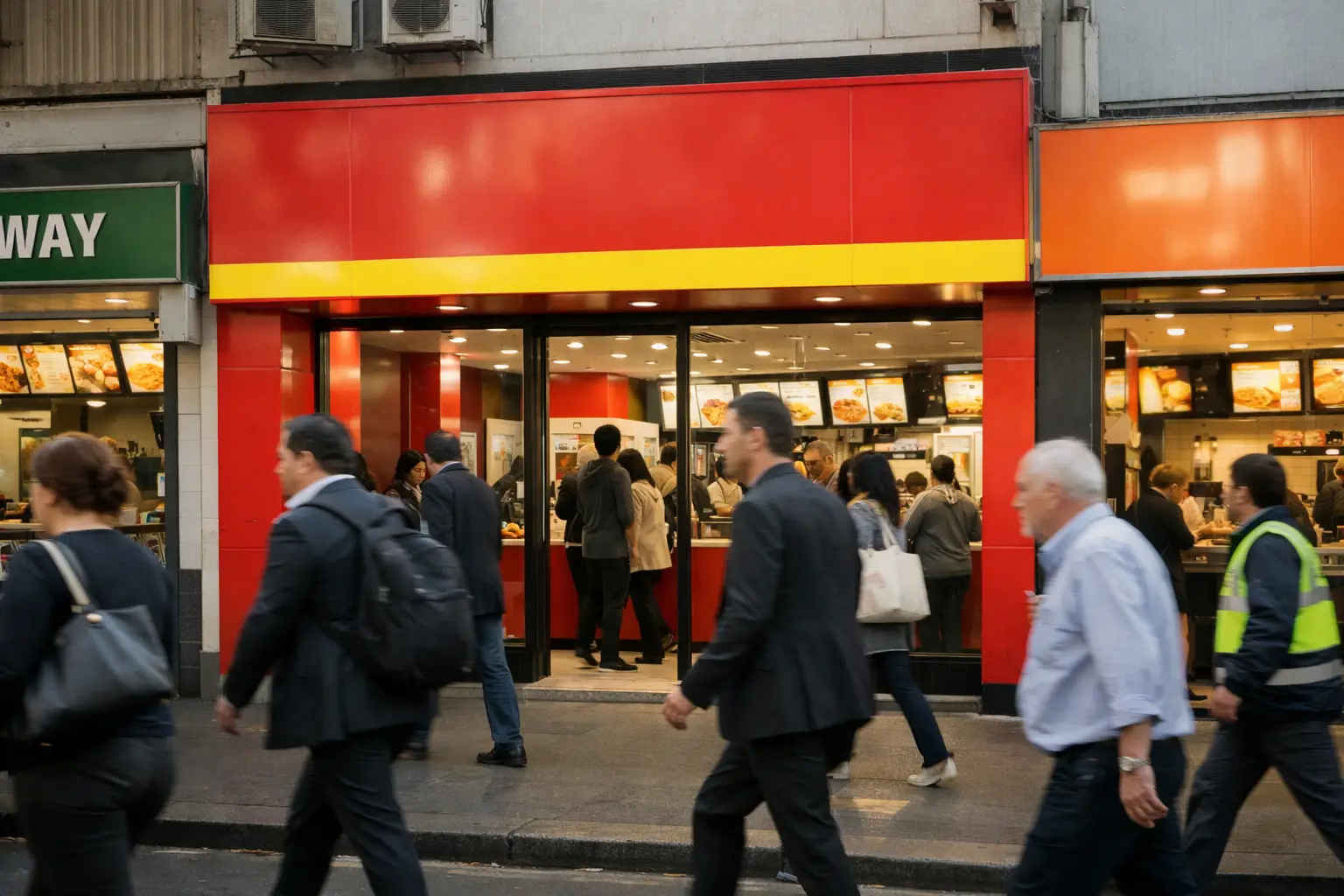
Jollibee’s push toward Australia places one of Asia’s most recognisable restaurant brands at the edge of a market already crowded with global chains, local operators and increasingly price-conscious consumers. The Philippine-born group, known internationally for fried chicken, burgers and sweet-style spaghetti, would enter Australia with a brand identity that differs sharply from the familiar American-led fast-food model.
The company behind the chain, Jollibee Foods Corporation, has built its international profile by serving Filipino communities abroad while also attempting to reach broader mainstream audiences. That dual appeal is central to the brand’s overseas strategy: nostalgia and cultural recognition can generate early demand, while accessible pricing and fast-service formats allow it to compete beyond diaspora customers. In Australia, where major cities have large Asian communities and diverse dining habits, that positioning could give the chain a clear entry point.
The move would arrive at a time when the fast-food sector is being reshaped by several pressures at once. Consumers continue to seek convenience, but operators face higher labour, rent and supply costs. Established brands have responded with delivery partnerships, loyalty programmes, limited-time offers and store formats designed for drive-through and takeaway traffic. A new entrant with a distinctive menu would not simply add another burger-and-fries option; it would test whether Australian customers are ready to embrace a different flavour profile within a quick-service setting.
Competition would be immediate. Australia’s restaurant market already includes multinational heavyweights, chicken specialists, pizza groups and a growing number of Asian-inspired quick-service concepts. For Jollibee, the challenge would be to balance brand familiarity with local adaptation, particularly in menu planning, site selection and pricing. The company’s success in other international markets shows that expansion can be driven by community demand, but long-term growth depends on repeat visits from a wider customer base.
If Jollibee establishes a visible presence, its arrival could intensify the battle for value meals, delivery orders and family dining occasions. It could also broaden the definition of mainstream fast food in Australia, where multicultural tastes already influence supermarkets, food courts and casual dining. The significance of the move lies less in a single brand opening than in what it signals: the country’s quick-service market is large enough, diverse enough and competitive enough to attract another global player with ambitions beyond its home region.


