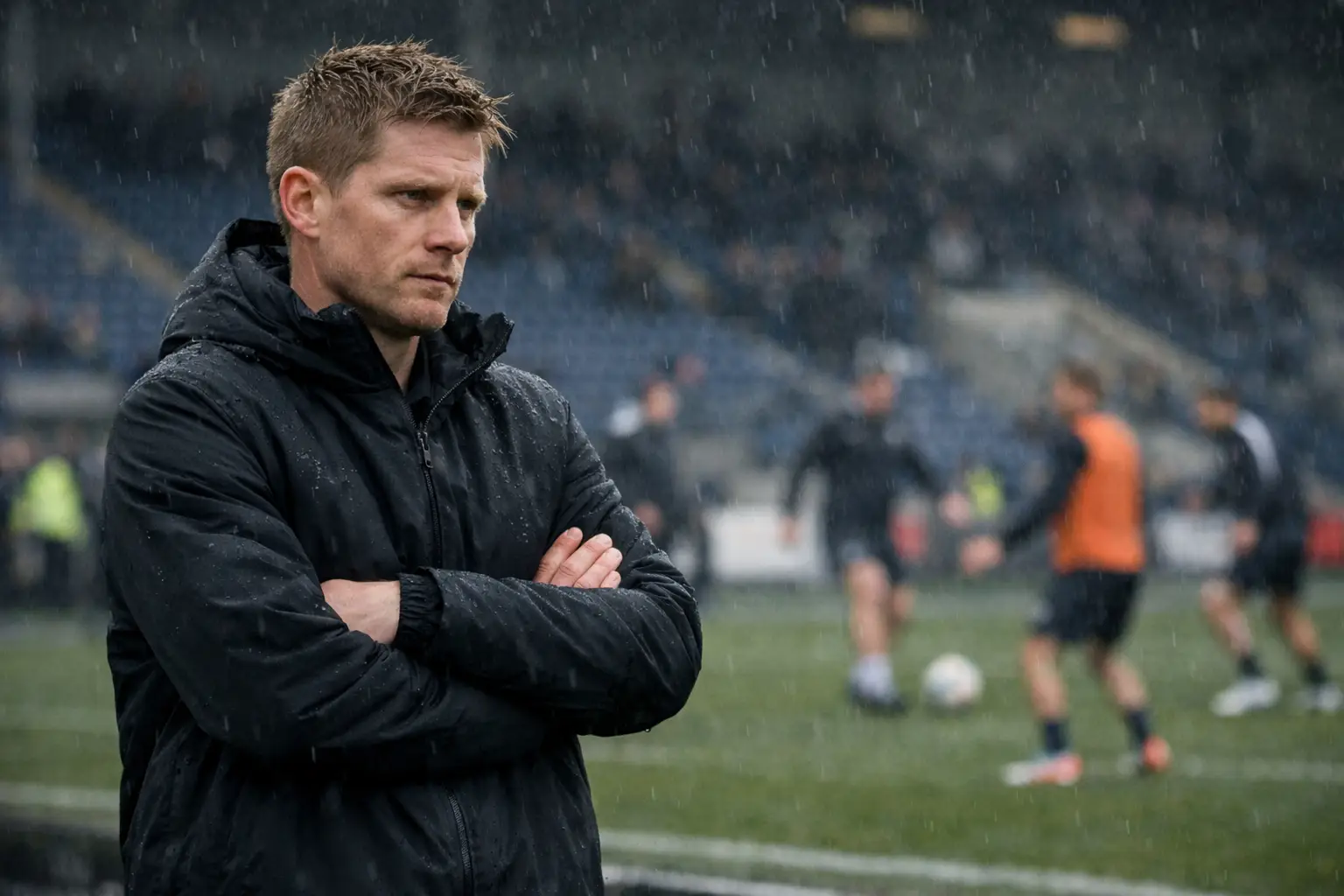
Scotland’s uneasy pause has become the central issue surrounding Sebastien Pocognoli. The debate is no longer limited to results or selection calls; it now concerns the direction of the team itself. A sense of drift has settled around the squad, and that is often the most difficult problem for any manager to solve because it touches confidence, identity and trust at the same time.
For Pocognoli, the challenge is not simply to survive scrutiny but to re-establish authority in a role where perception matters almost as much as performance. In football, a manager can endure criticism when there is a visible plan, even through setbacks. The greater danger comes when supporters struggle to see what the team is becoming, and when players appear uncertain about the path being asked of them. That is the space Scotland now seem to occupy.
The question of whether it is too late for Pocognoli to win back players and fans is therefore more than a headline about job security. It is a measure of how far the relationship has been strained. Dressing-room belief is rarely visible from the outside, but its effects usually are: intensity, clarity and commitment tend to show quickly when a squad is aligned with its coach. The same is true in the stands, where patience depends on evidence that a team is moving toward something coherent. For a national side associated with the Scottish FA, that connection carries particular weight because the team represents more than a weekly fixture list.
There is also a practical consequence to prolonged uncertainty. When doubts around a coach harden, every tactical choice becomes a referendum and every squad decision is read through the lens of authority. That can reduce the room needed to develop ideas or integrate changes. Scotland’s situation now appears to require a clear response, not necessarily through public declarations, but through performances that make the team’s direction evident again. Without that, the conversation will remain fixed on the manager rather than the football.
Pocognoli’s immediate task is to turn ambiguity into conviction. The facts of the moment are stark: Scotland cannot afford to let the current sense of drift continue for much longer, and the manager’s ability to reconnect with both the squad and the support is now central to his position. Whether that process is still possible will define the next phase of Scotland’s Scottish football debate.