

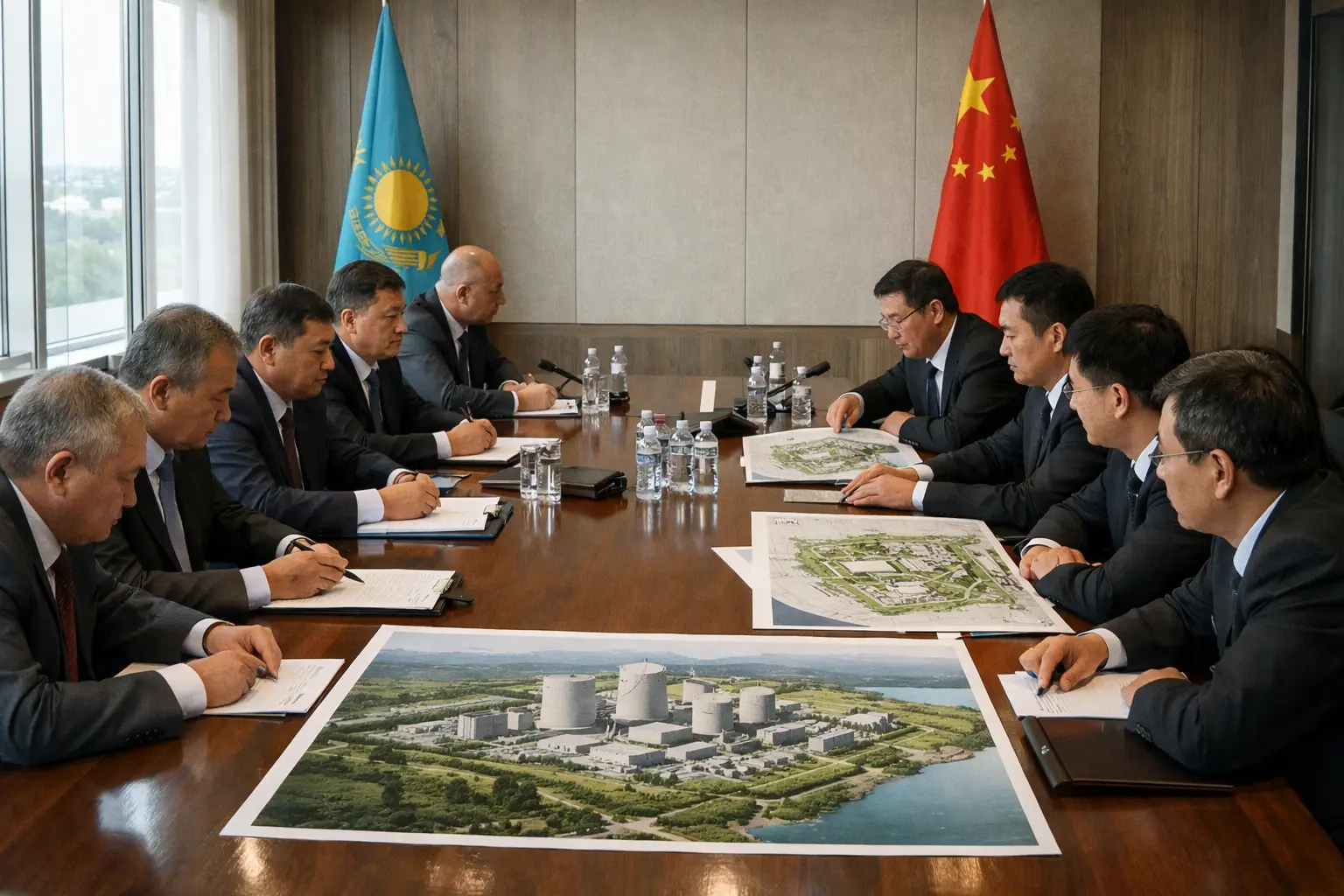
Kazakhstan’s nuclear ambitions are moving toward a 2035 deadline, with Astana aiming to complete both its first and second nuclear power plants within the next decade. The goal places Kazakhstan among the countries seeking to expand long-term energy capacity through civilian atomic power, even as a final agreement with China has not yet been concluded.
The planned programme would represent a major shift for a country already central to the global nuclear supply chain through uranium production, but without an operating commercial nuclear power fleet of its own. Completing two plants by 2035 would require decisions on technology, financing, construction schedules, regulation and long-term fuel management. Those elements are especially significant because nuclear projects typically involve long lead times and extensive safety oversight before electricity generation can begin.
Astana has been weighing international partnerships as it looks to turn political intent into infrastructure. China remains a key prospective partner, but the absence of a settled deal means the structure of cooperation is still unresolved. Any eventual arrangement would likely shape the pace of the programme, from reactor design to construction responsibilities. For Kazakhstan, the question is not only how to build generation capacity, but how to anchor it within a broader energy system that must balance reliability, industrial demand and long-term planning.
The nuclear target also carries regional and strategic relevance. A successful build-out would strengthen Kazakhstan’s position in nuclear energy beyond raw materials and could reduce dependence on conventional power sources over time. At the same time, nuclear development requires sustained institutional capacity, public communication and compliance with international safety standards. Bodies such as the International Atomic Energy Agency play an important role in the global framework for nuclear safety, safeguards and technical cooperation.
The 2035 objective gives the Government of Kazakhstan a clear horizon, but it also compresses the timetable for decisions that cannot be delayed indefinitely. Until an agreement with China is finalized, the scale and sequencing of the two-plant plan remain open. What is clear is that Kazakhstan is positioning nuclear power as a central part of its future energy strategy, with the coming years set to determine whether the ambition can be translated into operating plants on schedule.


