

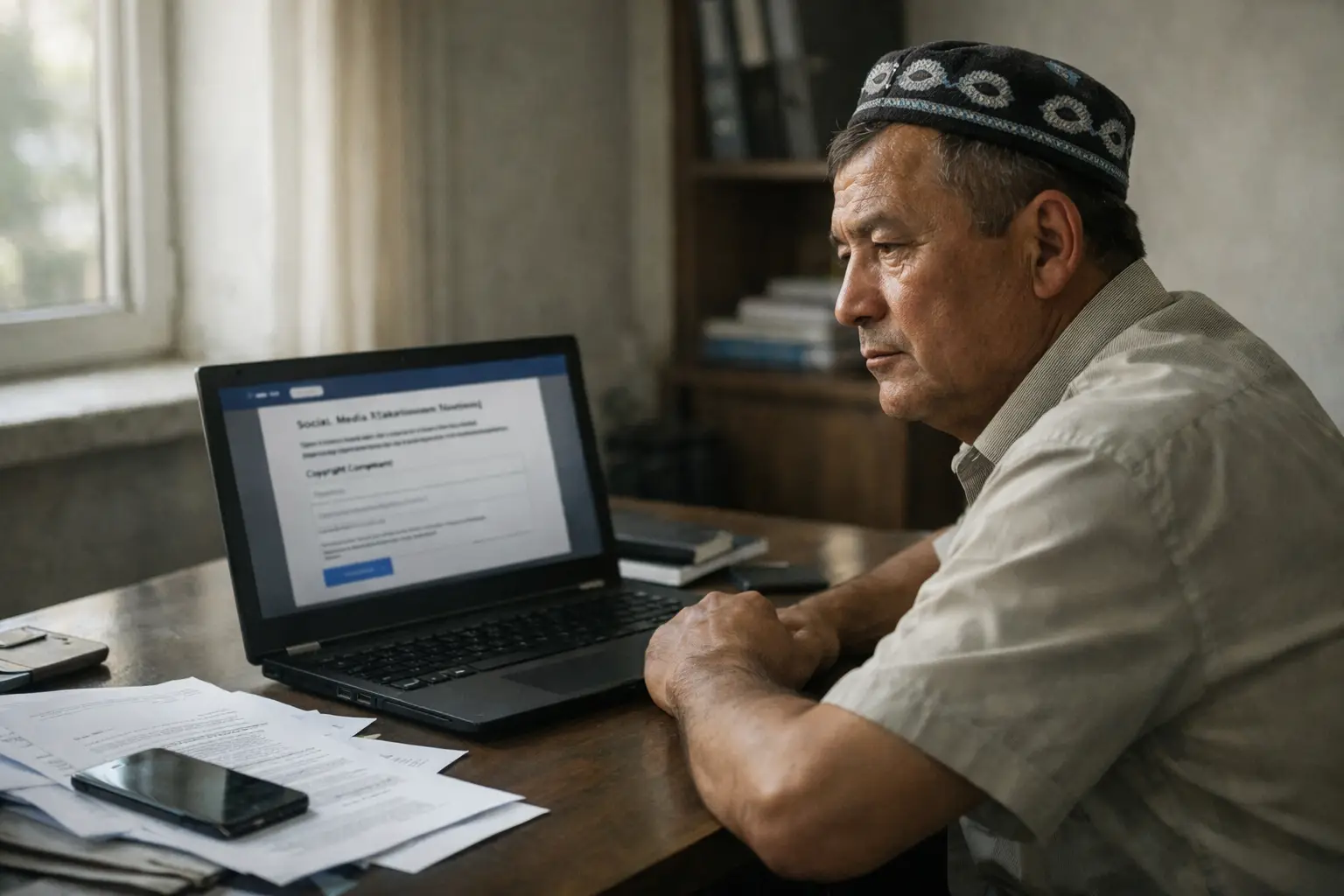
A false copyright claim has drawn attention to the risks facing Karakalpak activists online after a post was removed from a platform operated by Meta. The complaint was submitted by an individual who claimed to be an editor at The Diplomat. That representation was false, but the platform’s enforcement process still resulted in the activist’s content being taken down.
The case highlights a specific vulnerability in digital moderation: a tool designed to protect intellectual property can also be used to interrupt political speech. For activists connected to Karakalpakstan, online visibility is often central to public advocacy, particularly when international attention is limited. A single complaint, if accepted without sufficient verification, can remove material from public view and impose a burden on the targeted user to challenge the decision.
Copyright systems on major platforms generally rely on structured notice-and-takedown procedures. These mechanisms are meant to allow rights holders to request the removal of infringing material at scale. The Karakalpak case shows how identity verification can become a decisive weakness when a complainant invokes the name of a recognized publication. The removal of the post, despite the complainant being an impostor, raises questions about how platforms check credentials before acting on claims that affect civic or political expression.
The incident also carries broader significance for digital rights and online accountability. Activists, journalists and civil society figures can be particularly exposed when procedural tools are misused, because takedowns may occur quickly while appeals and corrections take longer. Even when a complaint is later shown to be invalid, the immediate effect is the same: information disappears from circulation at the moment it may be needed most.
For Meta and other technology companies, the episode underlines the need for stronger safeguards around copyright enforcement, especially when complaints concern public-interest speech. The facts of this case are narrow but consequential: a person falsely claimed affiliation with a media outlet, filed a copyright complaint, and a Karakalpak activist’s post was removed. That sequence illustrates how platform rules, when manipulated, can become an instrument for silencing rather than protection.


