

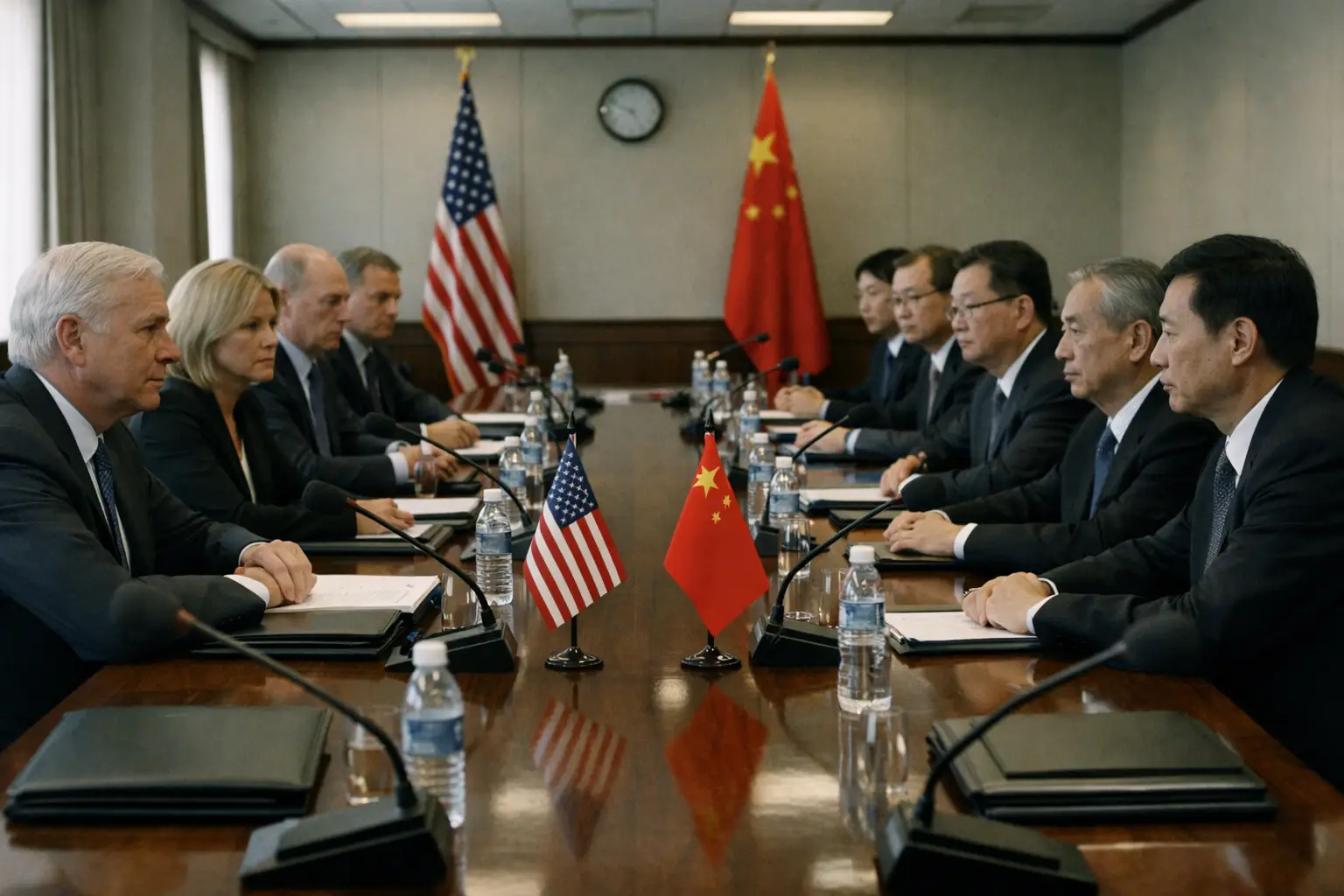
Washington keeps returning to the language of turning points in its relationship with China. The pattern has crossed administrations: from Donald Trump to Joe Biden, and now again as Trump dominates the Republican agenda, US politics has repeatedly presented China policy as entering a decisive new phase. Yet the substance of the rivalry has changed less than the rhetoric suggests. The two powers remain locked in a contest over economic influence, technology, security and diplomatic authority.
The White House has treated competition with Beijing as one of the central issues in American foreign policy. The tone has shifted at different moments, with periods of confrontation followed by attempts to stabilize contacts, but the underlying tensions have endured. Tariffs, export controls, supply chains and military activity in the Indo-Pacific continue to shape the relationship. For Beijing, represented externally by the Chinese Foreign Ministry, US policy is often viewed through the lens of containment and strategic mistrust.
This continuity matters because the debate in the United States often emphasizes political change more than structural reality. A new administration can alter style, personnel and priorities, but it cannot easily remove the sources of friction between the world’s two largest economies. Disputes over trade, advanced technology and market access are not temporary campaign themes. Security concerns around Taiwan and the wider Pacific region also remain central to the diplomatic agenda, limiting the scope for any quick reset.
The result is a relationship that repeatedly appears to be approaching a breakthrough or a breakdown, without fully reaching either. Meetings and diplomatic channels can reduce the risk of miscalculation, but they do not by themselves resolve the competing interests behind the rivalry. In Washington, both major parties have moved toward a tougher view of Beijing, even when they differ over method. In Beijing, suspicion of US intentions remains a durable element of strategic planning.
For allies, companies and international institutions, the persistence of this unresolved contest creates a difficult environment. Governments must navigate pressure from both sides, while businesses face uncertainty over rules, sanctions, investment screening and technology controls. The next phase of diplomacy may bring new formulas and new language, but the central question remains unchanged: whether Washington and Beijing can manage competition without allowing it to dominate every part of the global agenda.


