

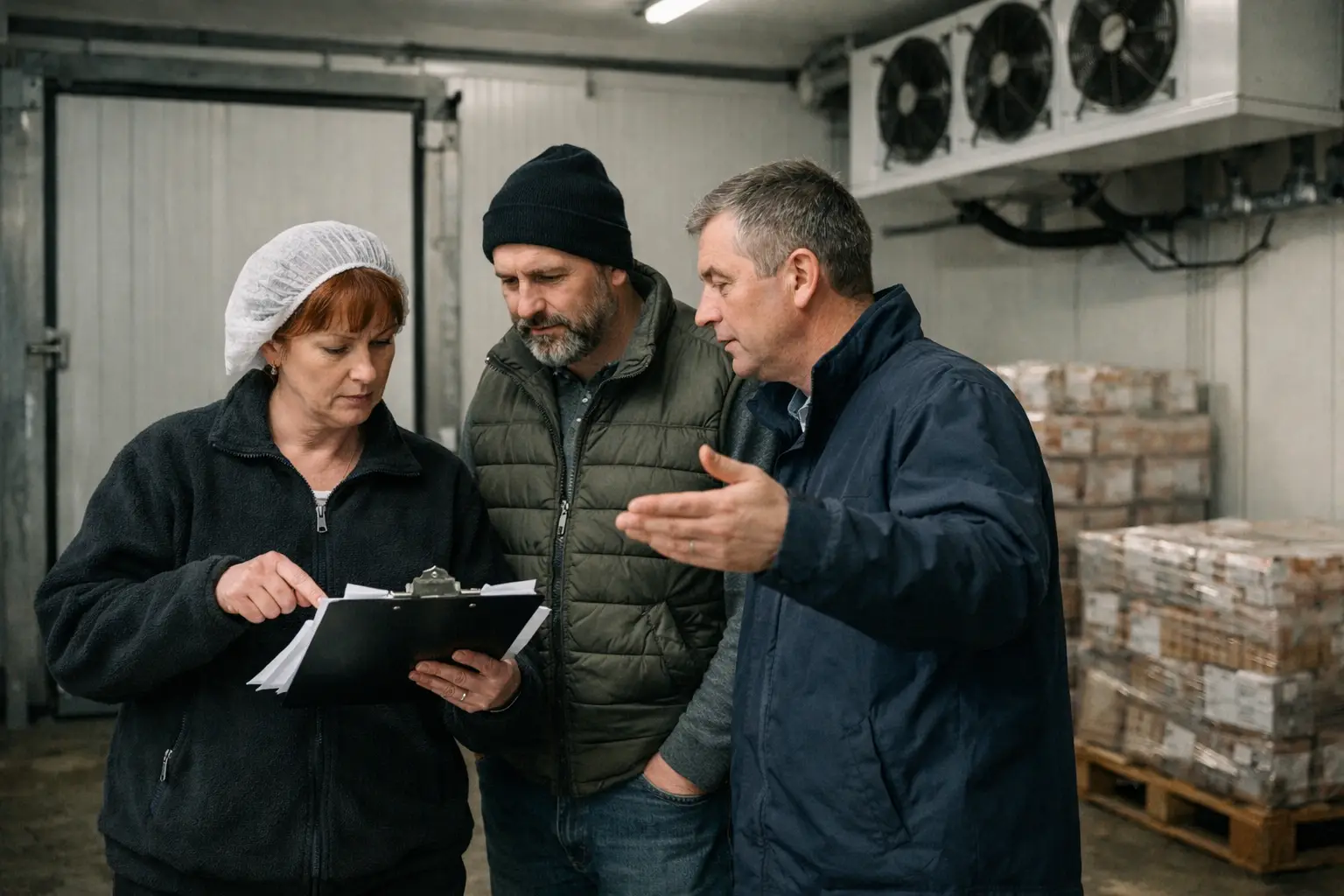
Scottish small food and drink companies face barriers that may prevent them from accessing finance needed to reduce emissions linked to refrigerated operations, research by Heriot-Watt University has found. The findings focus on a practical but often overlooked part of the sector’s energy challenge: keeping produce cold. For smaller businesses, refrigeration is not an optional function but a core requirement for product safety, shelf life and market access.
The research highlights a gap between the availability of funding for energy and emissions improvements and the ability of SMEs to make use of it. Small operators in Scotland can face both financial and operational constraints when trying to modernise cold storage, chillers or other temperature-controlled processes. Without support that fits their scale and working conditions, businesses most in need of assistance risk being excluded from schemes designed to accelerate cleaner operations.
The issue matters beyond individual company balance sheets. Scotland’s food and drink sector relies on cold chains that consume energy throughout production, storage and distribution. Cutting emissions from these systems can contribute to wider climate objectives, but upgrades often require planning, capital and technical confidence. For a small producer, even a funding opportunity can become difficult to pursue if the application process, eligibility rules or delivery timetable do not align with day-to-day commercial pressures.
Heriot-Watt University’s research points to the need for funding mechanisms that work more effectively for smaller companies, rather than assuming that all firms have the same resources to identify, apply for and manage energy projects. The findings underline a policy challenge: support for emissions reduction must be accessible not only to larger businesses with dedicated teams, but also to the many smaller firms that form a significant part of the supply chain.
For businesses handling perishable goods, the transition to lower-emission refrigeration cannot be separated from reliability and food safety. Funding that is too complex, too slow or poorly matched to operational realities may limit progress in an area where practical investment is essential. The research adds weight to calls for energy support designed around the conditions faced by small food and drink firms, so that emissions cuts do not become the preserve of companies with greater administrative capacity.


