

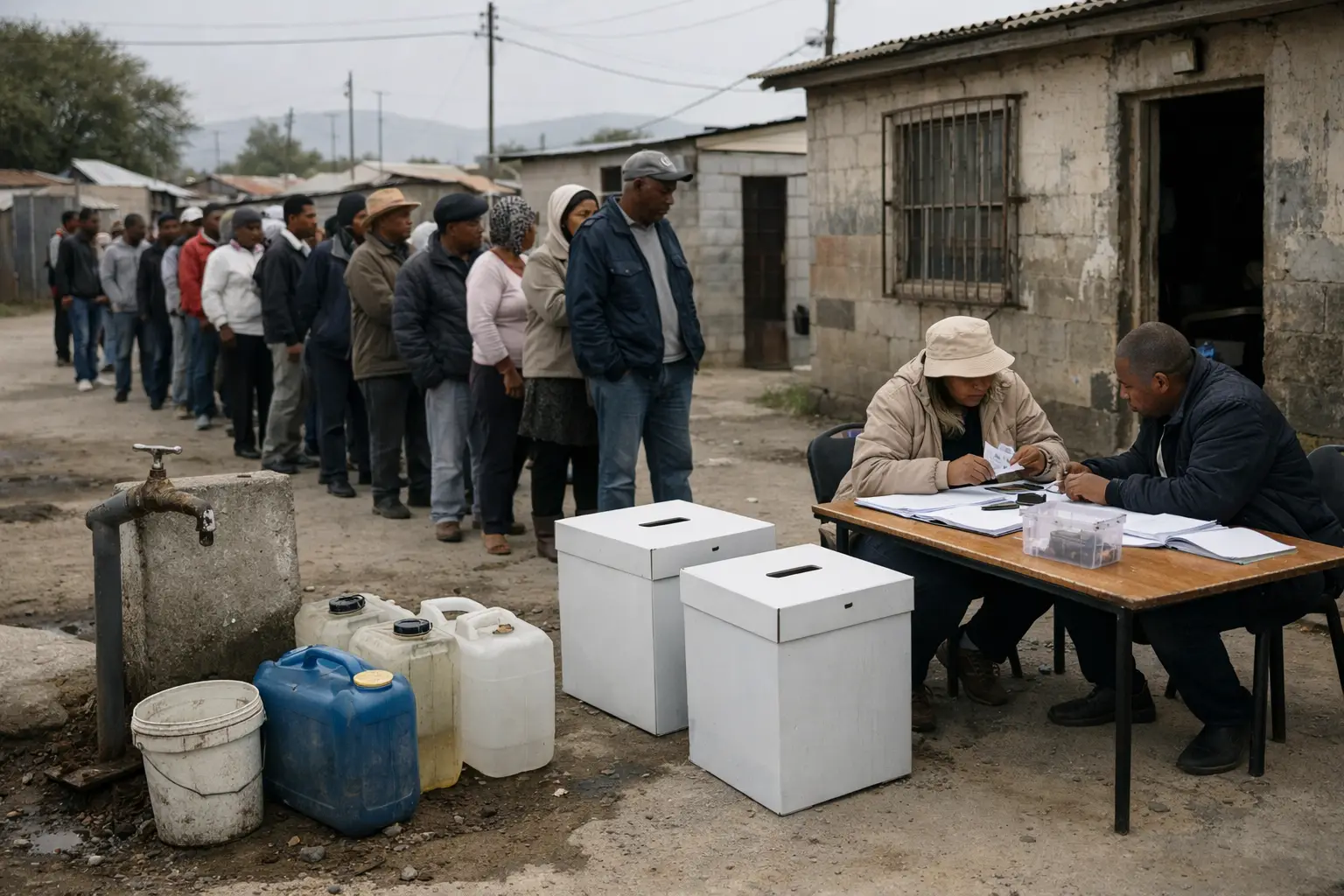
South Africa votes Wednesday in local elections that carry weight beyond town halls and municipal councils. The ballot comes amid widespread frustration over water shortages and uneven local services, issues that affect daily life directly and often shape political judgment more sharply than national debates. For voters, the election is a test of who can manage essential services; for parties, it is a measure of trust at the closest level of government.
The municipal vote is being overseen by the Electoral Commission of South Africa, with communities choosing representatives responsible for local administration. In South Africa, municipalities play a central role in water supply, sanitation, refuse collection, roads and other public services. Failures in these areas have fuelled public anger in many areas, making service delivery one of the defining themes of the campaign.
Attention is also focused on the African National Congress, whose electoral dominance has gradually weakened in previous contests. The party has governed nationally since the end of apartheid, but local elections have often revealed shifts in urban and community-level support before they appear in national politics. The central question in this vote is whether the ANC can contain further losses, particularly where dissatisfaction with municipal performance has become entrenched.
Local elections matter because they can alter the balance of power in councils and influence how coalitions are formed where no party secures a clear majority. They also provide a political signal ahead of future national contests, showing whether voters are prepared to punish incumbents over basic services. Water shortages, unreliable maintenance and administrative problems are not abstract campaign issues; they determine household routines, business activity and confidence in public institutions.
The result will therefore be read on two levels: as a judgment on local governance and as an indicator of the national political mood. A strong performance by the ANC would suggest resilience despite criticism, while further erosion would point to a more competitive political landscape. Whatever the outcome, the election underlines a central reality of South African politics: the credibility of parties is increasingly tied to their ability to deliver essential services where people live.


