

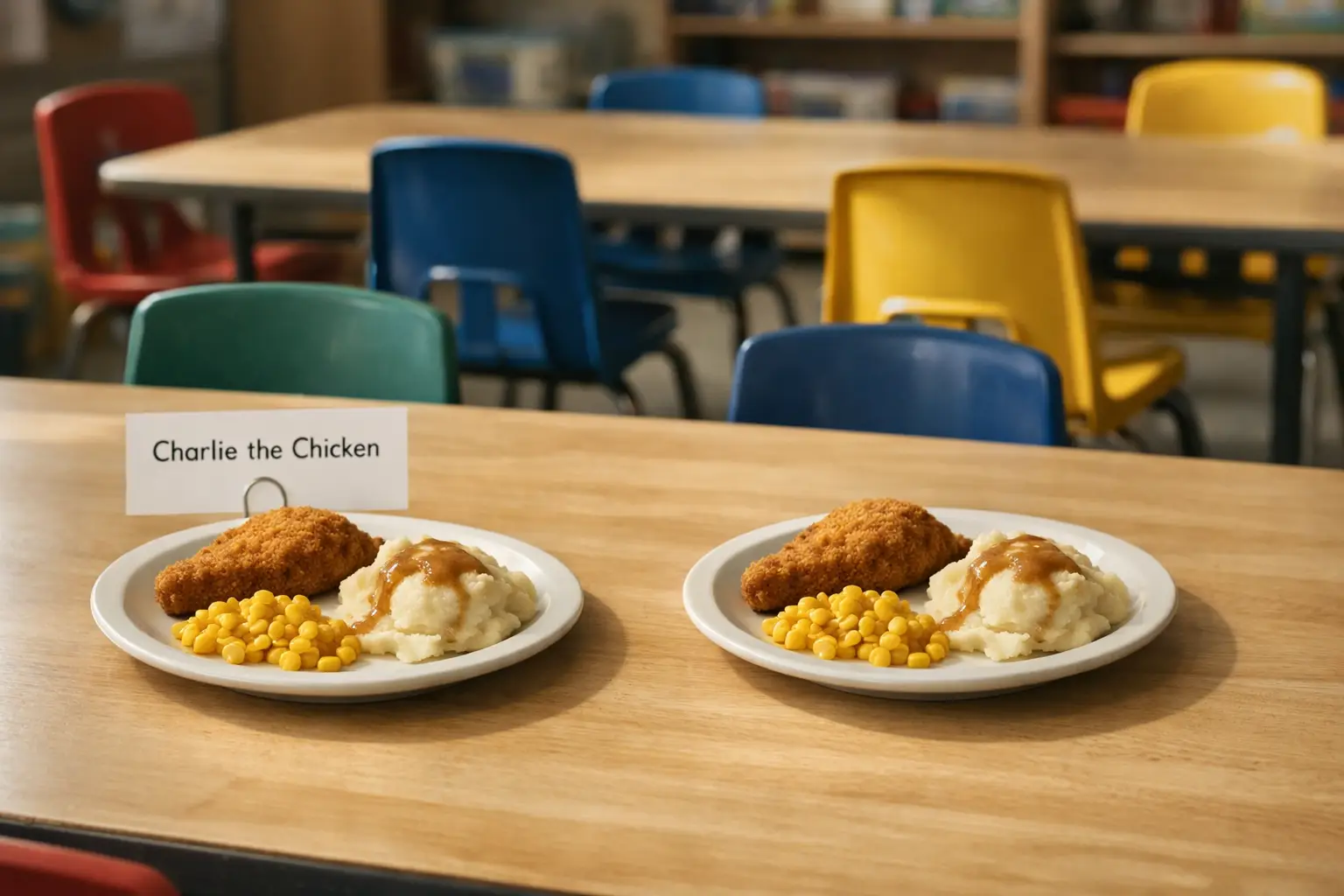
Naming a chicken and describing its habits suffices to change how young children approach meals, a new study finds. The research, published by a team at SWPS University, shows that simple acts of identification make preschoolers less likely to choose poultry, an effect visible in what they say they prefer and in the selections they then make at mealtime.
The investigators worked with groups of preschool-aged children and presented them with images and short narratives that assigned a name and preferences to a chicken. When that animal was individualized in this way, fewer children opted for poultry items than when the same animal was presented generically. The change manifested not only in verbal reports of preference but also in observed behaviour during food choice opportunities, indicating that the manipulation reached beyond hypothetical answers to influence actual decisions.
The effect, however, is not absolute. While identification reduced the frequency with which poultry was chosen, established gustatory preferences continued to exert a strong pull: many children still selected items they liked best despite empathic reactions elicited by the named animal. The study therefore draws a distinction between momentary empathic responses and longer-standing taste-driven choices, a nuance that matters for anyone working on early childhood nutrition or animal welfare education. The findings intersect with broader conversations about how empathy is formed in early years and how it competes with entrenched food preferences, relevant to both children and food policy discussions.
Beyond immediate classroom or family contexts, these results raise questions about how small changes in framing and language might be used to influence dietary behaviour ethically, and what limits such interventions face. The study suggests that personalization of animals can shift some choices, but also signals the resilience of sensory preference. Future work will need to determine how long such effects persist and whether they generalise across cultures, age groups and different types of foods.


