

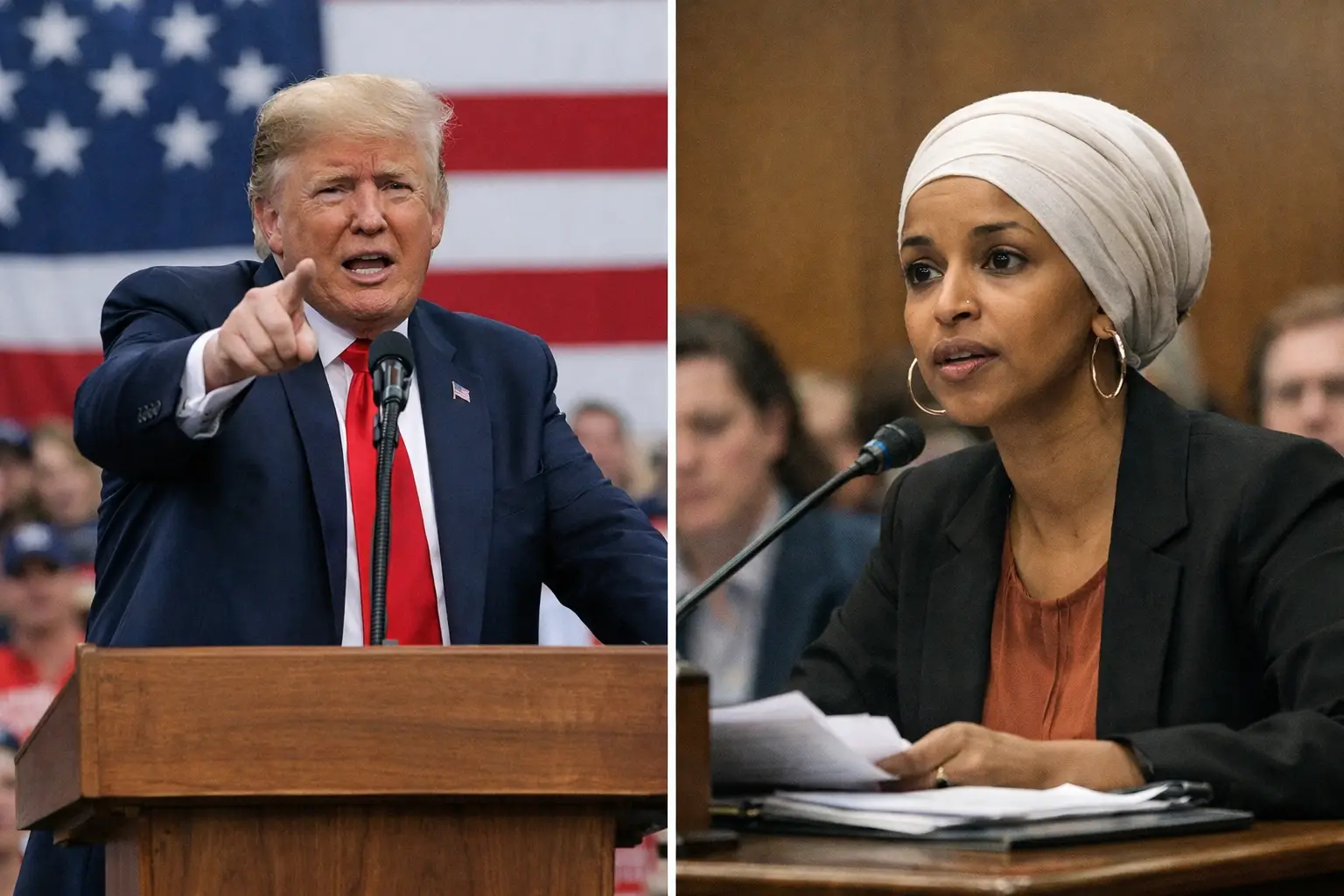
Ilhan Omar has become a recurring target of sharp verbal attacks from Donald Trump, who has described her as “garbage” and a “criminal” who does nothing but “bitch.” The language used by the former president has drawn attention because it singles out a sitting member of the House of Representatives and uses pejorative personal invective rather than policy-focused critique. The exchanges have been widely covered across the media and have intensified public debate over tone and civility in United States politics.
Ilhan Omar is a Democratic member of Congress and, as such, occupies a visible role in national politics. The directness and repetition of Donald Trump‘s remarks — issued while he remains a central figure in Republican politics and a frequent commentator on national affairs — have amplified their impact. The former president’s official platform, the White House, is often referenced in broader discussions of presidential rhetoric, even when comments come from political actors outside an administration.
Commentators and political analysts have offered various explanations for the focus on Ilhan Omar, noting factors such as her prominence as a public lawmaker, her alignment with the Democratic Party, and her place in contentious debates over immigration, foreign policy and identity in public life. Those explanations point to how visibility and symbolic value can make particular figures frequent targets of partisan attack. Observers also note that personal insults directed at elected officials can reshape media attention and the terms of political conversation.
The sustained exchange between Donald Trump and Ilhan Omar underscores broader tensions in contemporary American politics. How political leaders, media and institutions respond to incendiary language will continue to influence public discourse and the environment in which elected representatives operate in the United States.


