

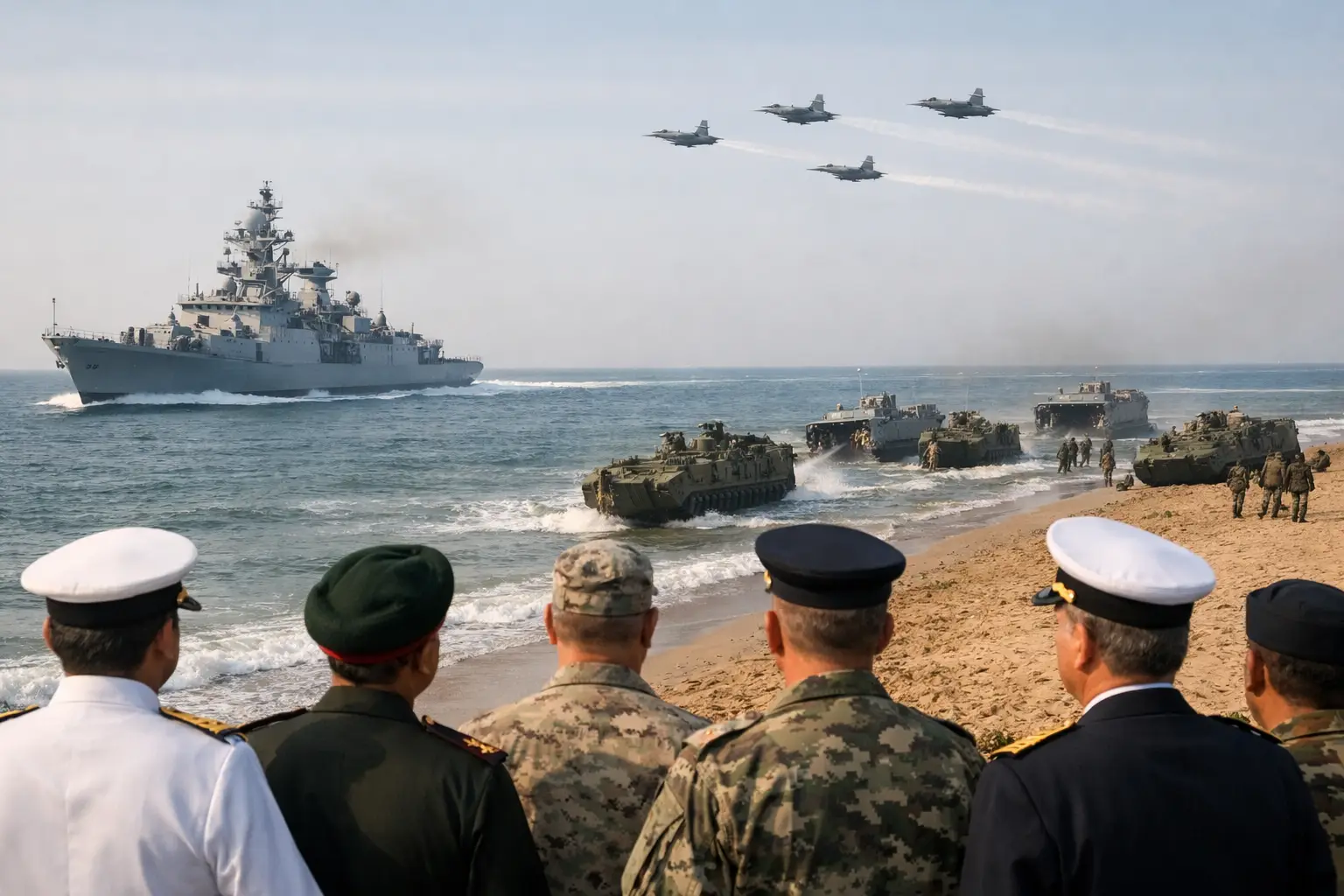
Exercise Tarang Shakti has become a focal point for observers tracking shifts in South Asian security practices. The manoeuvre, framed by its organisers as a training activity, also serves as a window into two broader developments: the Indian military pursuing deeper operational links with partner forces, and India advancing a multi-directional foreign policy. The event was overseen by the Ministry of Defence, India, which positions such programmes as tools to increase readiness and refine joint procedures.
On the operational side, the exercise underscores a sustained push toward interoperability. Participating units typically work through shared procedures for command and control, communications, and logistics, which reduce friction when forces operate together. This kind of practical alignment affects training curricula, equipment choices and exchange of technical know-how, and can create recurring frameworks for cooperation. Coverage of the exercise emphasises how these routines build mutual understanding and reduce the time needed to coordinate in combined operations, both at sea and on land. Internal discussions within defence circles now routinely link exercises to long-term capability planning and procurement practices; readers can follow related themes under military interoperability.
At the diplomatic level, Tarang Shakti is consistent with a broader strategy of diversified engagement. Rather than relying on a single bloc of partners, India prefers multiple lines of contact across regions and institutions, a posture often described as multi-vector. This approach seeks to preserve strategic autonomy while expanding options for crisis management, logistics support and defence collaboration. The pattern is visible in an array of government initiatives and exchanges that span bilateral and multilateral forums, and it shapes how New Delhi calibrates relationships with major powers and neighbouring states. For ongoing coverage of these dynamics, see the foreign policy archive.
The combined effect of improved interoperability and a multi-directional diplomatic stance carries several practical consequences. It can enhance deterrence by demonstrating the ability to operate cohesively with partners, while also creating routine channels for deconfliction. For defence planners, recurring exercises inform procurement timelines and training pipelines; for diplomats, they become instruments of signalling and reassurance. Observers will continue to watch such drills for indications of how defence cooperation and diplomatic priorities evolve in tandem across the region. For more on India-related developments, consult the India tag.


