

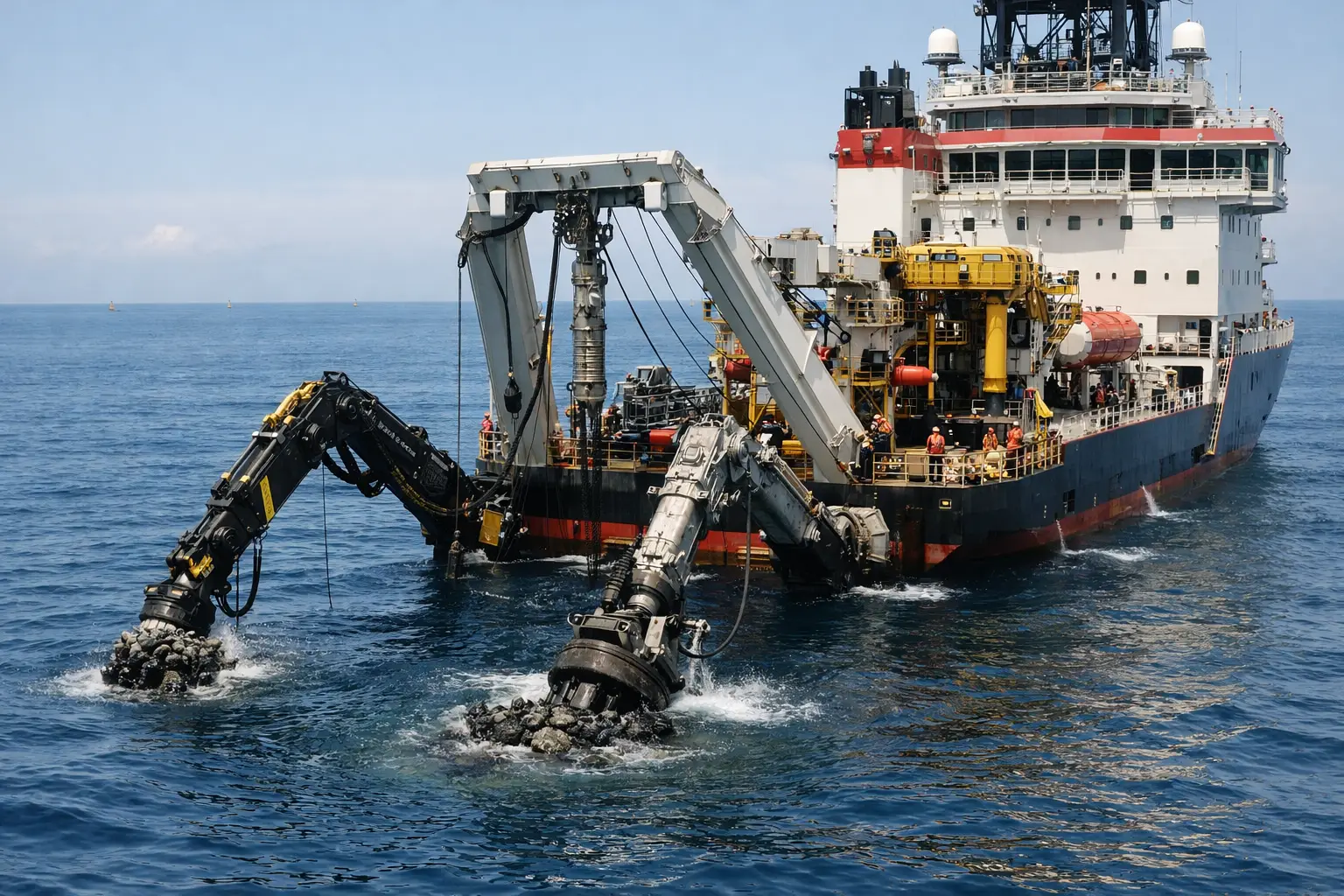
China’s expanding interest in underwater mineral deposits is introducing a new dimension to long-standing tensions in the South China Sea. As global demand for critical minerals used in high-tech industries grows, attention is turning from land-based deposits to seabed resources, a shift that could intensify disputes among coastal claimants and alter regional resource dynamics. The possibility of commercial-scale extraction raises questions about sovereignty, maritime jurisdiction and environmental stewardship.
The strategic value of rare earths and related minerals is well established in global supply chains, where China currently plays a central role in processing and refining. Seabed deposits could provide alternative sources of these materials, but exploiting them requires technology, investment and legal clarity. Governance instruments at the international level remain under development; in areas beyond national jurisdiction the International Seabed Authority is tasked with regulating activities, while the legal framework established by the United Nations Convention on the Law of the Sea continues to guide maritime entitlements and responsibilities.
In the South China Sea several states — including the Philippines, Vietnam, Malaysia, Brunei and Taiwan — have overlapping claims that already complicate fisheries, shipping and hydrocarbon exploration. The emergence of seabed mining introduces further layers of overlap between national exclusive economic zones and areas that may be subject to broader international regimes. Potential environmental impacts from deep-sea extraction add a scientific and regulatory urgency to the political question of who may profit from newly accessible resources.
Resolving these challenges will demand coordinated technical assessment, clearer legal rules and multilateral management mechanisms capable of balancing resource access and environmental protection. Regional diplomacy, domestic industrial strategies and international institutions are likely to shape outcomes as seabed mining moves from exploratory projects toward potential commercialization. Whatever path unfolds, the intersection of rare earths policy and maritime disputes will be a defining element of strategic calculations in the region.


