

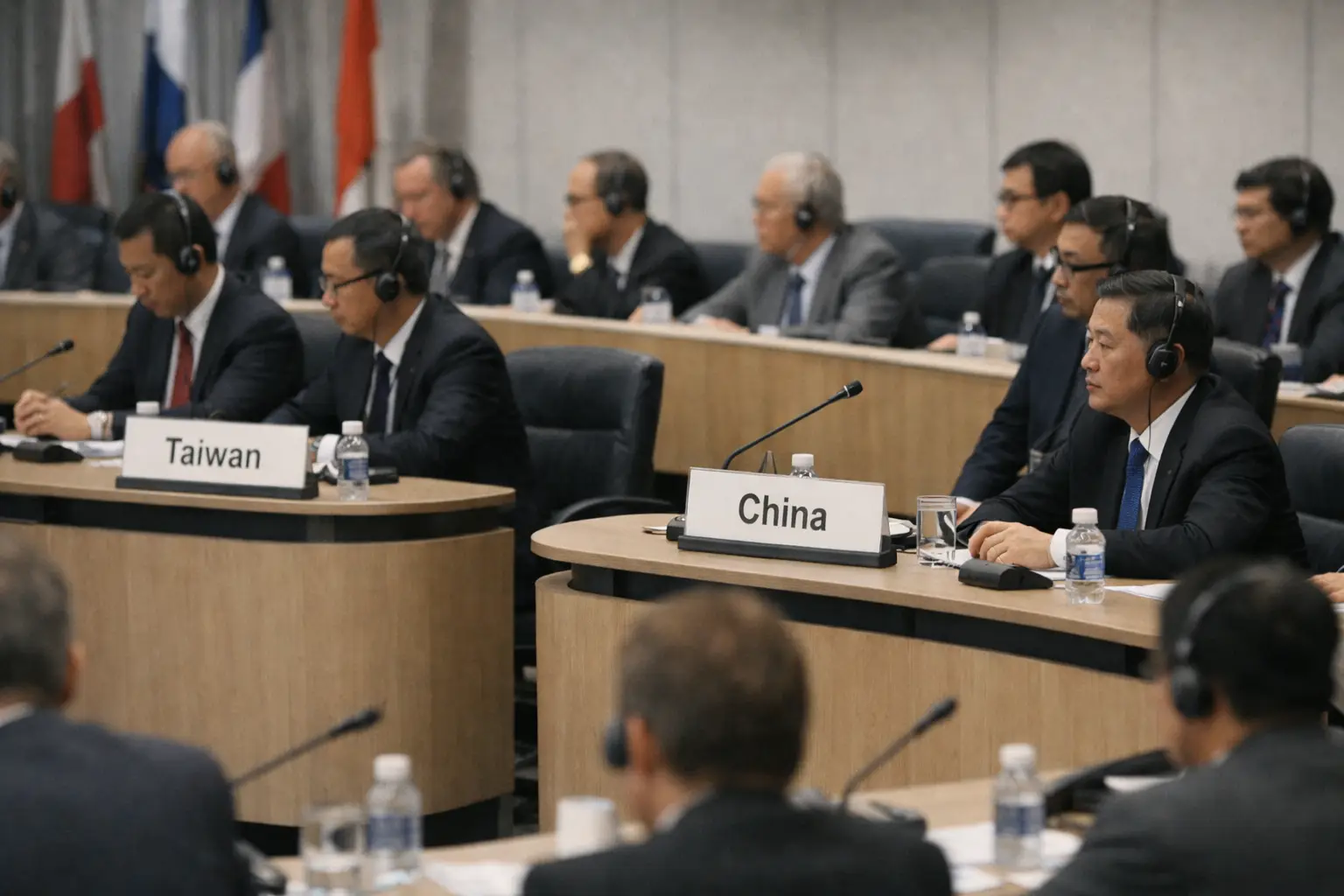
Taiwan is drawing attention to the importance of APEC as one of the few international settings in which it can appear alongside China, a point that underlines the island’s narrow room for diplomatic manoeuvre. The forum’s structure, based on participating “economies” rather than formally recognized states, gives Taiwan a platform that remains largely unavailable in many global institutions.
Within APEC, Taiwan participates under the name “Chinese Taipei,” a formula designed to avoid direct conflict over sovereignty while allowing the island to take part in discussions on trade, investment and regional economic cooperation. The arrangement is politically delicate: Beijing claims Taiwan as part of its territory, while Taiwan’s elected authorities operate separately and maintain their own institutions, including the Ministry of Foreign Affairs.
The emphasis on China’s presence at APEC reflects the practical value Taiwan attaches to forums where cross-strait visibility is possible without formal bilateral recognition. For Taipei, participation is not only about access to economic conversations in the Asia-Pacific region; it is also a way to show that the island remains connected to international decision-making despite diplomatic pressure. For Beijing, represented internationally by the Ministry of Foreign Affairs of China, such settings require careful management of symbols, titles and protocol.
APEC’s economic focus makes it particularly significant. The Asia-Pacific region is central to global supply chains, technology production and maritime trade, all areas in which Taiwan plays a major role. Its semiconductor industry and export-driven economy give it weight beyond the limits of its formal diplomatic recognition. Participation in APEC therefore helps Taiwan remain present in discussions that affect regional growth, resilience and commercial rules.
The situation illustrates a broader diplomatic balancing act. Taiwan seeks visibility and engagement without triggering procedural disputes that could restrict its participation, while China continues to oppose any move it views as implying statehood for the island. APEC does not resolve that conflict, but it provides a rare channel where both sides are present in the same international framework, making the forum politically important well beyond its economic agenda.


