

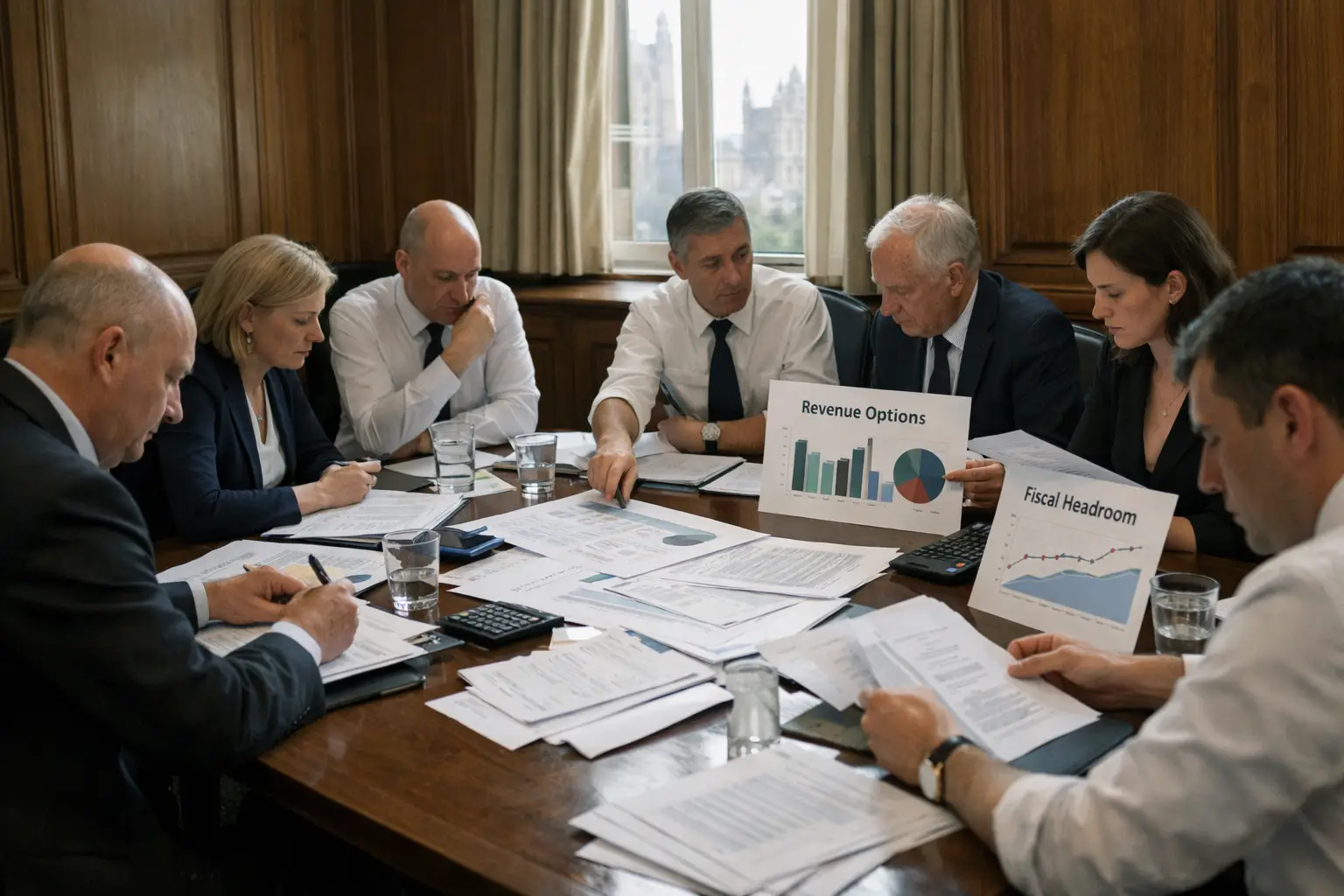
The fiscal challenge facing Labour is narrowing the space between political promises and the arithmetic of the public finances. Ahead of the UK Budget, the question is whether ministers can raise additional revenue while avoiding an increase in income tax. BBC Verify has examined options that could give the government more room against its fiscal targets, a margin often described as fiscal headroom.
One route is to change the tax base rather than the headline rate. Governments can raise more money by narrowing allowances, freezing thresholds or limiting reliefs, even when the main rate of a tax remains unchanged. Such choices are politically sensitive because they can still increase the burden on households or specific groups. For Labour, that distinction matters: avoiding an income tax rise does not remove the wider debate about who ultimately pays and how visible the measure is to voters.
A second route lies in taxes linked to assets and wealth, including areas such as capital gains and inheritance. These taxes affect fewer people than income tax but can generate intense scrutiny because they interact with savings, investment decisions and family finances. A third route would focus on business or employer-related taxation, where changes can raise money without appearing directly on payslips. The trade-off is that firms may respond through prices, wages, hiring plans or investment decisions, which makes the economic impact harder to present as cost-free.
The fourth route is enforcement and reform: reducing avoidance, tightening compliance and reviewing reliefs that reduce receipts. HM Treasury and HM Revenue & Customs already play central roles in assessing how policy changes translate into revenue. Measures of this kind can be easier to defend politically, but their yield depends on practical implementation and on whether expected receipts materialise.
Any Budget package will be judged not only by its political presentation but also by its credibility. The Office for Budget Responsibility assesses the fiscal impact of government decisions, making its forecasts central to the Budget process. For Labour, the strategic issue is whether revenue can be increased in a way that strengthens public finances, preserves confidence and does not undermine the economic activity on which future tax receipts depend.


