

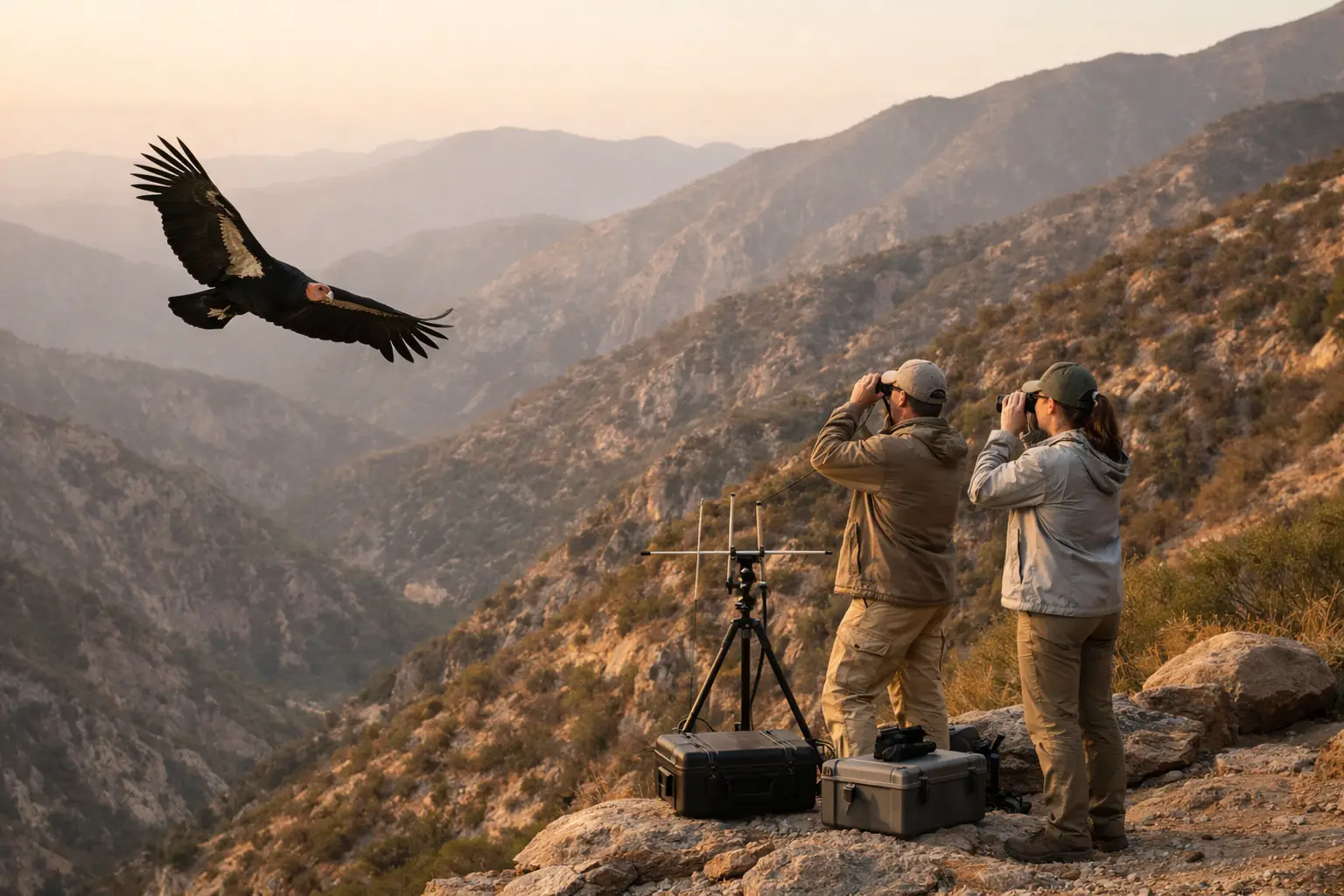
The California condor’s return from disappearance in the wild has become one of the clearest modern examples of what endangered-species rescue can demand. In 1987, biologists captured the last free-flying condor and moved it into captivity, leaving North America’s largest flying bird officially extinct in its natural habitat. Decades later, more than 300 condors have been restored to the wild through captive breeding and reintroduction work that required coordinated institutions, sustained expertise and millions of dollars. The U.S. Fish and Wildlife Service remains the federal reference point for the species.
The case matters beyond one bird. When public budgets, scientific manpower and habitat programs are limited, every recovery plan implies choices about which species move first, who sets priorities and how success is defined. The condor’s progress shows that extinction in the wild need not be the final chapter for a species. It also shows that recovery can be slow, expensive and dependent on commitments that outlast political and funding cycles.
Those questions sit at the center of global biodiversity policy. The Convention on Biological Diversity provides the main international forum for nature protection, while national agencies decide how broad goals become field work. A treaty can encourage protection, but the condor example indicates that recovery depends on institutions capable of breeding animals, managing releases and maintaining attention over generations.
It also highlights a governance issue: decisions about saving species are not purely technical. Scientists can assess risks, population trends and feasibility, but the allocation of money and land has public consequences. A transparent process can help explain why a high-cost effort is justified, what trade-offs it carries and how communities are expected to live with reintroduced wildlife. The condor’s recovery offers evidence that ambitious intervention can produce measurable results, while underscoring why such choices need legitimacy.
For the biodiversity agenda, the lesson is practical. Targets written at international level gain force only when matched by long-term conservation programs that survive setbacks and remain accountable. The California condor did not return because of a single breakthrough; it returned because a system was built around its survival. As countries consider how to prevent further losses, that system is a reminder that saving a species is both a scientific project and a public decision.


