

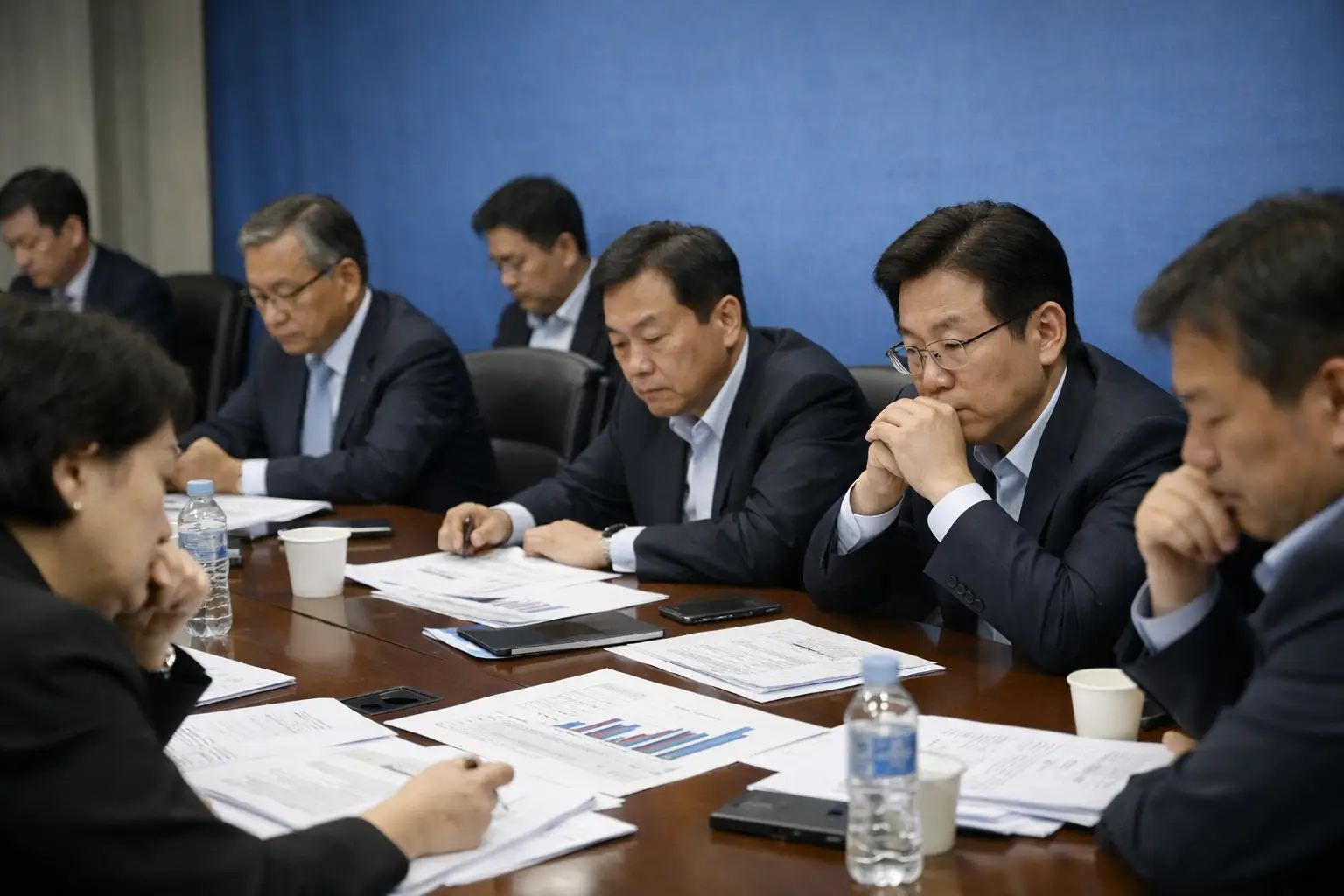
South Korea’s ruling party is facing a sharp deterioration in public support, with the Democratic Party weakened by a series of internal mistakes and disputes that have damaged its appeal to voters. The decline in polling is not being driven by one isolated controversy, but by an accumulation of political friction inside the party at a time when discipline and message control are essential for any governing force.
The setback is significant because parties in power are judged not only on their policy record, but also on their ability to appear organised, credible and capable of managing pressure. For the Democratic Party, the problem is becoming as much about perception as substance. Public gaffes and factional disagreements can reinforce doubts among undecided voters, while giving opponents an opportunity to frame the governing camp as divided or distracted.
In South Korea, where political competition is often intense and voter sentiment can shift quickly, polling weakness carries consequences beyond headline numbers. Lower approval can complicate legislative priorities, reduce the authority of party leaders and increase pressure on officials to correct course. It can also make internal tensions harder to contain, as poor survey results often encourage competing groups inside a party to blame one another for the loss of momentum.
The situation places the Democratic Party under pressure to restore coherence before further damage sets in. Governing parties typically need a clear public message, visible unity and the capacity to respond quickly to criticism. When internal controversies dominate attention, policy achievements risk being overshadowed, and the political narrative can shift from governance to party management.
The polling slide has therefore become a test of the party’s resilience as much as its popularity. Without a visible effort to reduce missteps and limit disputes, the Democratic Party risks allowing internal problems to define its public image. For voters, the central issue is whether the ruling party can project stability while handling the responsibilities of government in a demanding political environment.


