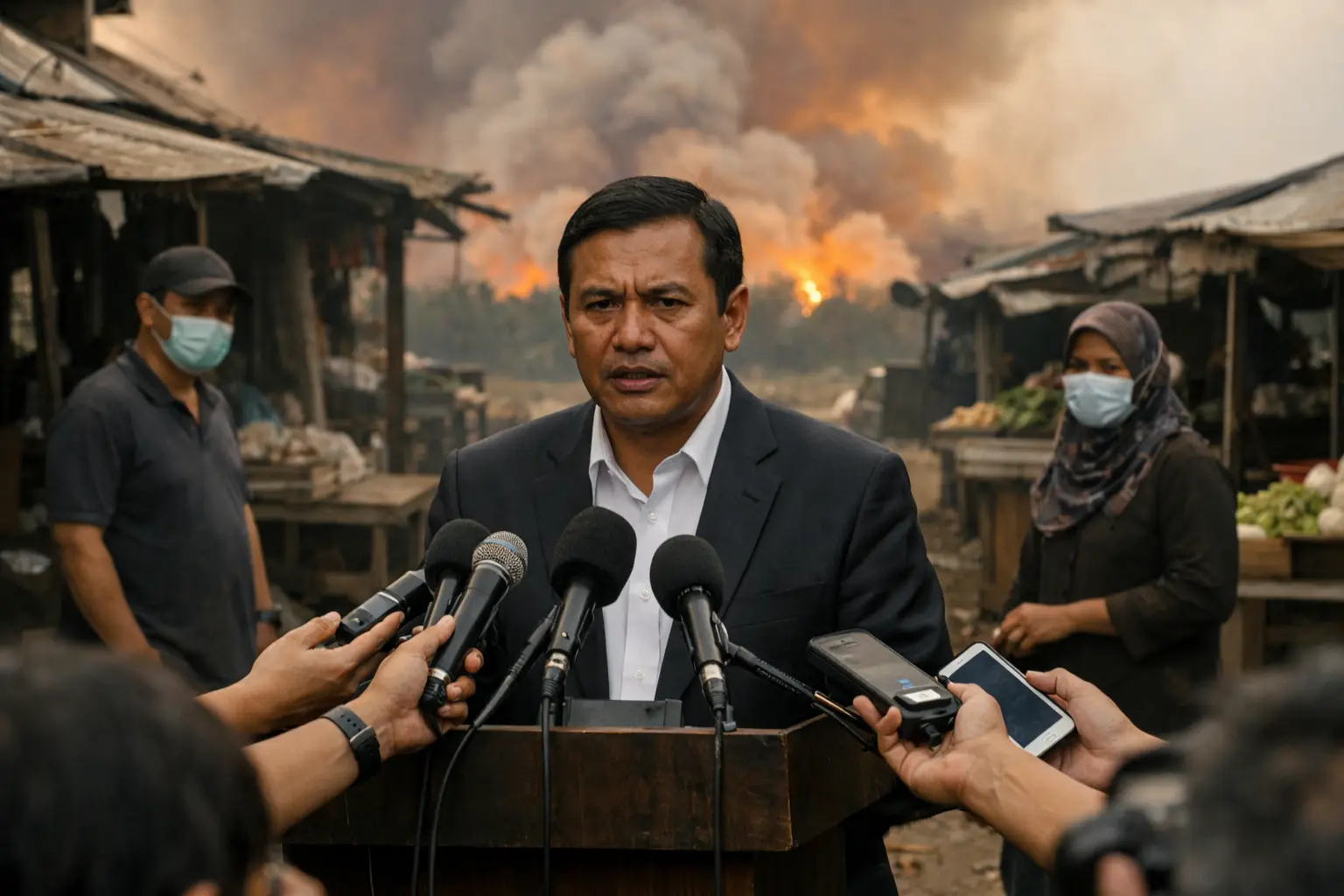
Indonesia faces an array of concurrent challenges that are reshaping immediate priorities for policymakers and communities. Across the archipelago, widespread wildfires, heightened political friction and an intensifying economic slowdown are interacting to increase pressure on public services and private operators. The situation in Indonesia has prompted emergency responses from local authorities while also drawing attention from regional partners and market observers concerned about broader spillovers.
Wildfires remain a central concern for public health and livelihoods. Fires reduce air quality, disrupt transport and damage agricultural lands, with local responders and municipal services stretched by containment and mitigation tasks. The environmental and health consequences complicate recovery efforts in affected areas and force reallocations of resources that would otherwise support development and public welfare projects. Coverage and monitoring of the blazes continue to inform relief planning and longer-term restoration needs; more sustained investment in prevention and forest management has emerged as a repeated theme among practitioners.
Political tensions have added another layer of uncertainty. High-profile disputes within governing circles and between political actors have translated into policy unpredictability and a slower pace of legislative or executive decision-making. That dynamic affects everything from emergency funding to regulatory clarity, and it can undermine confidence among domestic stakeholders. For markets and international partners, political instability increases the difficulty of assessing medium-term trajectories, while civil society groups and local leaders press for transparent responses to both environmental and governance challenges. The interplay between politics and emergency management remains a central variable in how effectively the country addresses concurrent crises; observers are watching institutional coordination closely.
Economic strains are amplifying the human and institutional toll of the other shocks. Rising costs, supply disruptions and constrained public budgets reduce the margin for error in disaster response and social protection. Businesses face higher operational uncertainty, and households contend with tighter real incomes. How authorities prioritize fiscal support, stimulus measures or structural reforms will shape recovery prospects and investor sentiment in the months ahead. Immediate indicators to monitor include resource allocation for firefighting and relief, measures to stabilize markets, and developments in political consensus that affect governance capacity.