

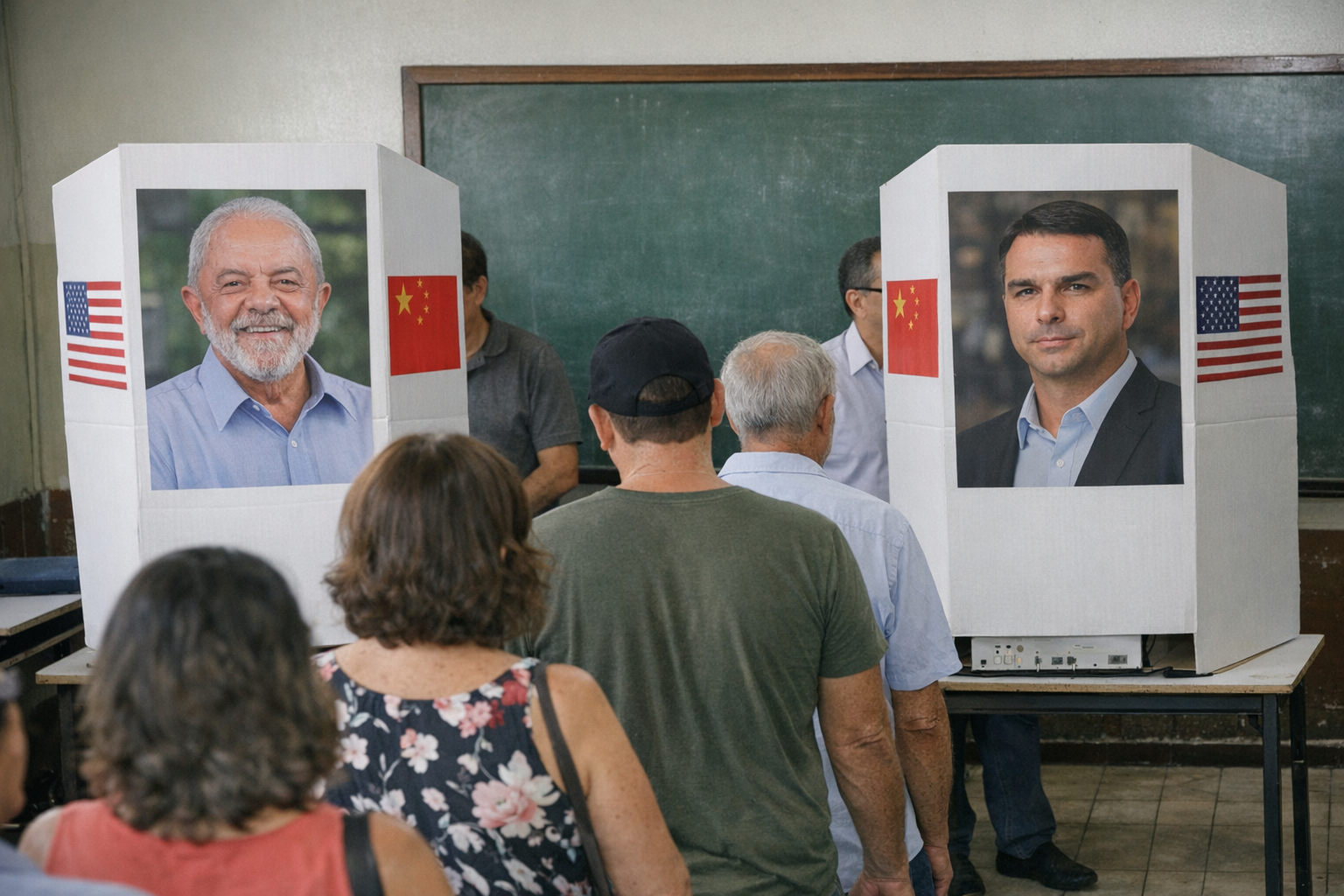
Election day looms on October 4 as voters in Brazil prepare to choose between the multilateralist incumbent Lula da Silva and former president Jair Bolsonaro’s son, Flavio Bolsonaro. The two front-runners present divergent approaches to international alignments: the incumbent emphasizes engagement with multiple partners, while Flavio Bolsonaro has advocated drawing the country closer to the United States and away from China.
The campaign has underscored how foreign policy intersects with domestic priorities. Trade relations, investment flows and supply-chain links are central concerns for business and civic actors across the country. Observers note that a shift in Brasília’s international orientation could lead to changes in trade negotiation priorities and in the signalling Brazil sends to global markets, without altering existing contractual obligations or bilateral agreements overnight.
Beyond economics, the contest carries implications for regional diplomacy and multilateral institutions. As the largest economy in the region, Brazil’s posture influences South American cooperation frameworks and its role within global forums. A continuation of a multilateral stance would likely favour broad engagement, while a pivot toward closer ties with a single major partner could recalibrate Brazil’s diplomatic focus and partnership patterns.
What happens on October 4 will determine which vision gains the mandate to govern, but implementation will depend on legislative dynamics and institutional processes that follow the vote. Stakeholders at home and abroad will be watching how the declared priorities translate into concrete policy choices on trade, security cooperation and international investment promotion.
For now, the immediate fact is the date: citizens of Brazil will cast ballots on October 4 to choose between continuity under Lula da Silva and the alternative proposed by Flavio Bolsonaro. The result will shape how Brasília positions itself toward partners such as the United States and China, with ripple effects for regional relations and economic ties.


