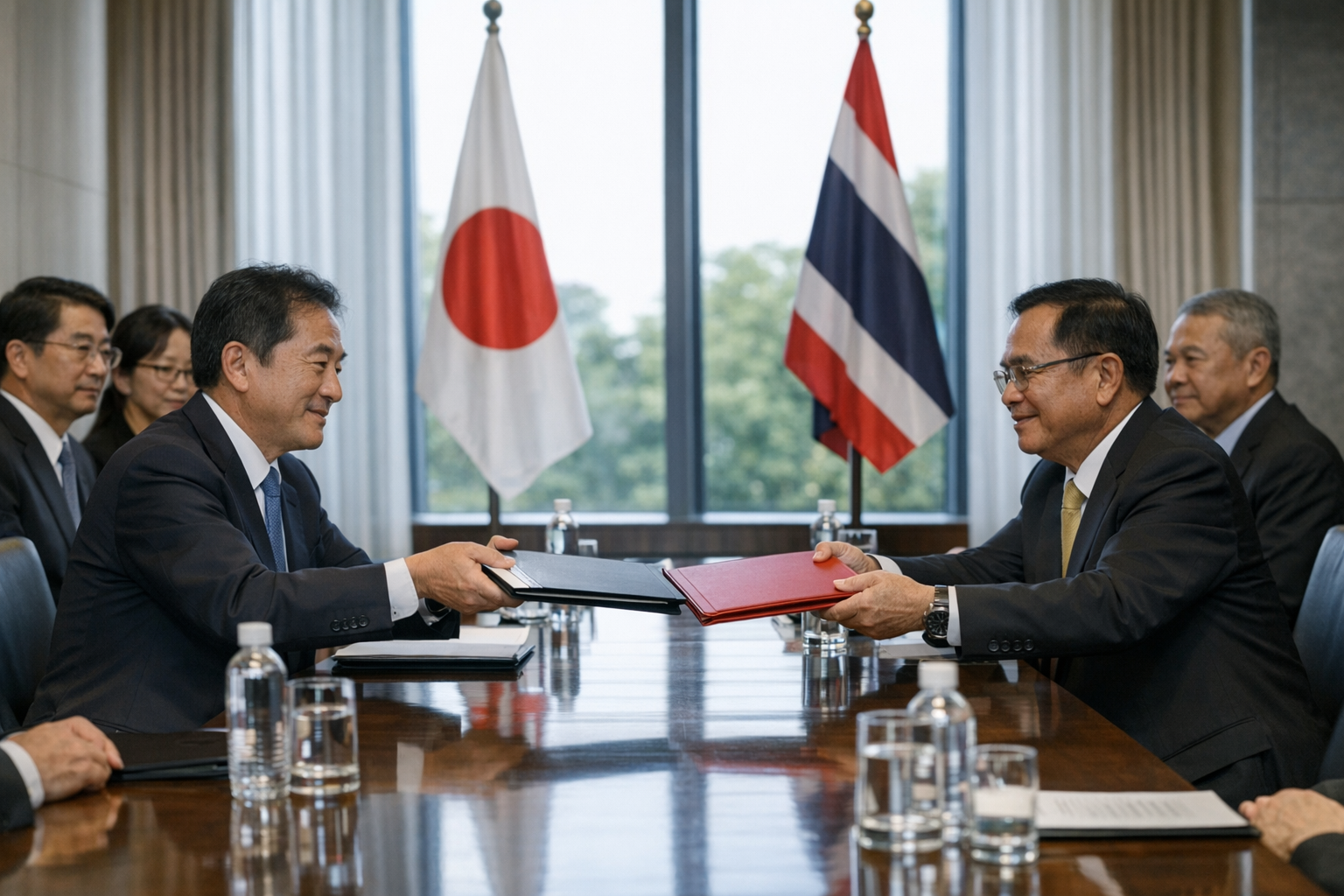
Japan and Thailand have strengthened links across trade, investment and security in recent years, creating a relationship that combines tangible benefits with shared vulnerabilities. Greater market integration and coordinated projects have supported industrial expansion and people-to-people exchanges, but they have also exposed both countries to common shocks—from supply-chain disruption to regional geopolitical shifts—that require careful management.
The economic dimension remains the backbone of the partnership. Japanese firms play a prominent role in Thai manufacturing, particularly in sectors oriented toward exports, while Thai markets have offered investment opportunities and a gateway to Southeast Asian consumers. Tourism and labour mobility have reinforced cultural and economic connections. At the same time, the concentration of supply chains and production nodes means that disruptions in one country can ripple quickly to the other, amplifying the consequences of natural disasters, pandemics or sudden policy changes.
Beyond commerce, collaboration on infrastructure, technology and rule-based regional governance has become more visible. Official exchanges and development financing have supported transport and logistics projects and capacity building. Security dialogues and port-calls reflect converging interests in maritime safety and stable sea lines of communication. These interactions involve central actors such as the Ministry of Foreign Affairs of Japan and the Ministry of Foreign Affairs of Thailand, which coordinate diplomatic and technical engagement.
The practical implication of growing interdependence is a need to hedge risks without undermining cooperation. Diversification of supply chains, investment in resilience and transparent regulatory frameworks can reduce exposure to concentrated shocks. Strengthening disaster preparedness, environmental safeguards and labour protections will also limit spillovers from non-economic crises. Maintaining open channels for dialogue helps manage strategic frictions while preserving the economic ties that benefit both societies. As ties deepen, policymakers on both sides face the task of converting interdependence into mutual stability rather than mutual fragility.