

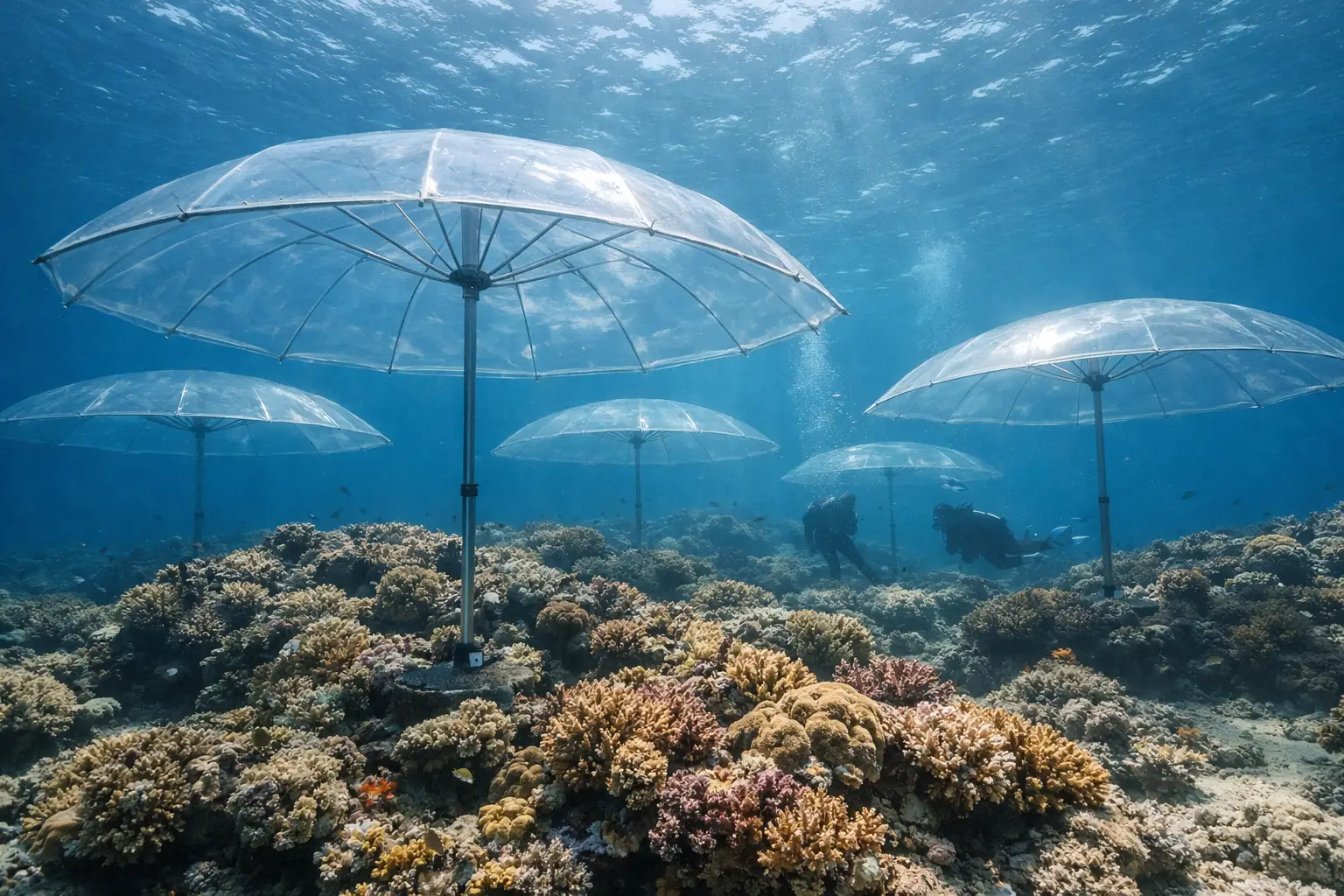
High sea temperatures are causing widespread damage to coral reefs, triggering episodes of bleaching that leave colonies pale and often lead to large-scale mortality. Warming waters associated with global ocean trends compromise the symbiosis between coral animals and the algae that feed them, a collapse commonly referred to as bleaching. These events have intensified in frequency and severity in recent decades, reducing reef resilience and undermining the ecological services reefs provide, from fisheries support to coastal protection.
Efforts to restore degraded reefs through transplanting and growing corals on artificial structures can bring damaged systems back to life, but restoration is typically labour-intensive and costly. Restored corals remain exposed to the same rising temperatures that caused the initial declines, meaning they are at risk during subsequent marine heat waves. The scale and expense of ongoing restoration highlight the need for interventions that can protect functioning reef communities in place, rather than only replacing what has been lost.
One class of proposed measures involves temporary shading or cooling of reef areas, often described in public discussions as deploying “underwater umbrellas.” Such interventions aim to reduce the intensity of light and heat reaching corals during extreme warming episodes, thereby lowering physiological stress and the likelihood of bleaching. Advocates note that localized shading could act as a stopgap to protect high-value or particularly vulnerable reef sections while longer-term climate mitigation proceeds. However, practical questions remain about scalability, deployment logistics, maintenance, and potential unintended impacts on reef ecology and water movement.
Given the magnitude of the threat, protecting reefs will likely require a portfolio of approaches. Tactical shading could complement targeted restoration and management actions, but it does not address the root driver of warming seas. Broader measures to limit global temperature rise remain fundamental to the long-term survival of coral ecosystems. Continued evaluation through careful trials, monitoring of ecological effects, and coordination with conservation practitioners will be needed to determine where and how shading techniques might be used alongside other strategies to bolster reef resilience in a warming world.


