

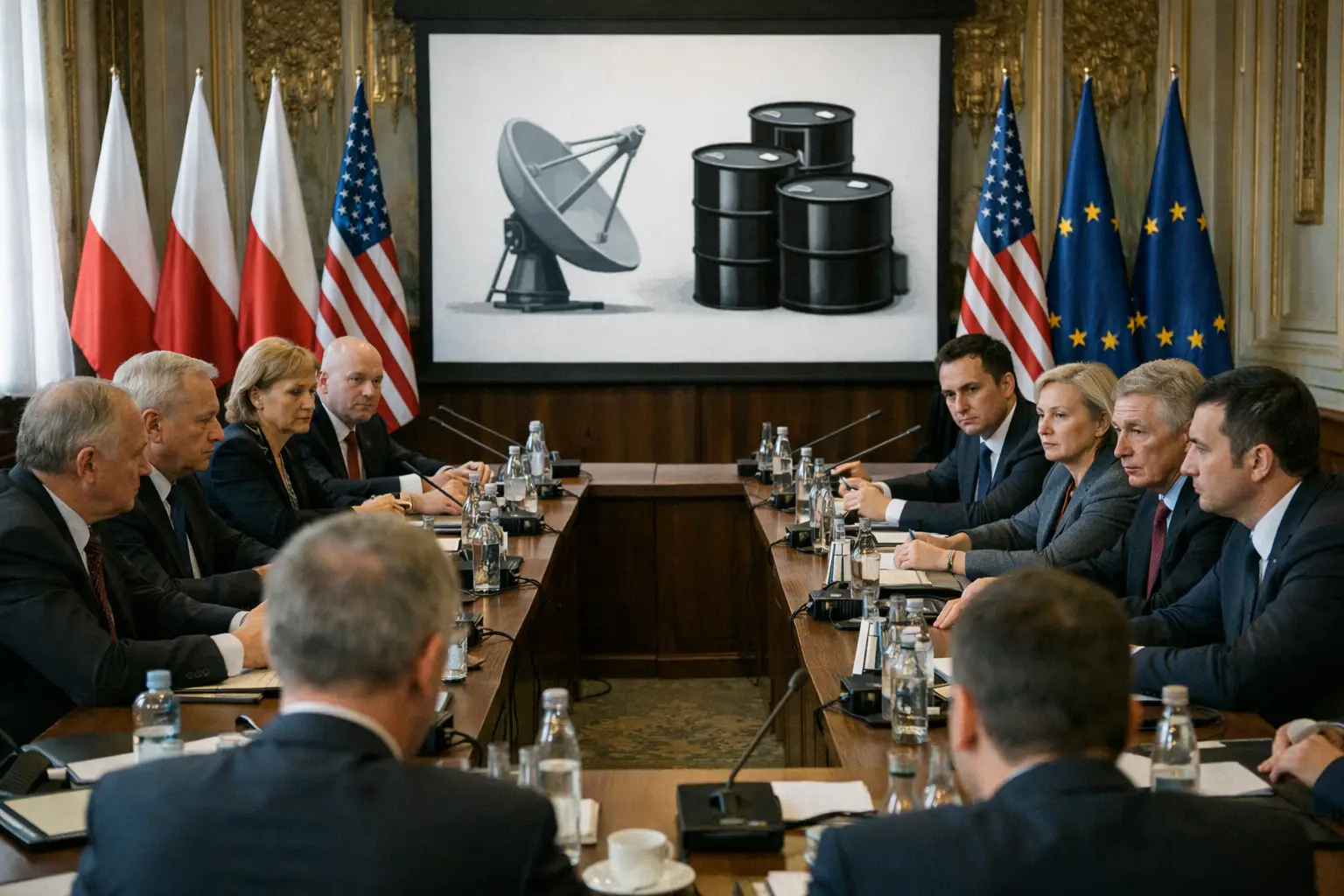
Allied delegations have convened in Poland amid concerns over a recent incident that damaged Starlink equipment and diplomatic fallout from a separate energy agreement. The gatherings brought into sharp relief warnings from Johann Wadephul, who said hybrid plots such as the Starlink fire demonstrate that Europe is “in Russia’s crosshairs.” At the same time, Ed Miliband described a US–Russia diesel deal as producing a “very difficult few days” on the diplomatic front, underlining how security incidents and political developments are intersecting for partners supporting Ukraine.
The remarks from Johann Wadephul framed the Starlink incident as part of a broader pattern of hybrid threats that can target civilian infrastructure and complicate defence postures. Delegations in Poland are examining the implications for resilience of communications systems that have become critical for military coordination and civilian services, while assessing the information and security dimensions of such attacks.
Ed Miliband highlighted the diplomatic strain stemming from the diesel agreement involving Russia, noting that it has produced a challenging period for allied relations. The comment reflects tensions among partners as they balance immediate energy and economic considerations with collective political positions. The convergence of energy diplomacy and security incidents has intensified discussion about how allies maintain unity in policy and messaging toward Russia while continuing support for Ukraine.
The meetings in Poland illustrate how operational security concerns and diplomatic developments are increasingly linked in the current European security environment. Officials and representatives present are focusing on short-term responses to specific incidents and on how to preserve cohesion among partners facing simultaneous pressure points. The public comments from Johann Wadephul and Ed Miliband signal that both hybrid threats and diplomatic fallout will remain central topics as allied discussions proceed.


