

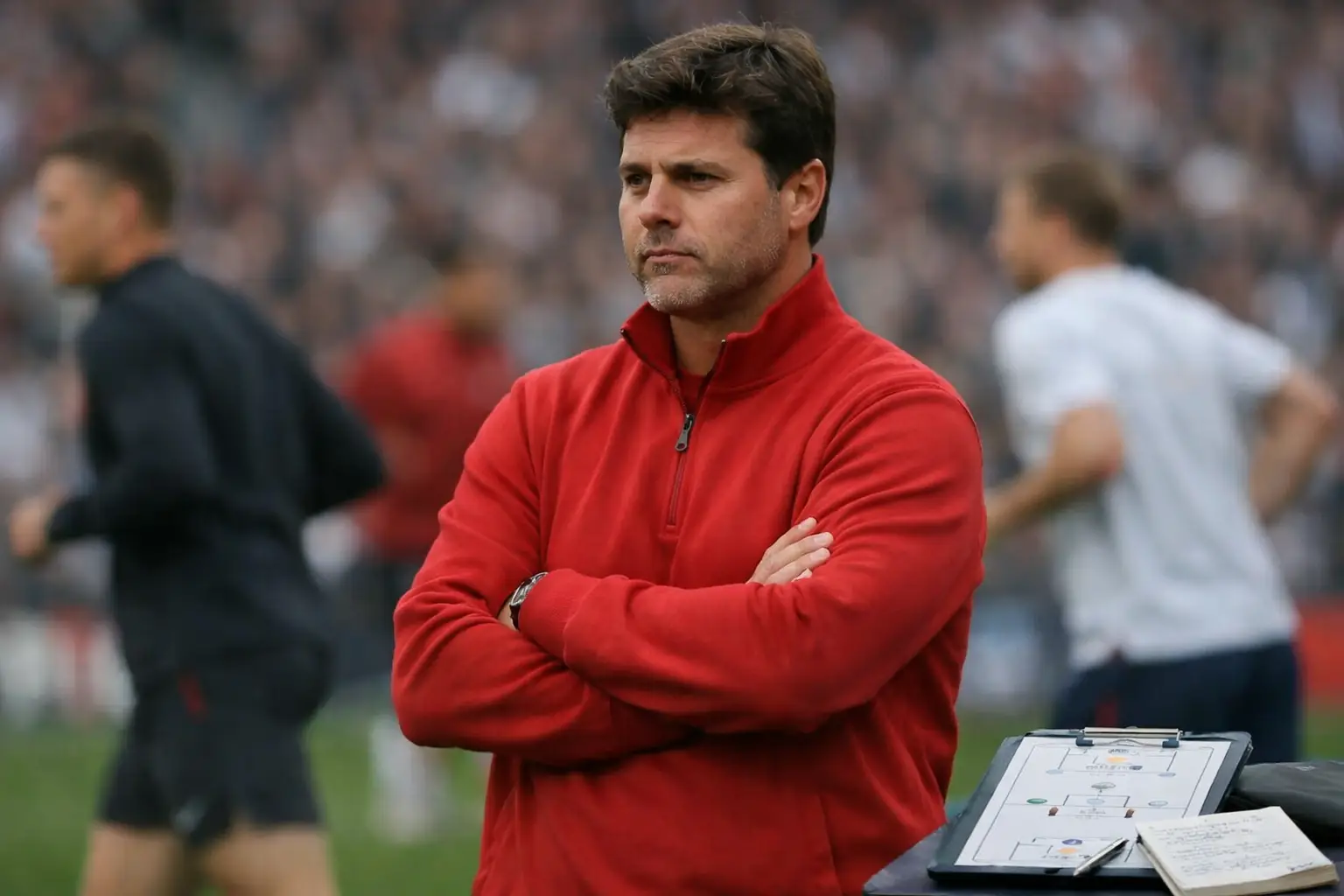
Mauricio Pochettino’s opening two matches in charge of Manchester United have offered little room for comfort. The early mood around Old Trafford is defined less by renewal than by impatience, with the new manager already confronting the familiar problems that have followed the club through recent seasons. A change in the dugout has not immediately delivered clarity, and the first signs point to a difficult adjustment rather than a quick reset.
The most striking feature of the start has been the tension between ambition and execution. Pochettino has long been associated with intensity, coordinated pressing and fast transitions, but those principles require timing, fitness and confidence. After only two matches, any definitive judgment would be premature, yet the early evidence suggests that the players are still adapting to new demands. In a club where scrutiny arrives instantly, even a short period of disorder can quickly become a wider debate about direction.
For Manchester United, the issue is not only tactical. The squad has carried structural uncertainty for some time, with questions over balance, consistency and decision-making in key moments. A new coach can reshape roles and routines, but he cannot solve every weakness in a matter of days. The challenge for Pochettino is to establish authority while avoiding the impression that another managerial cycle is beginning with the same unresolved problems.
The consequences of this difficult beginning are amplified by the competitive environment. In the Premier League, slow starts can rapidly increase pressure, particularly for a club measured against domestic and European ambitions. Early frustration does not determine a season, but it can influence the atmosphere around training, selection and recruitment priorities. The next phase will be judged on whether United become more cohesive, not simply on whether individual results briefly quieten criticism.
Manchester United remain at the point where process matters as much as outcome. Pochettino’s immediate task is to turn a chaotic opening into a readable plan: clearer pressing triggers, better spacing, sharper possession and a more reliable defensive structure. Two matches are too few to define his tenure, but they have been enough to show the scale of the work ahead and the limited patience available at a club still searching for stability.


