

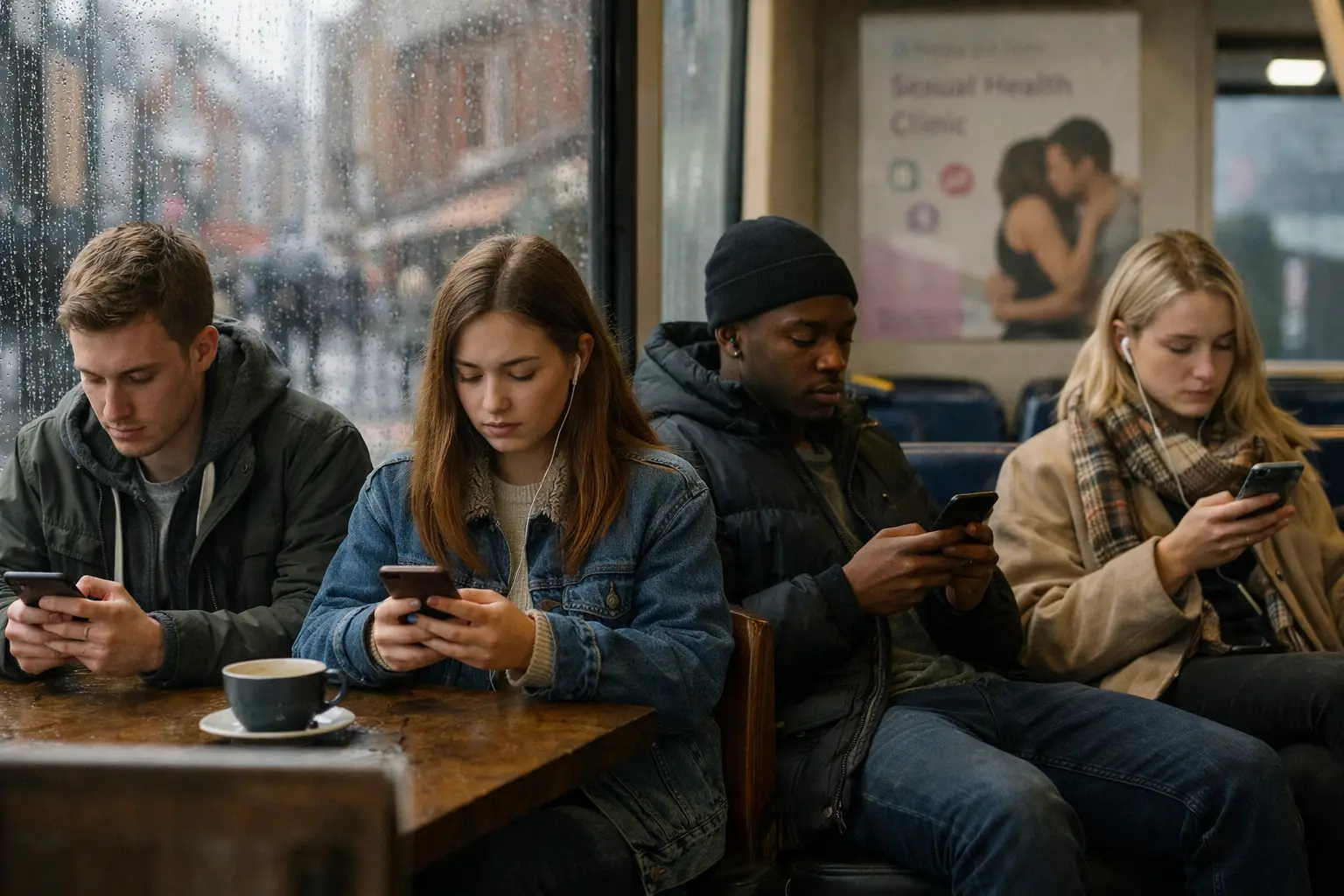
A third of young people in Britain have never had sex, highlighting a marked shift in intimate behaviour among younger generations. The finding points to a growing gap between sexual experience and exposure to sexual content, as many young people who have not had physical sexual relationships are still engaging with sexting and watching pornography.
The pattern complicates conventional assumptions about youth sexuality. Delayed or absent sexual experience does not necessarily mean reduced contact with sexual themes, images or conversations. Digital communication has made private exchanges easier and more immediate, while online pornography remains widely accessible. Together, these behaviours suggest that intimacy is increasingly shaped not only by relationships, but also by screens, messaging platforms and the availability of explicit material.
For professionals working in sexual health, the change raises practical questions about education and support. Advice aimed solely at preventing pregnancy or sexually transmitted infections may not fully address the pressures surrounding sexting, consent, body image and expectations created by pornography. Public health resources such as the NHS sexual health guidance provide information on relationships, contraception and infections, but the wider challenge is ensuring that young people receive clear, realistic and non-judgmental guidance before their first sexual experiences.
The figures also underline the need to distinguish between abstaining from sex and being disconnected from sexual culture. A young person may have no sexual history while still navigating explicit content, intimate messages and social pressure online. That distinction matters for parents, teachers and health services, because conversations about safety and consent increasingly begin before physical intimacy occurs.
The rise in young Britons who have never had sex should therefore be read alongside, not in opposition to, the prevalence of sexting and pornography. The picture is not simply one of withdrawal from sexuality, but of changing routes into it. As sexual behaviour becomes less tied to traditional milestones and more influenced by digital environments, education and healthcare responses will need to reflect the realities young people are already encountering.


