

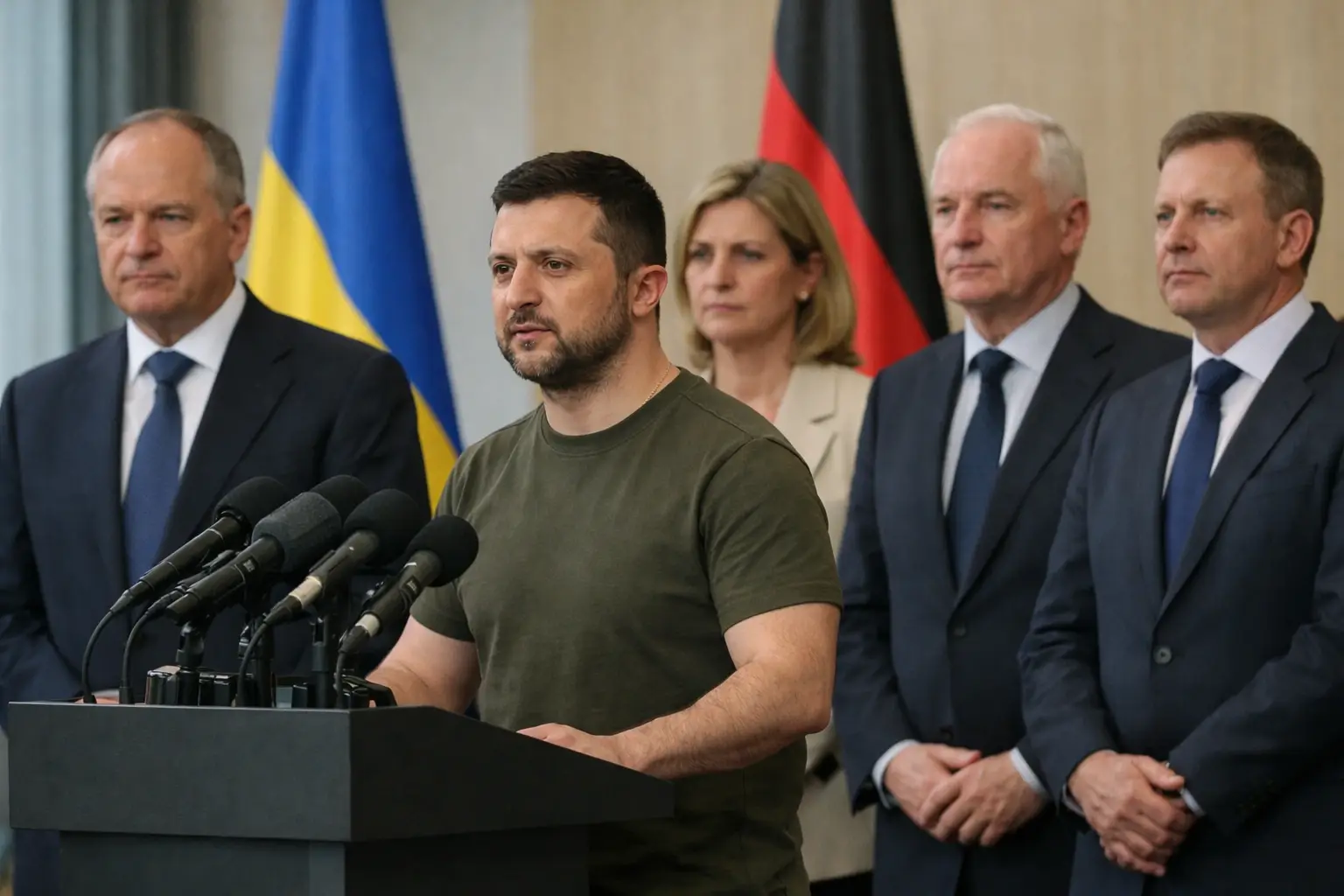
Ukraine’s push for rapid entry into NATO remains politically unsettled, despite renewed pressure from Volodymyr Zelenskyy. The Ukrainian president has urged allies to move quickly on membership and to strengthen his country’s air defenses, placing two of Kyiv’s central wartime demands back at the heart of the transatlantic debate. The discussion gained fresh visibility during the NATO Parliamentary Assembly in Berlin, where the limits of allied consensus were again exposed.
The central obstacle is procedural as well as political: accession to the North Atlantic Treaty Organization requires unanimity among all member states. That threshold has not been reached for Ukraine. While Kyiv frames membership as a necessary guarantee against continued Russian aggression, several allies remain cautious about the timing and implications of admitting a country at war. The Berlin discussions underlined that support for Ukraine’s defense does not automatically translate into agreement on immediate membership.
Air defense is the other issue where urgency and hesitation coexist. Kyiv has repeatedly made the case that stronger protection against missiles and drones is essential for civilians, infrastructure and military resilience. Yet the provision of additional systems depends on national inventories, training, logistics and political decisions by individual governments. For Ukraine, the request is immediate and practical; for allies, it sits within a wider balancing act involving their own defense readiness and the pace of long-term support.
The NATO Parliamentary Assembly does not decide membership, but it reflects political currents inside allied democracies and can influence the tone of debate. Its Berlin session highlighted a familiar divide: strong backing for Ukraine’s right to defend itself, but no collective breakthrough on the most consequential step Kyiv seeks. The absence of unanimity keeps membership out of reach for now, even as Ukraine’s appeal for closer integration and stronger air defense remains firmly on the allied agenda.


