

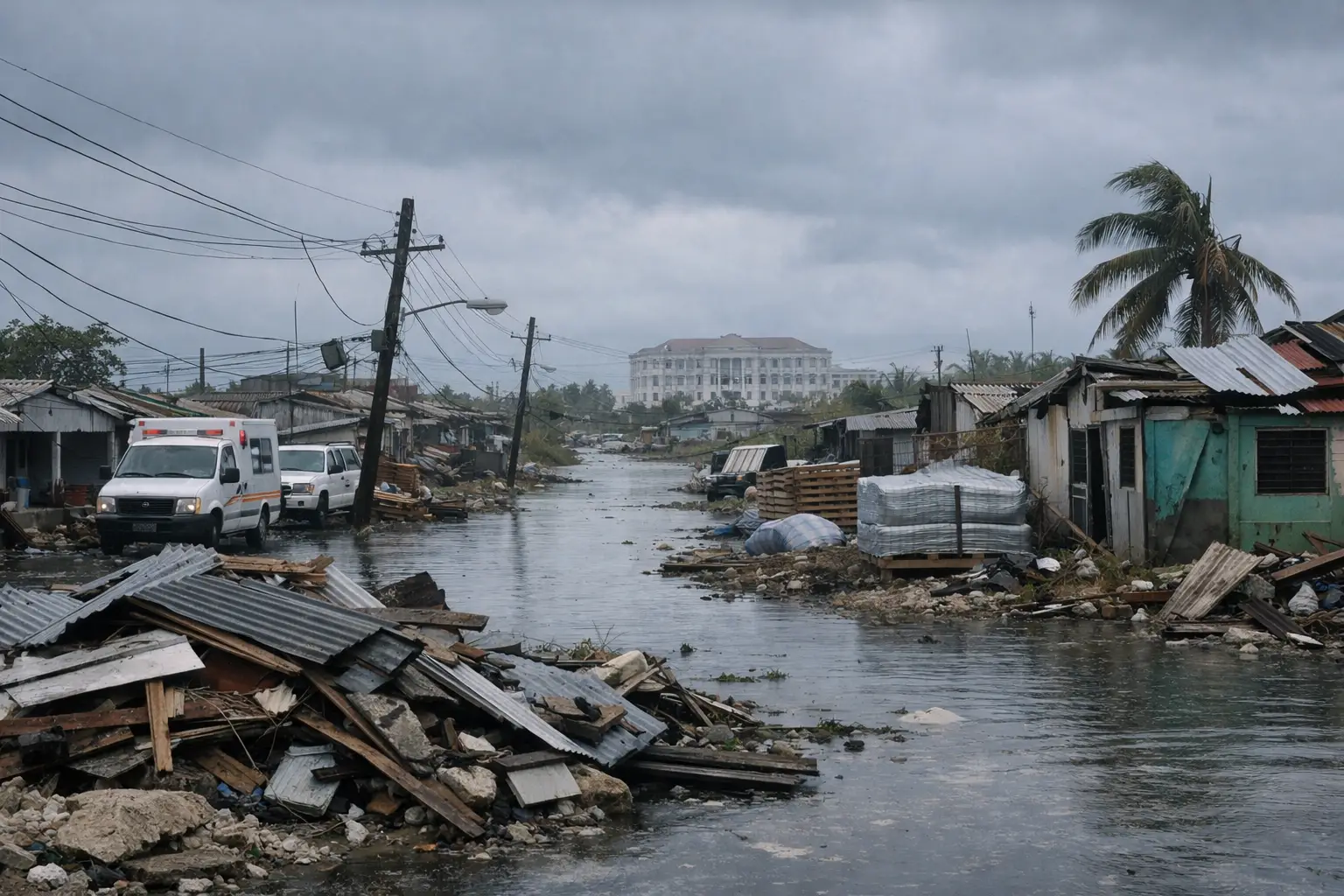
The scale of destruction left by Hurricane Melissa in western Jamaica has become a stark measure of how climate disasters can overwhelm public finances. Satellite analysis by the United Nations Satellite Centre indicated that about 4.8 million metric tons, or 5.3 million tons, of rubble had to be cleared after the storm crossed the Caribbean in 2025. Moving that volume required the equivalent of roughly 480,000 truckloads, a logistical burden that illustrates the immediate cost of recovery before reconstruction even begins.
Debris removal is often treated as the first visible step after a disaster, but it is also one of the earliest financial pressures on governments. Roads must be reopened, public spaces made safe and damaged structures cleared before schools, hospitals, utilities and businesses can fully resume operations. In island economies, where transport routes and ports are central to daily life, delays in clearance can slow the wider recovery and extend the economic impact well beyond the storm’s landfall.
The Jamaican case also reflects a broader challenge facing countries exposed to stronger and more frequent climate shocks: the climate-debt loop. A major disaster can force authorities to redirect budgets, seek emergency financing or take on new borrowing. Higher debt costs can then limit investment in disaster preparedness, resilient infrastructure and social protection, leaving communities more vulnerable when the next extreme event arrives. The result is a cycle in which recovery absorbs resources that might otherwise reduce future risks.
For governments in the Caribbean and other climate-vulnerable regions, this dynamic has turned disaster response into a long-term fiscal issue. The physical damage caused by storms is only part of the burden. Cleanup, temporary services, infrastructure repair and economic disruption all compete for funding. When those costs accumulate after repeated events, resilience becomes harder to finance even as the need for it grows. The aftermath of Hurricane Melissa shows how a single disaster can create demands at a scale that tests administrative capacity as well as public budgets.
Breaking that cycle requires treating climate resilience as part of financial stability, not only environmental policy. The figures from western Jamaica give a concrete form to an often abstract debate: hundreds of thousands of truck movements, millions of tons of waste and a recovery bill that begins before rebuilding starts. In that context, reducing disaster risk is inseparable from reducing debt pressure, especially for nations on the front line of climate change.


