

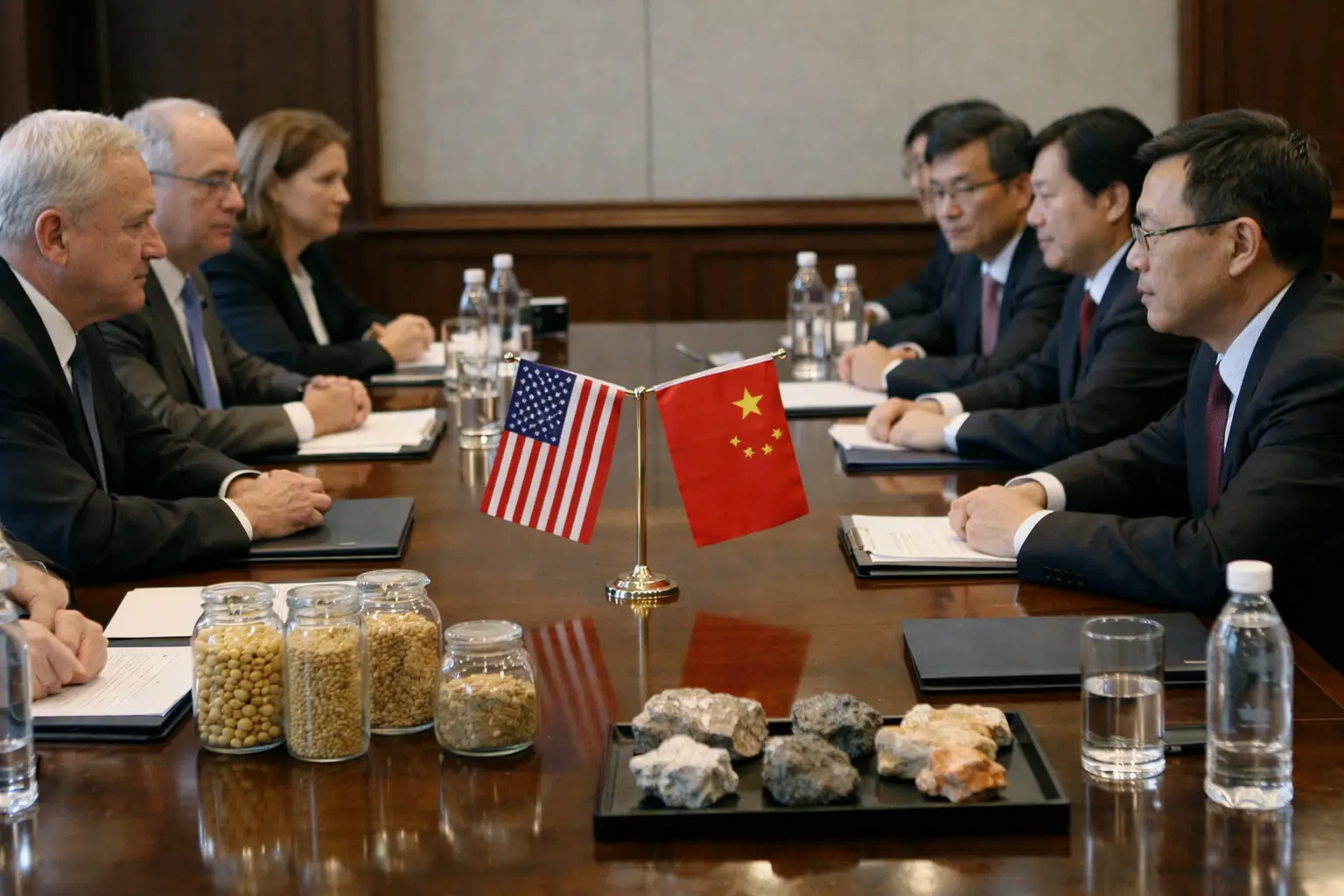
Washington is pressing Beijing to implement commitments tied to the 2025 Busan trade accord, putting renewed attention on agricultural purchases and the supply of rare earths. The message from the United States Trade Representative highlights two areas that remain central to the economic relationship between the United States and China: access to Chinese demand for farm products and the reliability of minerals used across advanced manufacturing.
The Busan agreement has become a reference point in a broader trade relationship still shaped by tariffs, export controls and strategic competition. For Washington, agricultural sales are politically and economically significant because China has long been a major market for crops and food products. Rare earths carry a different weight: they are essential inputs for electronics, electric vehicles, clean-energy equipment and defense-related technologies, making supply continuity a priority for governments and companies alike.
Beijing, for its part, voiced concern over what it described as US economic and trade restrictive measures. The position reflects a continuing disagreement over the tools both governments use to protect domestic industries, manage national-security risks and influence supply chains. The Ministry of Commerce of the People’s Republic of China has repeatedly been at the center of China’s trade-policy messaging, particularly when disputes involve market access, technology controls or industrial inputs.
The renewed exchange shows how implementation, not only negotiation, remains a test for bilateral trade deals. Commitments on purchases and supply can affect farmers, manufacturers, logistics firms and technology producers far beyond the negotiating table. In sectors linked to rare earths, even limited uncertainty can force businesses to reassess sourcing strategies and inventory planning, while agricultural commitments influence export expectations in regions dependent on overseas demand.
The dispute also underlines the fragile balance between cooperation and rivalry in global commerce. Both governments have an interest in keeping trade channels open, yet each continues to frame parts of the relationship through economic security. The Busan commitments now serve as a practical measure of whether the two sides can convert an agreement into stable trade flows at a time when supply chains, food markets and strategic minerals remain closely watched worldwide.


