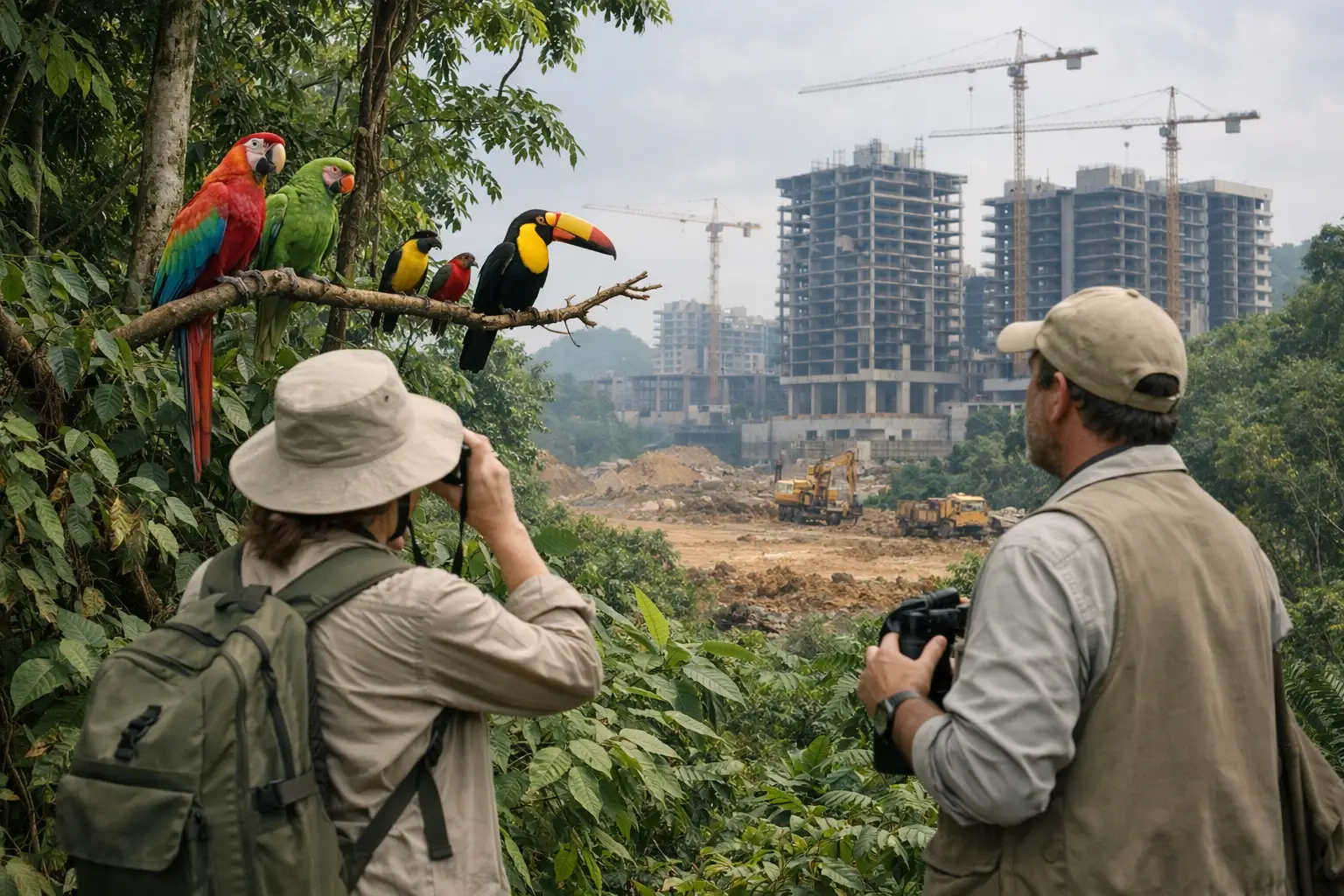
Tropical cities are expanding into some of the planet’s richest living systems, and birds are among the clearest indicators of what is at stake. The strongest losses occur in the tropics, where ecosystems contain an exceptional concentration of species and where even limited habitat change can affect a wide range of wildlife. The pattern reflects a broader biological reality: life is not distributed evenly across the globe.
The global rise in species richness from the poles toward the equator is known as the latitudinal diversity gradient. It is visible across many branches of the tree of life, not only among birds, and fossil evidence indicates that this unequal distribution of biodiversity has existed for millennia. Because tropical regions begin with such abundant and varied communities, urban expansion there can translate into larger absolute declines in bird life than in less diverse zones.
For conservation, the finding sharpens attention on the ecological consequences of urbanization. Cities concentrate housing, infrastructure and economic activity, but their growth can fragment habitats and reshape the conditions on which species depend. In the tropics, those changes intersect with ecosystems that are already notable for their complexity. The loss of birds is therefore not only a question of individual species disappearing from a local area; it also signals pressure on ecological networks that have developed over very long timescales.
The issue is especially relevant for planning authorities and conservation bodies seeking to reconcile development with habitat protection. International frameworks promoted by institutions such as the Convention on Biological Diversity emphasize the need to reduce biodiversity loss while allowing societies to grow. In tropical regions, that balance requires particular care because the biological value of land can be unusually high before construction begins.
Birds are often used to understand environmental change because they are visible, widely monitored and closely tied to habitat quality. The higher vulnerability of tropical bird communities during urban expansion underscores a central challenge for the coming decades: the places with the greatest natural richness may also face some of the most consequential losses when land is transformed. Protecting biodiversity in and around growing cities will depend on decisions made before expansion permanently reshapes tropical landscapes.