

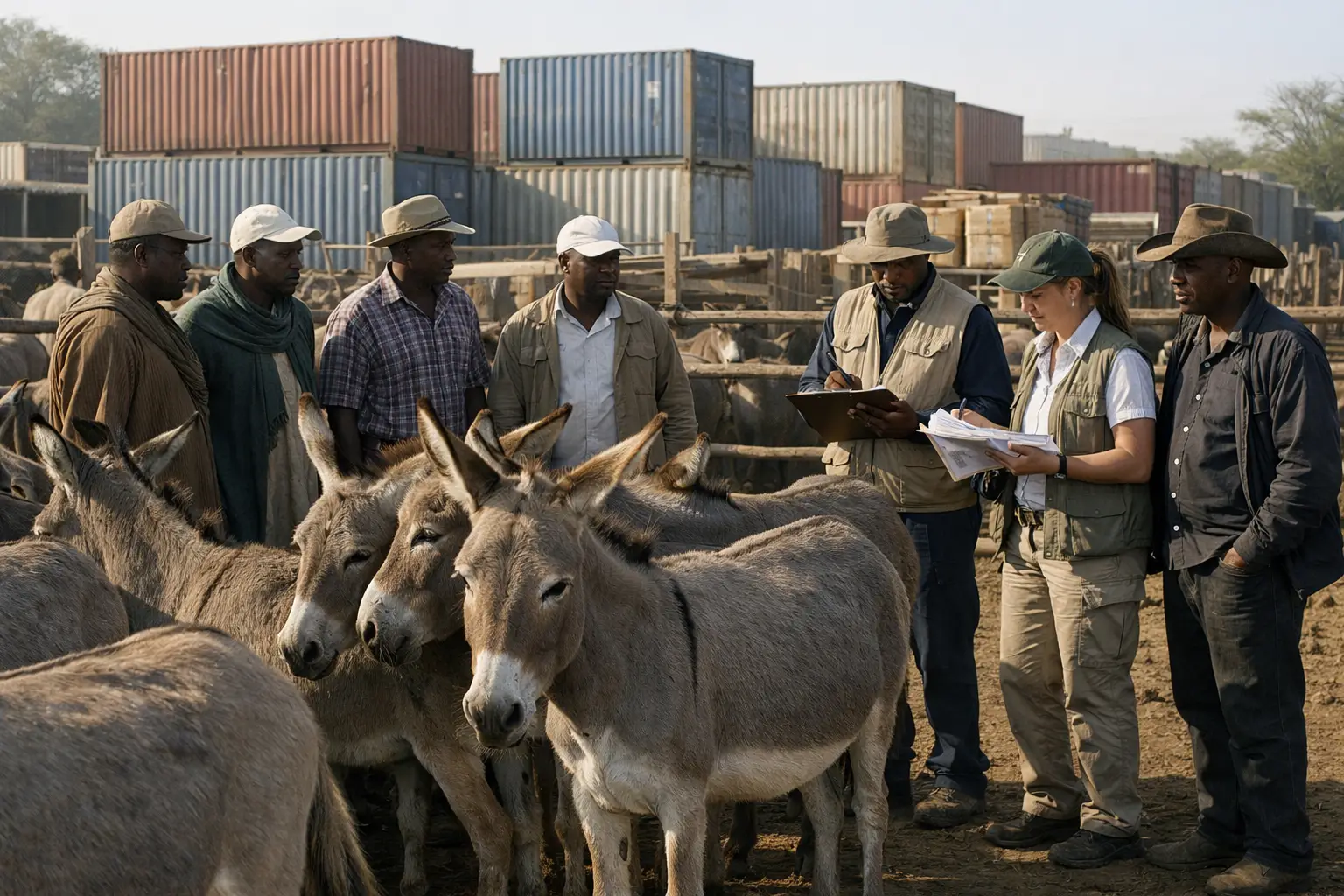
A fast-growing trade in donkey hides has turned a once-overlooked rural animal into a commodity linking Africa to consumer demand in China. In her new book, China, Africa and the Market for Donkeys, Lauren Johnston, a specialist in China-Africa trade, examines how annual imports of millions of hides from African markets became part of a wider commercial chain over the past 15 years.
The central driver is Chinese demand for donkey hide, used to produce ejiao, a gelatin-based product with a long history in traditional consumption. As demand expanded, procurement moved beyond domestic supply and drew in exporters, traders and slaughter networks across borders. The result is a market that sits at the intersection of trade, rural economies and animal welfare, with consequences that extend far beyond the final product sold to consumers.
Johnston’s research highlights why the issue cannot be measured only through import volumes or prices. In many African communities, donkeys are not marginal animals: they are working assets used for transport, agricultural tasks, moving goods to markets and collecting water. When the value of hides rises, the pressure on live animals can affect households that depend on them for daily labour. The trade has also intensified scrutiny of slaughter practices, cross-border movement and the capacity of authorities to regulate supply chains.
The book adds context to a debate that has grown alongside China’s broader commercial presence in Africa. It shows how a specific consumer product can reshape incentives in distant rural areas, especially where animals reproduce slowly and replacement costs are high for low-income families. For policymakers, the challenge is to distinguish legitimate commerce from practices that undermine livelihoods, while weighing export income against the social role of working animals.
By focusing on a narrow but revealing market, China, Africa and the Market for Donkeys offers a case study in how global demand can transform local resources. The donkey hide trade is not simply an animal product story; it is a question of rural resilience, regulatory capacity and the uneven effects of international commerce on communities with limited economic alternatives.


