

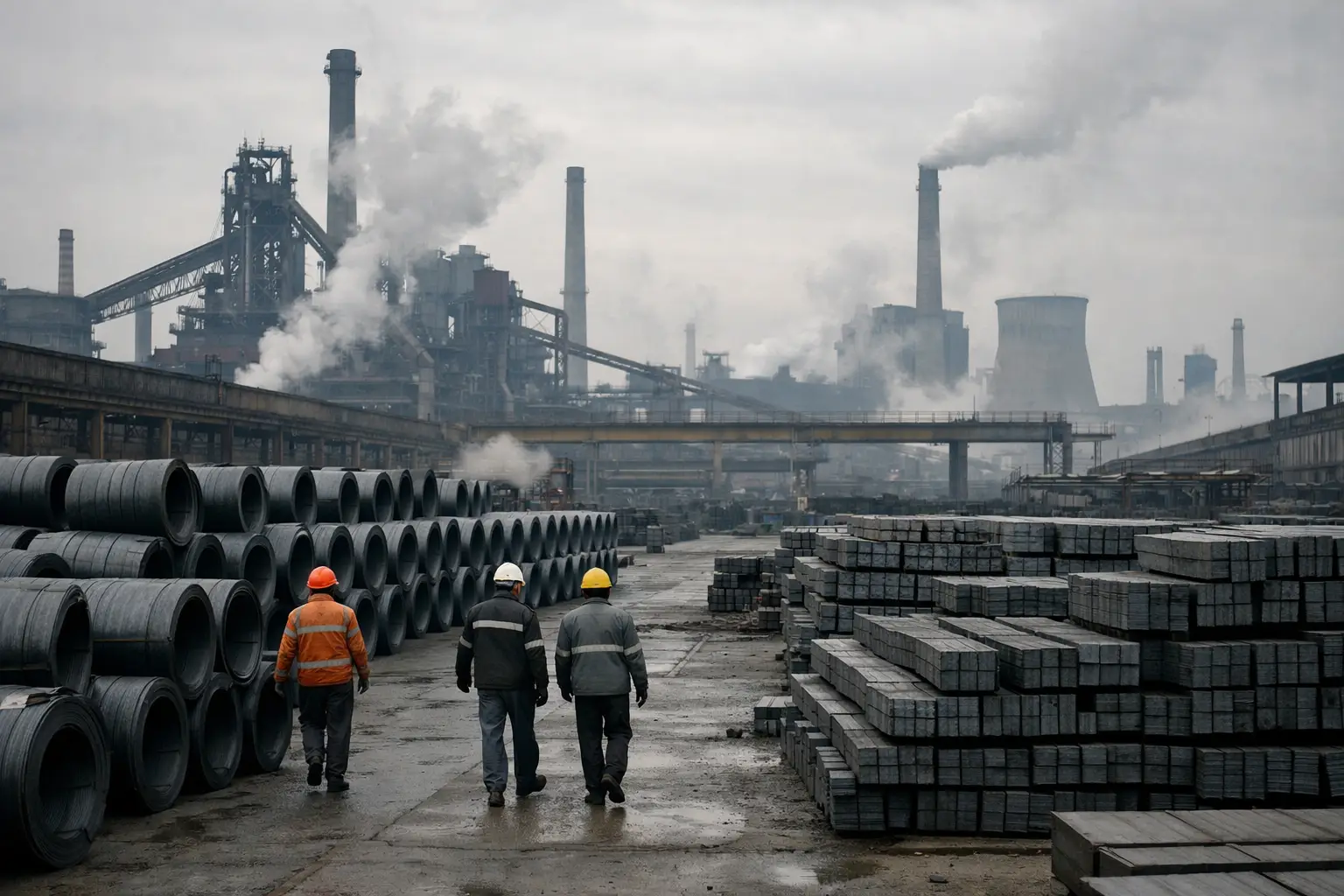
China’s steelmakers are confronting a worsening financial squeeze as falling demand and rising costs combine to erode margins across one of the country’s most important industrial sectors. The pressure has translated into mounting losses for producers already operating in a market where pricing power has weakened. For an industry closely tied to China’s broader investment cycle, the downturn highlights the strain created when consumption of steel slows while the expense of production continues to climb.
The challenge is rooted in a difficult imbalance. Steel mills depend on steady orders from areas such as construction, manufacturing, transport equipment and infrastructure, but softer demand reduces their ability to pass higher costs on to customers. When input prices remain elevated, producers face a narrower path to profitability. This dynamic is especially significant in China, where the steel sector is both a major employer and a critical supplier to industries that shape domestic growth.
The deterioration also points to a broader issue for heavy industry: scale alone does not shield producers from margin pressure. Large steelmakers can benefit from efficient operations, but they remain exposed to swings in demand and the cost of raw materials, energy and logistics. As losses accumulate, companies face pressure to manage output, protect cash flow and improve the mix of products they sell. Those decisions can affect suppliers, distributors and downstream manufacturers that rely on stable volumes and predictable prices.
The situation carries importance beyond company balance sheets. Steel is a barometer for industrial activity because it is used in buildings, machinery, vehicles, energy projects and public works. Persistent weakness in demand can signal caution in sectors that normally absorb large quantities of metal. At the same time, higher costs make it harder for producers to respond through price cuts without deepening losses. For policymakers and businesses, the sector’s difficulties underline the fragility of recovery in parts of the industrial economy.
Without a clear improvement in orders or relief on costs, the pressure on mills is likely to remain a central issue for China’s industrial landscape. The industry’s current position shows how quickly profitability can deteriorate when demand cools and expenses rise at the same time. For markets that track Chinese production closely, the losses are a reminder that steel remains highly sensitive to shifts in construction activity, capital spending and the wider cost environment.


