

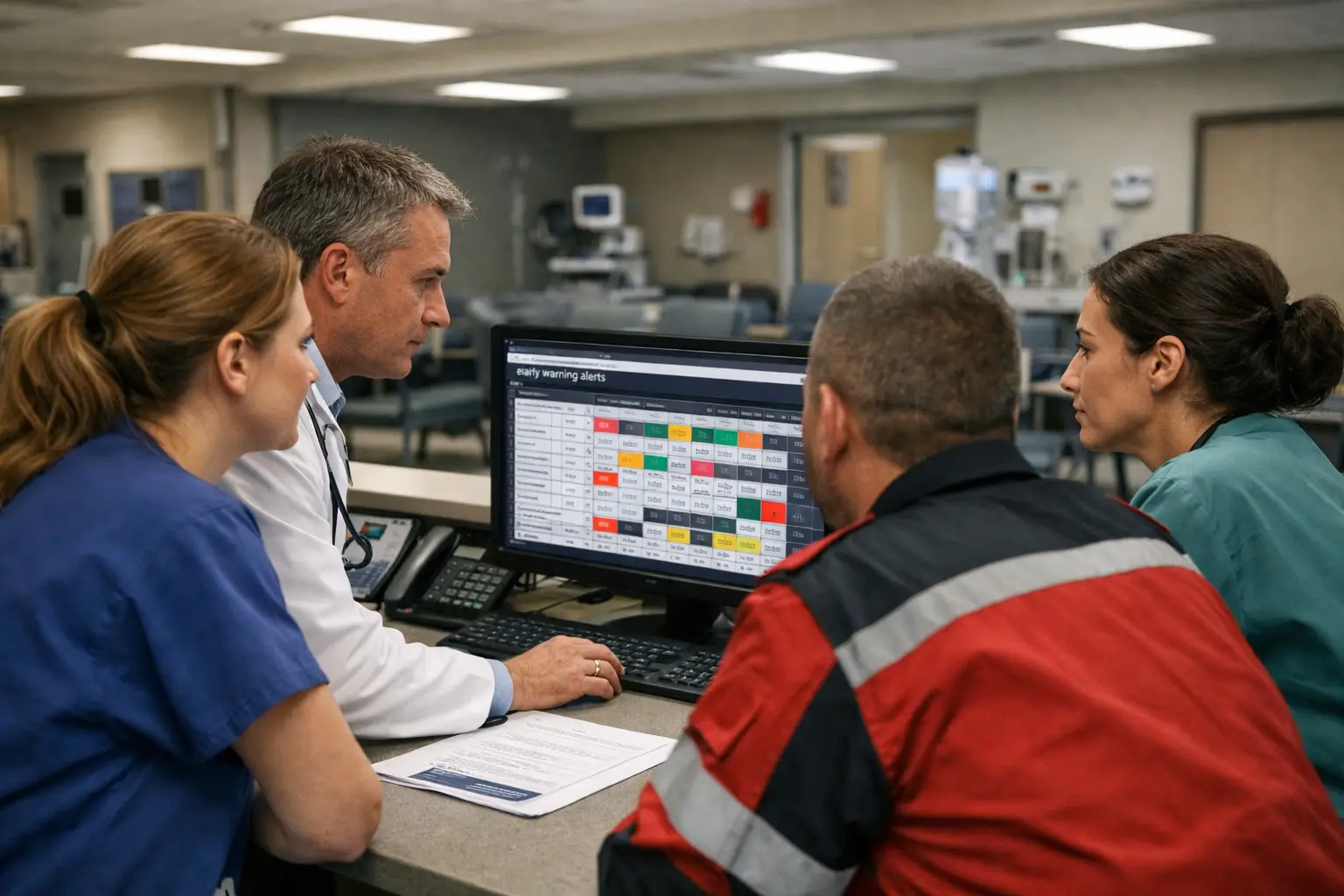
A new warning system is being introduced in England to help emergency departments identify children whose condition is worsening while they wait to be seen. The initiative is designed for Accident and Emergency units, where pressure on staff and rising demand can make it harder to spot early signs of rapid deterioration among young patients.
The measure focuses on children already waiting for emergency care, a group that requires close observation because symptoms can change quickly. In busy A&E settings, clinical teams must assess large numbers of patients while also responding to urgent cases. A structured warning system is intended to support that work by drawing attention to children who may need faster review or escalation.
The initiative sits within the wider challenge facing healthcare services in England: maintaining patient safety in crowded emergency departments. Waiting areas are not passive spaces for children with acute illness, because a child who initially appears stable may become more unwell before treatment begins. The system is therefore aimed at strengthening the link between triage, ongoing monitoring and clinical response.
NHS England and hospital trusts have faced sustained scrutiny over emergency care performance, particularly when departments are operating under heavy pressure. Any tool that helps staff recognise clinical decline earlier has practical importance for frontline teams, but it also depends on clear procedures and the ability to act once a warning is raised.
The introduction of the warning system does not replace clinical judgement. Its purpose is to give staff an additional prompt when a child’s condition may be changing more quickly than expected. For families waiting in A&E, the change is intended to reduce the risk that deterioration goes unnoticed during one of the most vulnerable points in the emergency care pathway.


