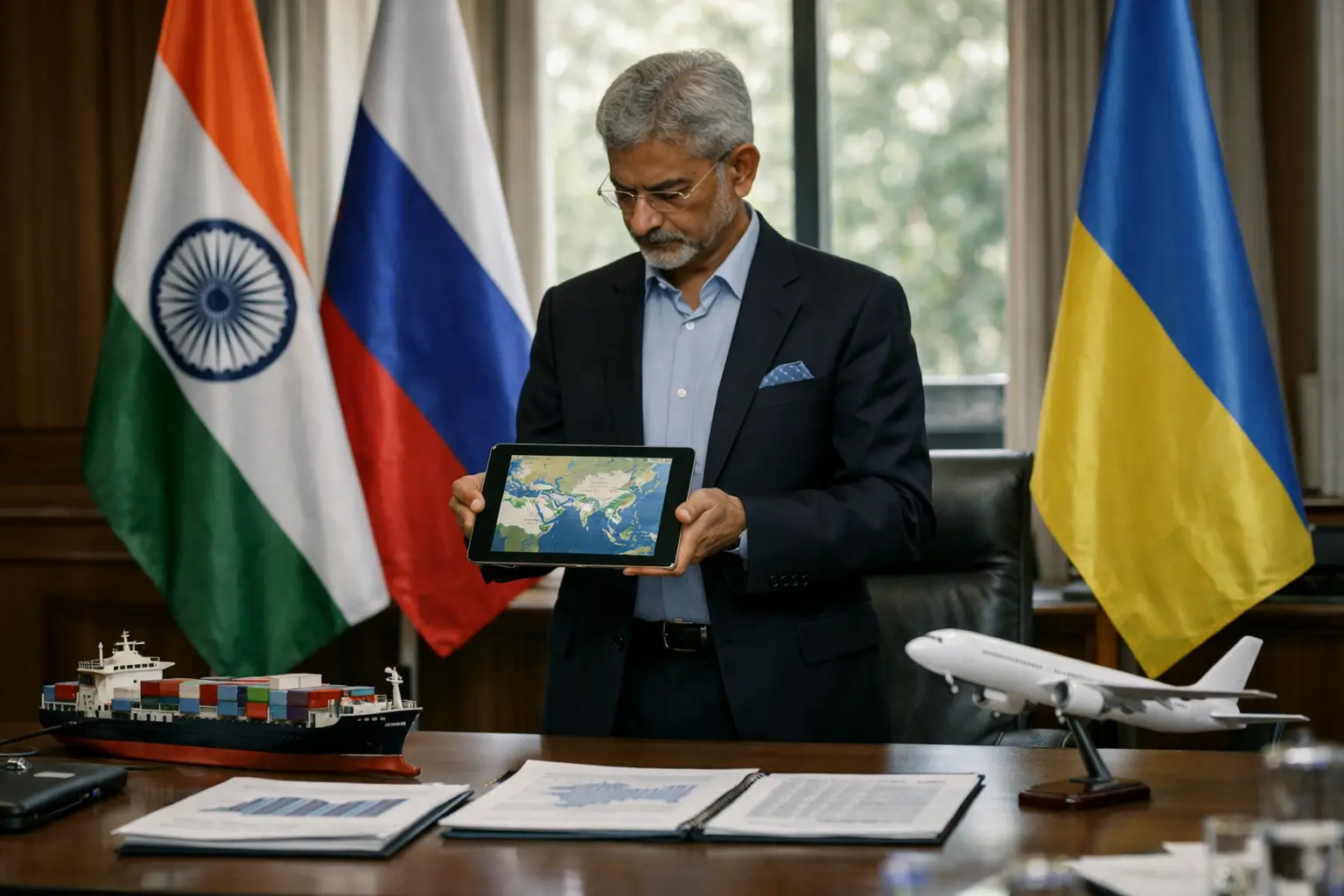
India’s evolving role in the standoff between India, Russia and Ukraine reflects a set of tangible interests rather than a straightforward bid for global prestige. New Delhi has kept a careful diplomatic distance from public confrontation, while maintaining lines of communication with Moscow and preserving commercial relationships with European and other partners. Official interactions, including statements and visits coordinated by the Ministry of External Affairs, have emphasized restraint and continuity of dialogue.
Economic factors are central to that posture. India sources energy and defence equipment from Russia, and uninterrupted supplies are important for its industrial and security planning. At the same time, India’s trade links with Europe and other global markets shape its calculus; disruptions to commodity flows, logistics and civilian trade would have direct repercussions for Indian businesses and consumers. These practical considerations help explain why New Delhi has focused on managing relationships rather than joining punitive measures that could complicate procurement and energy imports.
Diplomatically, India has preferred calibrated engagement: pursuing bilateral channels, offering to host delegations and keeping open lines for negotiation without adopting a confrontational public stance. That approach preserves New Delhi’s capacity to act as an interlocutor if both sides see benefit in third-party facilitation. It also maintains India’s diplomatic flexibility with Western capitals, where New Delhi continues to deepen economic and strategic partnerships while avoiding direct rupture with Moscow.
If India does step into a facilitation role, the immediate effects are likely to be procedural and economic rather than transformational. Such involvement could help sustain limited channels for dialogue, protect trade routes and reduce the spillover of economic disruption. For policymakers in New Delhi, the prime objective appears to be safeguarding national interests—energy security, defence supply lines and stable commerce—while retaining the diplomatic space to engage with multiple partners simultaneously.