

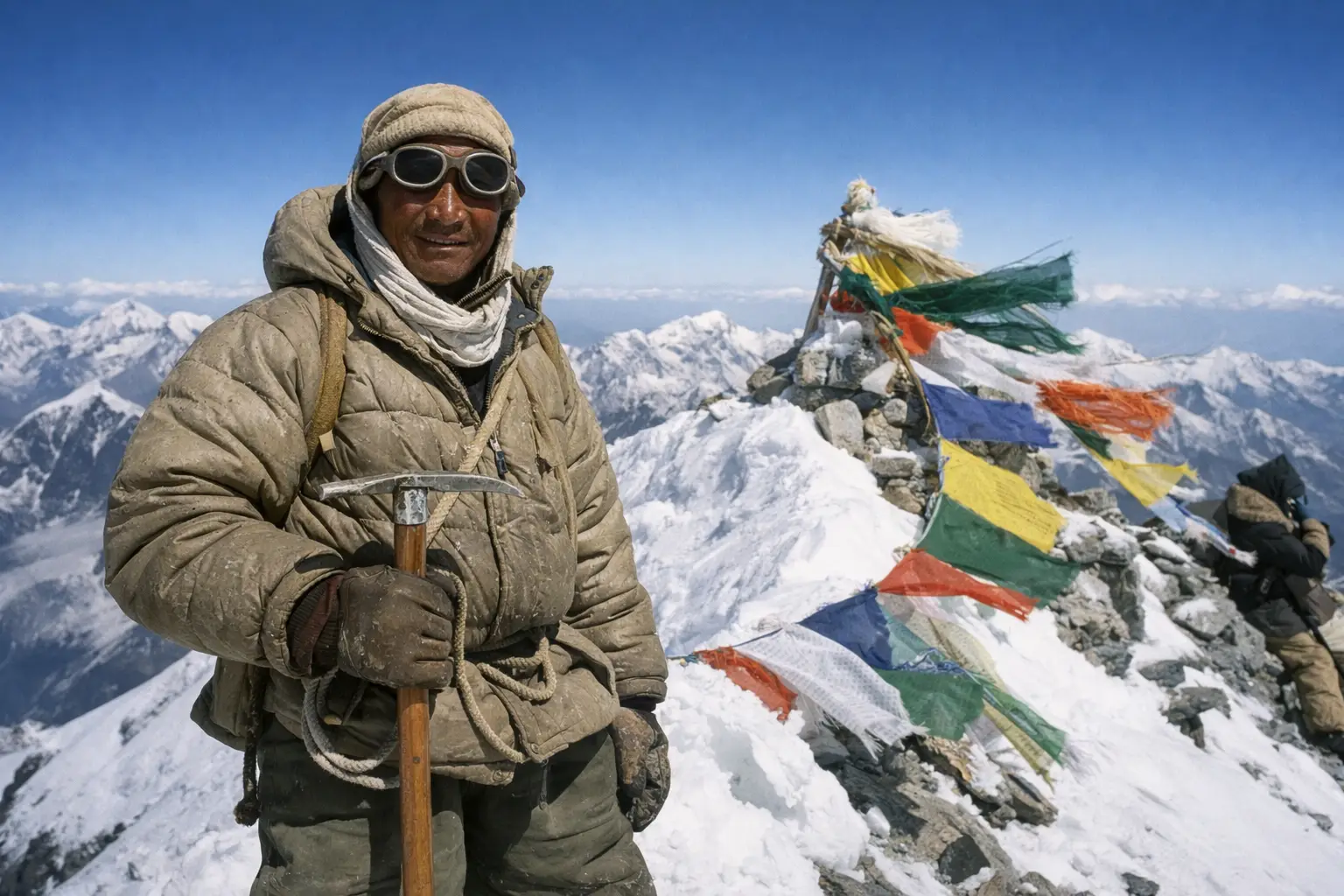
Seventy-three years ago, Tenzing Norgay stood on the summit of Mount Everest, the peak also known by its Tibetan name Chomolungma, which is commonly translated as “Goddess Mother of the World.” The ascent, first recorded in 1953, marked a pivotal moment in the history of high-altitude climbing and introduced global audiences to the expertise of Himalayan climbers.
The 1953 success, achieved alongside Edmund Hillary, transformed public perceptions of human capability at extreme altitude and catalysed wider interest in organized expeditions to the world’s highest mountains. That interest reshaped local economies and international mountaineering culture, with expeditions bringing both opportunity and complex logistical challenges to the region surrounding Everest.
The name Chomolungma carries cultural and spiritual weight for Tibetan and Sherpa communities, and references to it underscore the mountain’s significance beyond sport. Over decades the story of that first successful summit has been retold in books, films and exhibitions, contributing to public awareness of Himalayan heritage and the crucial role played by local climbers and support staff in enabling high-altitude exploration.
As the anniversary of the 1953 ascent is observed, the episode continues to prompt reflection on conservation, the responsibilities of commercial expeditions and the preservation of mountain cultures. The legacy of that climb remains visible in ongoing discussions about safety, environmental stewardship and recognition for the communities whose knowledge and labour have long been central to climbs of the world’s highest peaks. The 1953 achievement by Tenzing Norgay endures as a landmark in both mountaineering history and cultural memory.


