

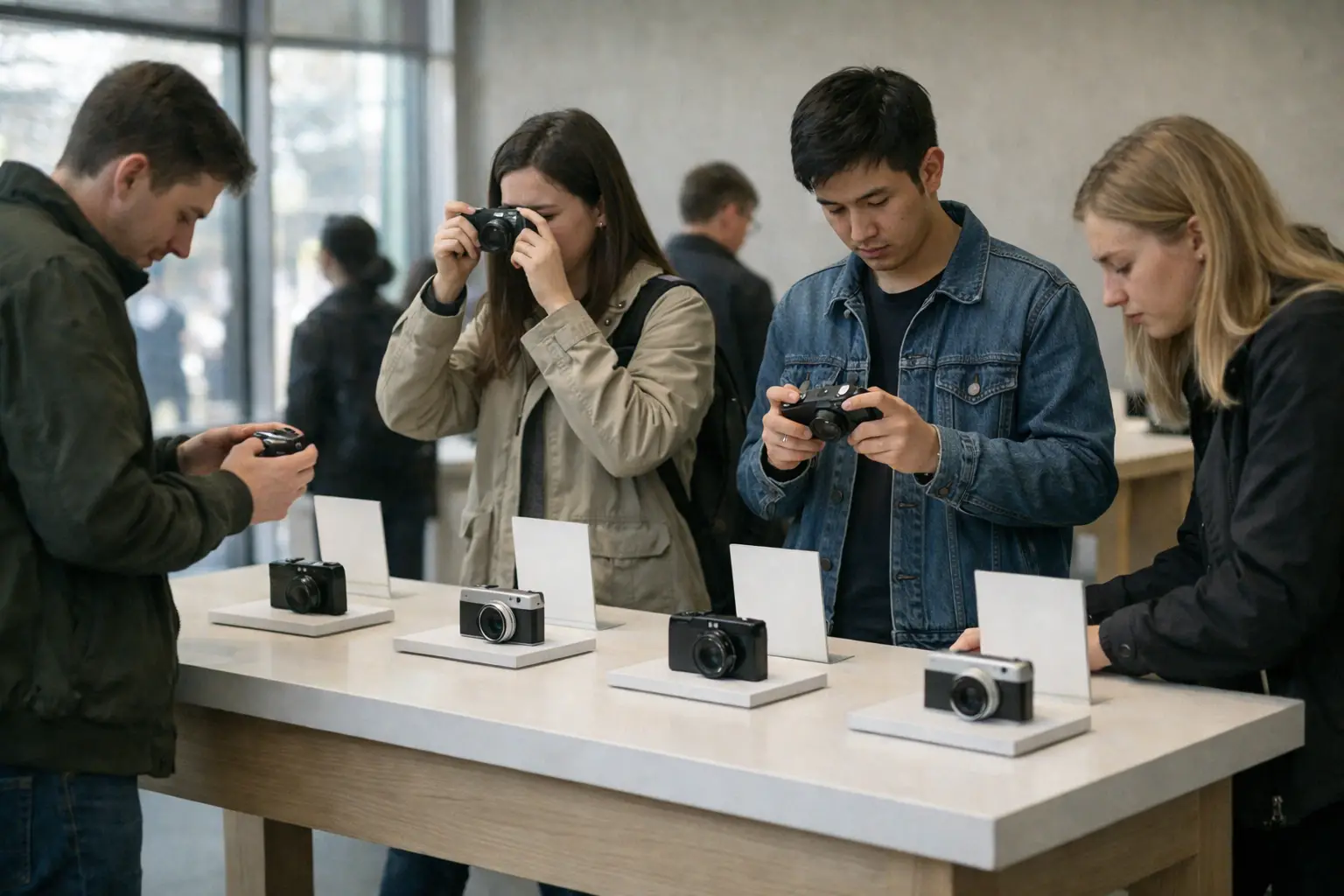
Japan’s Ricoh is trying to win over younger buyers with a noticeably simpler approach to cameras, positioning pared-back devices as an alternative to increasingly complex digital tools. The strategy places Ricoh in a segment where usability, design and immediacy can matter as much as technical specifications. For a company rooted in imaging and office technology, the move reflects a broader attempt to keep dedicated cameras relevant in a market reshaped by smartphones.
The appeal of stripped-down cameras lies in their promise of focus. Instead of competing directly with mobile devices on convenience or with high-end systems on professional performance, Ricoh is emphasizing a more direct photographic experience. That positioning may resonate with younger users who have grown up with phones as their main image-making tool but are increasingly drawn to objects that feel distinct, intentional and less dependent on software-driven automation.
The shift also underlines a changing dynamic in consumer electronics. Camera makers have spent years facing pressure from smartphone manufacturers, whose devices have absorbed much of the casual photography market. A simplified camera is not designed to replace a phone in everyday use. Its value instead depends on offering a different relationship with photography: fewer distractions, a more tactile process and a product identity that can stand apart from the phone ecosystem.
For Japan’s imaging industry, the approach is significant because it suggests that growth may not come only from higher resolution, more advanced autofocus or increasingly sophisticated video features. Ricoh’s youth-focused direction points to a more selective market, where design choices and the experience of using the device can help define demand. That does not remove the commercial challenge. Dedicated cameras must justify their place alongside powerful smartphones, especially for buyers who are cautious about adding another device to daily life.
Ricoh’s bet is therefore less about nostalgia than differentiation. By reducing complexity, the company is seeking to make the camera feel accessible again to consumers who may be curious about photography but not ready to enter the world of professional equipment. If the strategy succeeds, it could reinforce a niche in which simplicity becomes a selling point rather than a limitation, giving traditional camera brands a clearer role in a mobile-first visual culture.


