

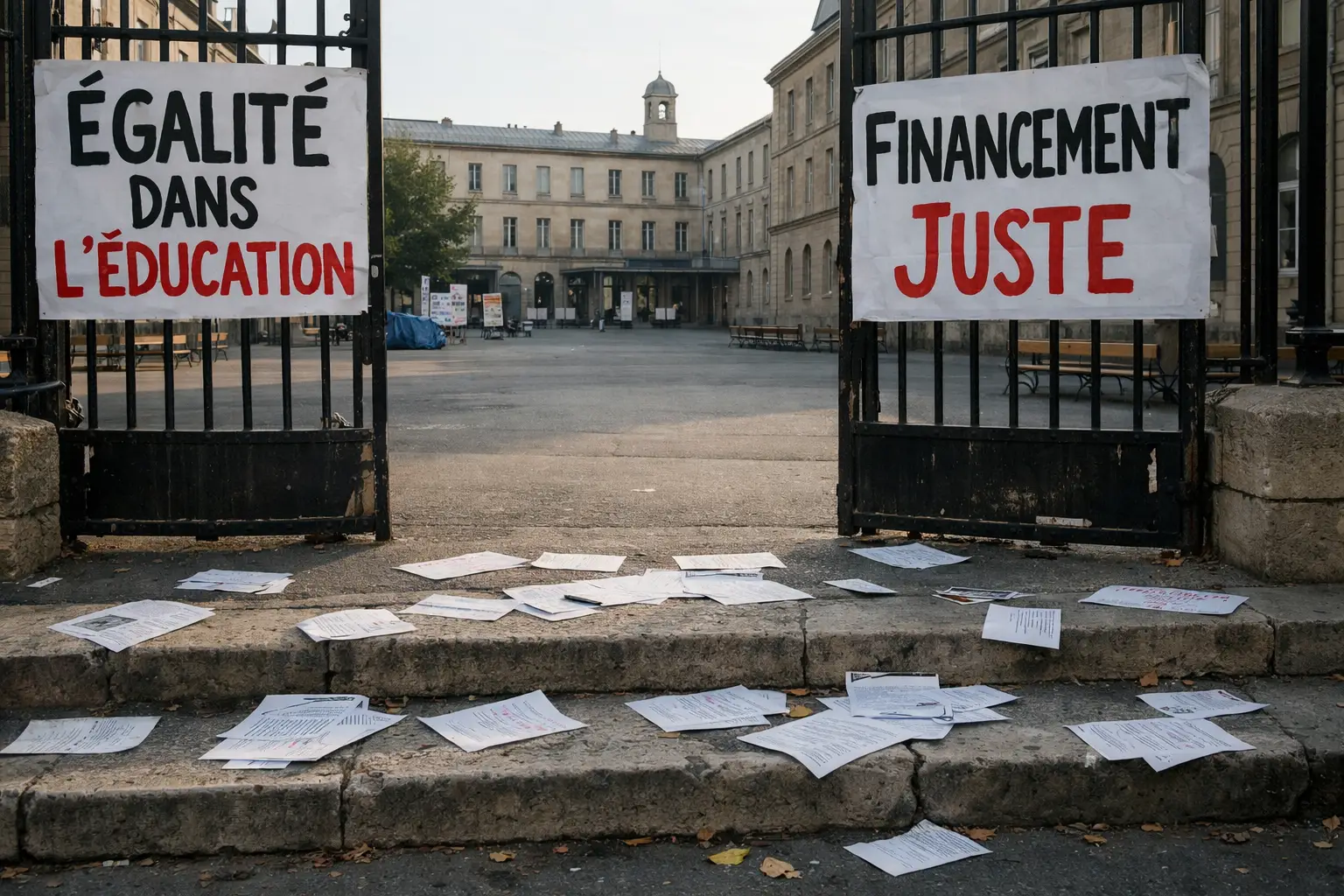
Young protesters in France have spent weeks demonstrating against what they describe as a failing education system, bringing sustained public attention to how schools are funded and managed. The demonstrations, led by schoolchildren alongside parents and local associations in many towns, have kept education policy at the centre of national discussion and highlighted widespread unease about how public resources translate into classroom conditions and opportunities.
At the heart of the debate is a paradox: France is widely regarded as a country that invests heavily in education compared with many peers, yet critics argue this overall effort does not ensure fair access or uniform quality across regions and schools. Commentary from observers and advocacy groups has concentrated on the distributional side of public spending, insisting that high aggregate investment cannot substitute for equitable allocation mechanisms.
The wave of demonstrations has sharpened scrutiny of institutional choices, drawing attention to the role of the Ministry of National Education as well as regional and municipal authorities responsible for school budgets and services. The protests have re-opened conversations among educators, parents and policymakers about priorities, transparency and the criteria used to direct funds toward different territories and student groups.
Beyond immediate mobilisations, the situation raises broader questions about how to reconcile strong national spending with persistent perceptions of uneven outcomes in the sector. The unfolding debate is likely to focus on the design of funding formulas, the transparency of spending decisions and measures to ensure resources reach the schools and pupils most in need. For now, the demonstrations have made the allocation of education resources an urgent public policy issue, with potential implications for future budgeting and governance choices in the sector education.


