

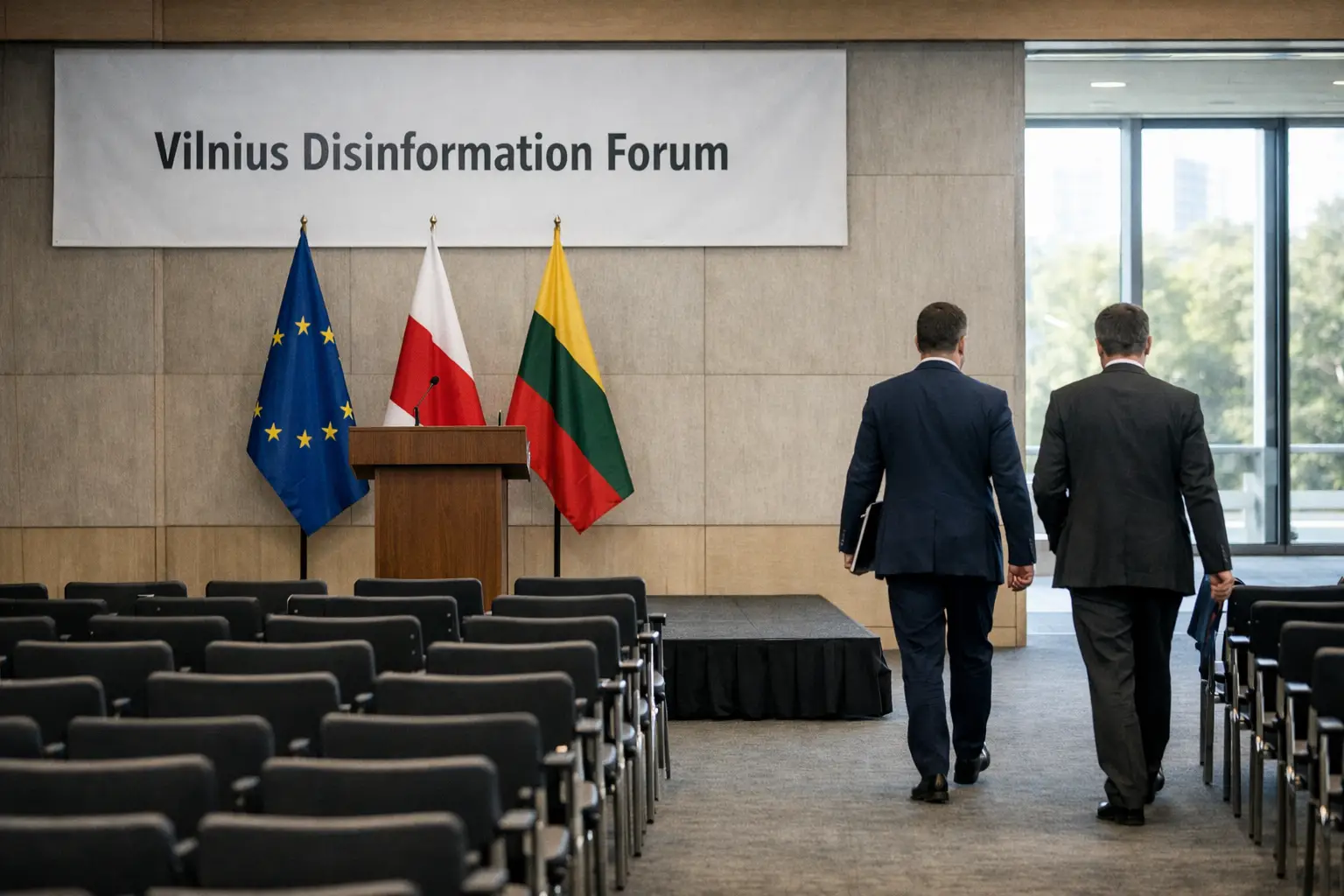
Key partners withdrew sponsorship this week from a disinformation conference scheduled in Vilnius after raising objections to the event’s programme. The withdrawals came from the diplomatic arm of the European Union, Canada and the host nation Lithuania, removing high-profile diplomatic backing from the gathering aimed at countering online manipulation.
Organisers had assembled panels intended to address the spread of false information and the role of state and non-state actors. After the announcements, the European Union said it was “uncomfortable with the framing” of some sessions, a terse critique that signalled substantive misalignment with the event’s approach. The departures follow media accounts of pressure from the United States, which underscored the diplomatic sensitivities surrounding the programme.
The loss of these sponsors strips the forum of key diplomatic imprimaturs and practical support, complicating organisers’ ability to present the meeting as a broadly supported multilateral response to disinformation. For a conference hosted in a capital that has positioned itself as active on information-security issues, the episode raises questions about how to balance open debate with the expectations of institutional backers and allied governments.
Beyond the immediate impact on the Vilnius event, the episode points to wider challenges for international cooperation on contentious information-policy topics: crafting agendas that satisfy diverse partners, maintaining perceived neutrality of fora, and managing external political pressures. The sequence of withdrawals illustrates how quickly diplomatic support can shift when stakeholders judge an event’s framing at odds with their policy priorities.


