

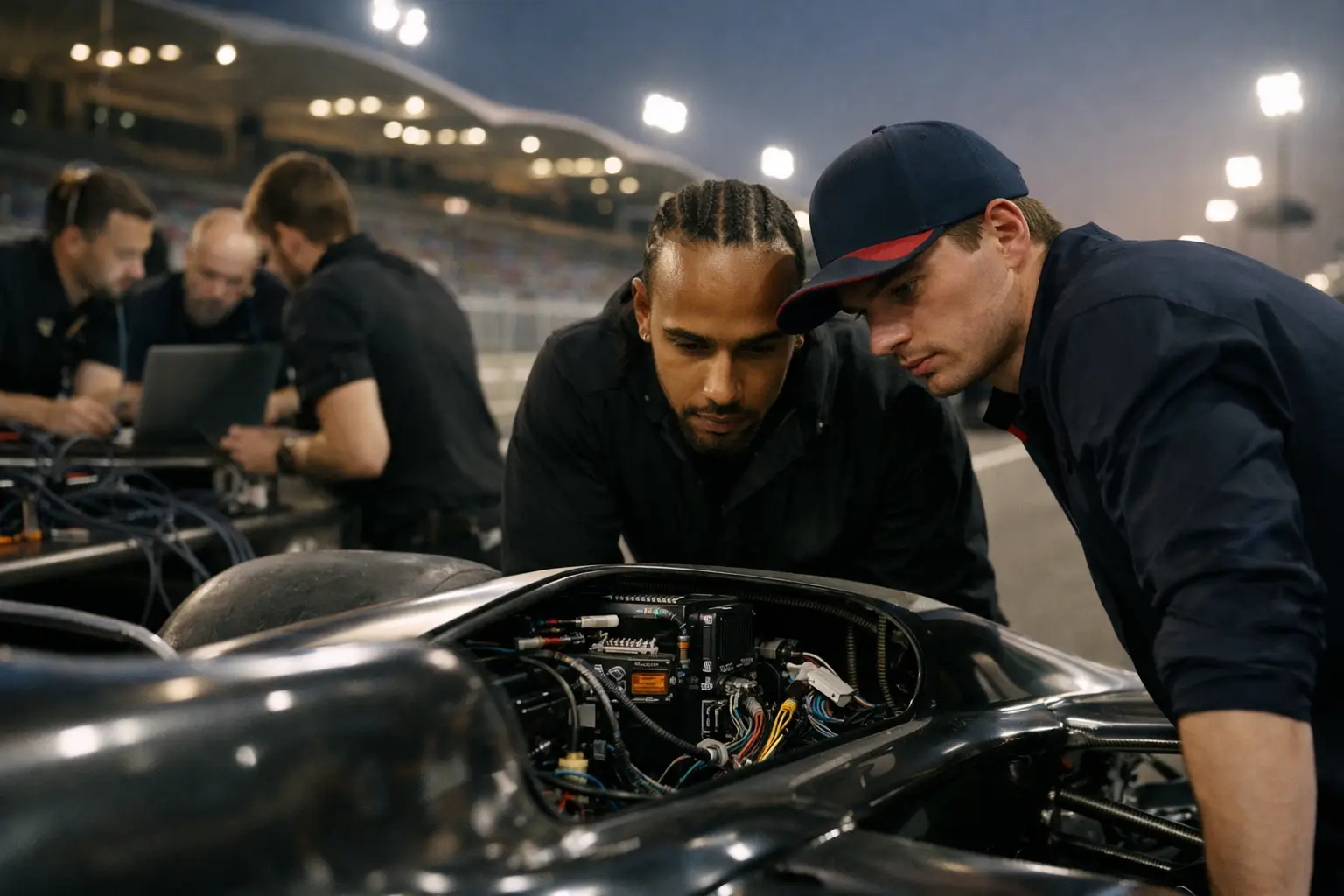
Lewis Hamilton bemused after a software fault affected multiple cars in the run-up to the Bahrain Grand Prix staged in Malaysia. The issue, observed before the start of the weekend’s sporting programme, prompted visible frustration from drivers on the grid, with Max Verstappen and Lewis Hamilton likening the on‑track consequences to a “Lego race”.
The problem was described by participants as a software bug that had an effect on more than one car. Teams reported anomalies tied to onboard systems during pre‑race checks, producing unusual behaviour that drew attention in the paddock. Organisers and technical personnel were conscious of the situation while the session developed, and the occurrence quickly became a talking point among competitors and engineers alike.
Beyond its immediate impact on the event, the episode underlines the central role of software and electronic control systems in contemporary motorsport. Modern racing cars depend heavily on complex code and networked components to manage everything from power delivery to driver aids. When those systems behave unexpectedly, the consequences can range from compromised performance to operational uncertainty for teams preparing cars for competitive running.
The comments from leading figures on the grid highlighted a wider conversation about reliability and resilience in the technical architecture that underpins high‑level racing. Observers noted that such incidents, even when resolved, often prompt renewed scrutiny of development processes and the interaction between hardware and software. For followers of Formula 1, the event served as a reminder of how technical subtleties can influence both the sporting spectacle and the work carried out behind the scenes by engineers and technicians.


