

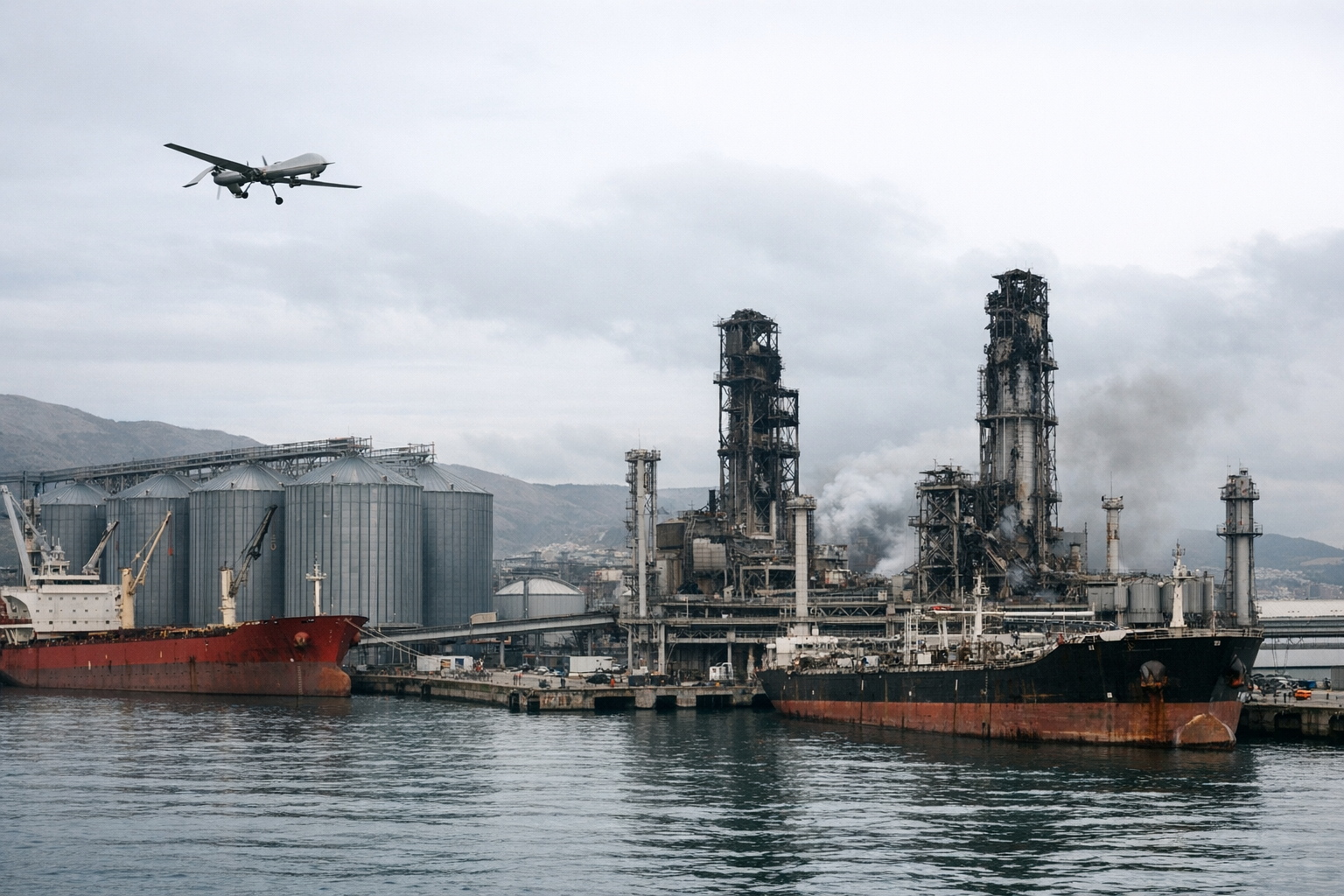
Drone strikes have targeted maritime infrastructure along the Black Sea, interrupting loading operations and vessel movements at major Russian hubs. The strikes have particularly affected shipments from Novorossiysk, a principal outlet for both grain and crude oil, and forced operators to suspend or slow activity at nearby terminals. The escalation has produced immediate operational disruption: berthing windows have narrowed, some cargoes have been delayed, and routine scheduling across the region has been unsettled.
Ports and exporters report slower throughput as safety checks and damage assessments take place. Loading equipment, access routes and storage yards in affected areas face temporary restrictions while authorities inspect facilities. These interruptions have a cascading effect on chartering and port rotation, with vessels often obliged to wait offshore or seek alternative berths. The combined impact on agricultural shipments and energy cargoes increases pressure on already tight logistics chains for staple commodities.
The disruption comes amid broader trading tensions connected to the conflict between Ukraine and Russia, where maritime arteries have become operational risk zones. For markets dependent on Black Sea exports, delays translate into scheduling uncertainty and potential cost increases for shippers and buyers. Some consignments may be rerouted through other corridors or ports, but such shifts typically require time, additional paperwork and higher freight or transit expenses. National and regional food-security considerations are heightened when staple shipments experience repeated interruptions.
Analysts and logistics providers say the current pattern of strikes is likely to keep export flows volatile while security conditions remain unsettled. Ports serving as major collection points for grain exports are particularly sensitive to any operational pause, and oil cargo scheduling is similarly affected. Monitoring of berth availability, insurance conditions and shipping notices will remain central for market participants assessing near-term supply timelines. Until maritime safety stabilizes, exporters, carriers and importers should expect continued uncertainty in both grain and energy shipments from the Black Sea corridor.


