

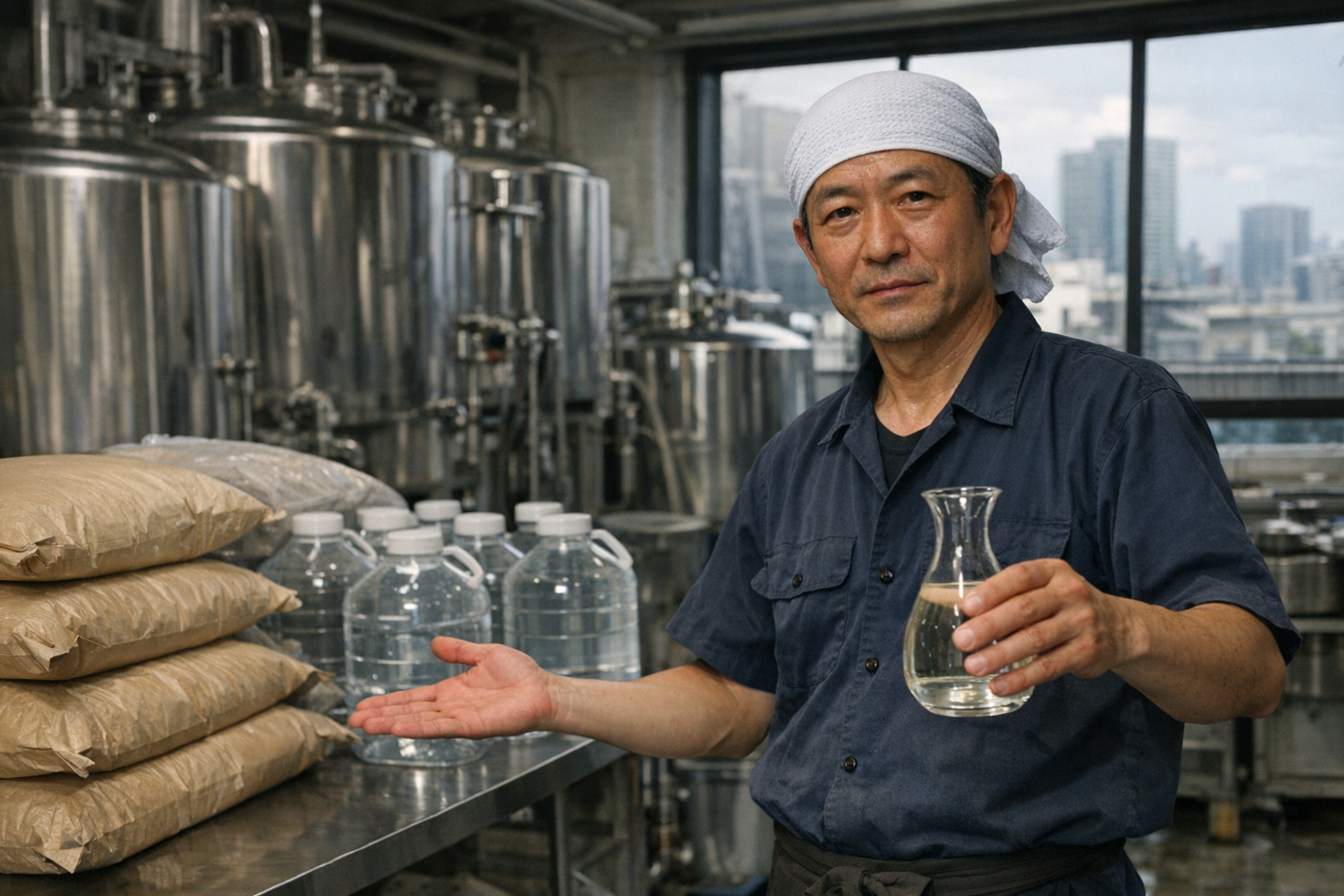
Tokyo brewer challenges the widely held conviction that the source of water is the single defining factor in sake quality. The move has reopened discussions within Japan’s brewing community about the relative importance of raw materials, microbiology and production techniques, shifting attention away from the historic marketing emphasis on celebrated springs.
For generations, many sake labels have highlighted local springs and mountain streams as central to their identity. This association grew alongside regional brands that tied terroir to taste, helping producers market products to both domestic and international customers. The current questioning does not deny water’s role, but it frames water as one of several interacting variables rather than an overriding determinant.
The Tokyo brewer at the center of the debate has publicly urged a broader appraisal of factors such as rice variety, koji preparation, yeast selection and fermentation management. By emphasizing process control and ingredient handling, the brewer argues that consistent results can be achieved without exclusive reliance on famed water sources. The intervention has resonated particularly in urban breweries and microbreweries that lack access to traditional spring water and must adapt to different supply conditions.
Reactions across the sector have varied. Some artisanal producers see the conversation as an opportunity to innovate and to expand sake production in cities and regions without renowned springs. Others caution against downplaying a marketing asset that helped build sake’s reputation abroad. Retailers and sommeliers are observing how consumers respond, with attention on whether provenance claims remain a decisive purchasing factor.
Beyond branding, the debate touches on sustainability and supply-chain resilience. If more brewers focus on technique and ingredient quality, production could become less dependent on singular water sources, affecting how breweries invest in treatment systems, sourcing and quality control. The discussion is prompting industry stakeholders to reassess quality metrics and to consider how technical knowledge and transparency might reshape consumer expectations for sake going forward.


