

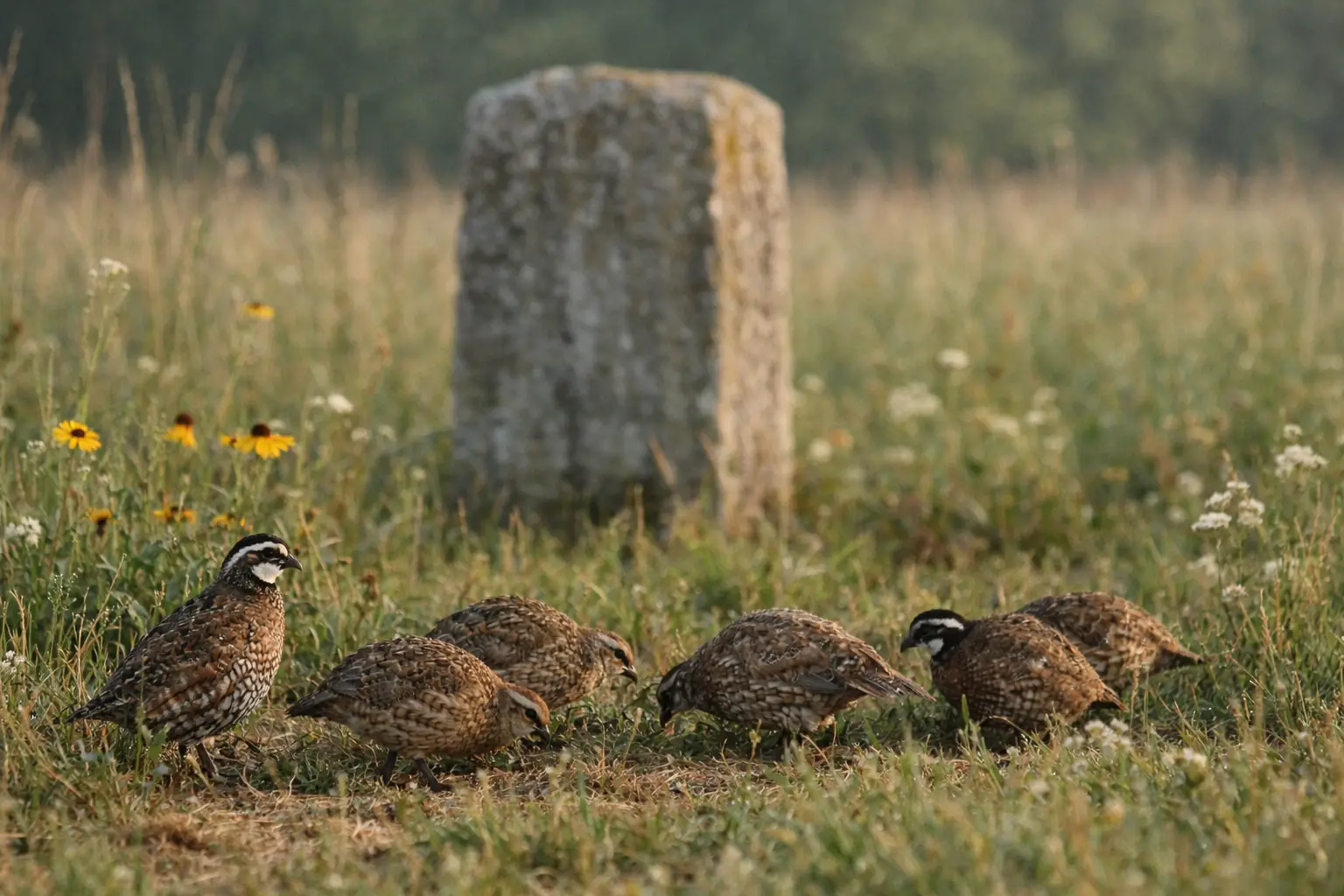
Multiple coveys recently were observed at the Ames AgResearch and Education Center, part of the University of Tennessee, marking a notable development in an ongoing habitat restoration initiative at a site long known for bird dog field trials. Field personnel reported several small groups of wild bobwhite quail moving across open areas and edge habitats within the research property.
The sightings carry weight because the northern bobwhite has experienced decades of population decline across much of its historic range. Researchers and land managers regard the presence of multiple coveys as an indicator that the local environment is providing the basic resources the birds require for feeding and nesting. Observers noted the birds in areas where vegetation structure and ground cover were being managed with wildlife objectives in mind.
Efforts underway at the Ames facility aim to rehabilitate habitat conditions that historically supported bobwhite and other grassland species. Those actions are being implemented on the center’s research landscape while maintaining its legacy as a bird dog field trial destination. Local conservationists say progress at such demonstration sites is important because they can offer practical lessons for private landowners and public managers working to reverse declines in grassland and early-successional birds.
The recent return of bobwhite coveys will inform continued management decisions at the center and provide a baseline for monitoring population trends over time. Conservation practitioners are expected to track whether the sightings represent a sustained presence or a transient occurrence, and to share outcomes with peers engaged in similar restoration work. The development underscores the potential role of targeted habitat work in supporting species recovery and sustaining regional cultural and recreational traditions tied to upland game birds.


