

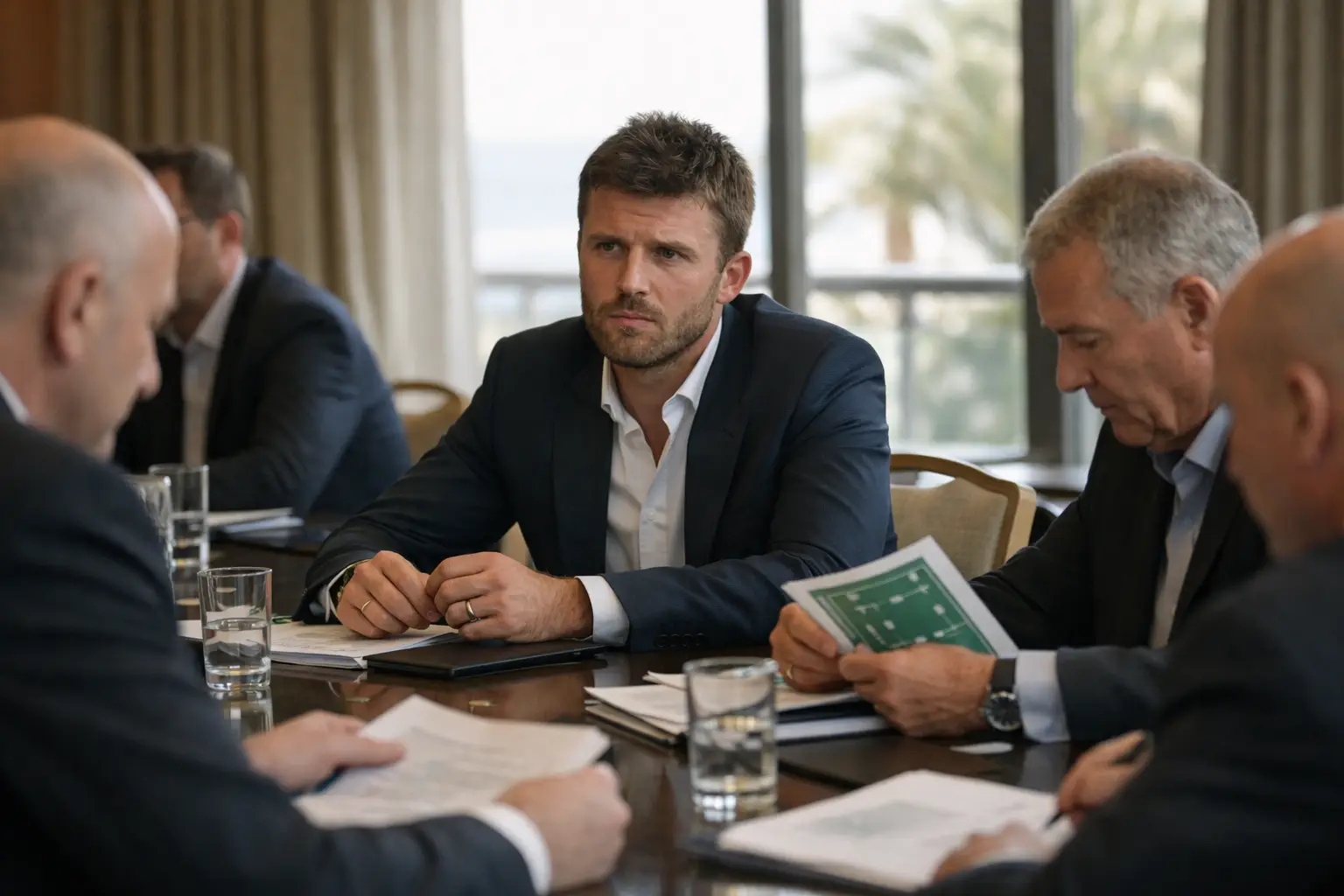
Manchester United’s leadership will convene in Monaco on Wednesday for a meeting centred on one question: whether Michael Carrick remains head coach. The gathering brings the club’s decision-makers together away from Old Trafford at a point when the coaching position requires a clear resolution. No outcome has been announced, and the decision rests with the club’s hierarchy.
The issue carries significance beyond Carrick’s own status. At a club such as Manchester United, confirmation or change in the technical leadership shapes the work that follows across the football department. A head coach is the visible point of sporting authority, but the role also connects with staff planning, player preparation and the club’s wider competitive programme.
Michael Carrick is closely associated with United through his playing career and later coaching work, giving the discussion an additional layer of familiarity for supporters. The question before the club’s power brokers is not symbolic, however. It concerns the structure of the team’s immediate direction and the figure expected to lead daily work with the squad.
For any leading football institution, uncertainty around the head-coach position affects the rhythm of internal planning. Decisions on training priorities, communication with players and coordination between technical staff all depend on knowing who holds final responsibility on the pitch. In the environment of the Premier League, where competitive margins are narrow, clarity at the top of the coaching structure is a practical necessity rather than a formality.
The Monaco meeting therefore stands as a decisive administrative step for United. Until the club communicates its conclusion, Carrick’s position remains the central item on the agenda. The outcome will determine whether the current coaching arrangement continues or whether Manchester United moves into another phase of leadership planning.


