

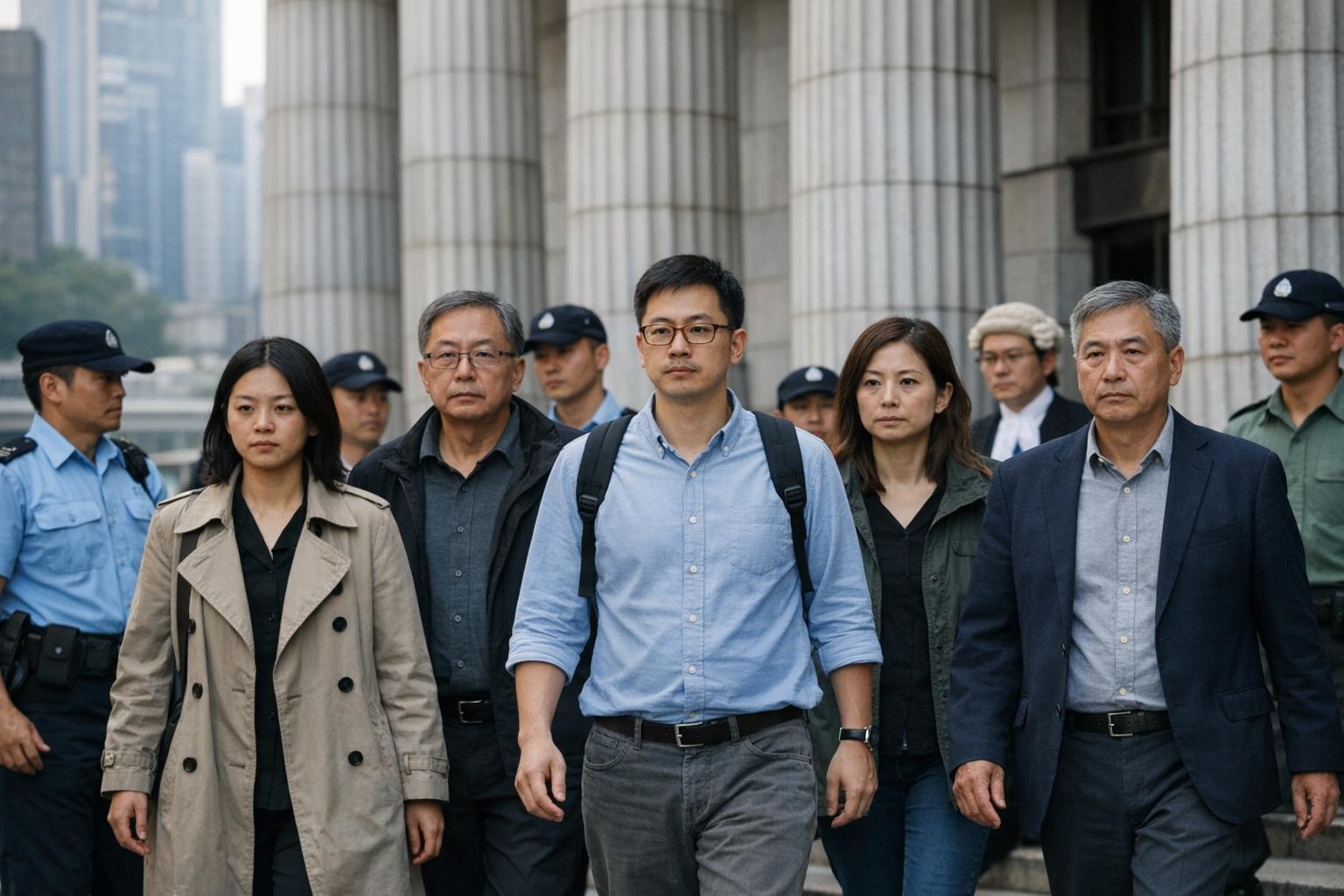
Sentences were handed down by a Hong Kong court this week, with organisers of the annual Tiananmen vigil receiving prison terms reaching up to seven years and three months. The penalties conclude long-running prosecutions tied to commemorations of the 1989 crackdown in Beijing and mark one of the most severe judicial outcomes linked to the gatherings.
For decades the candlelit vigil in Victoria Park was a fixture of civic life in Hong Kong, drawing thousands to remember the victims of the 4 June 1989 events on Tiananmen Square. The city’s public commemorations were disrupted after authorities imposed bans on large assemblies and new security measures in 2020, and organisers subsequently faced investigations, prosecutions and repeated court appearances over their roles in arranging the event.
The recent sentences follow convictions for conduct linked to organising a banned public assembly. Court rulings in these cases have underscored the expanded legal risks for civil society actors involved in public memorials. Legal proceedings against the organisers drew sustained attention because they tested the limits of permitted public expression and assembly in the territory.
Observers note that the prison terms are likely to affect how commemorative events are organised going forward and may further constrain public forms of remembrance in the city. The rulings come amid broader shifts in Hong Kong’s legal and political environment that have already reshaped civic space and the operation of non-governmental organisations. For communities that have long marked 4 June, the sentences represent a significant moment for the preservation of public memory and for future commemorative practices in Hong Kong.


