

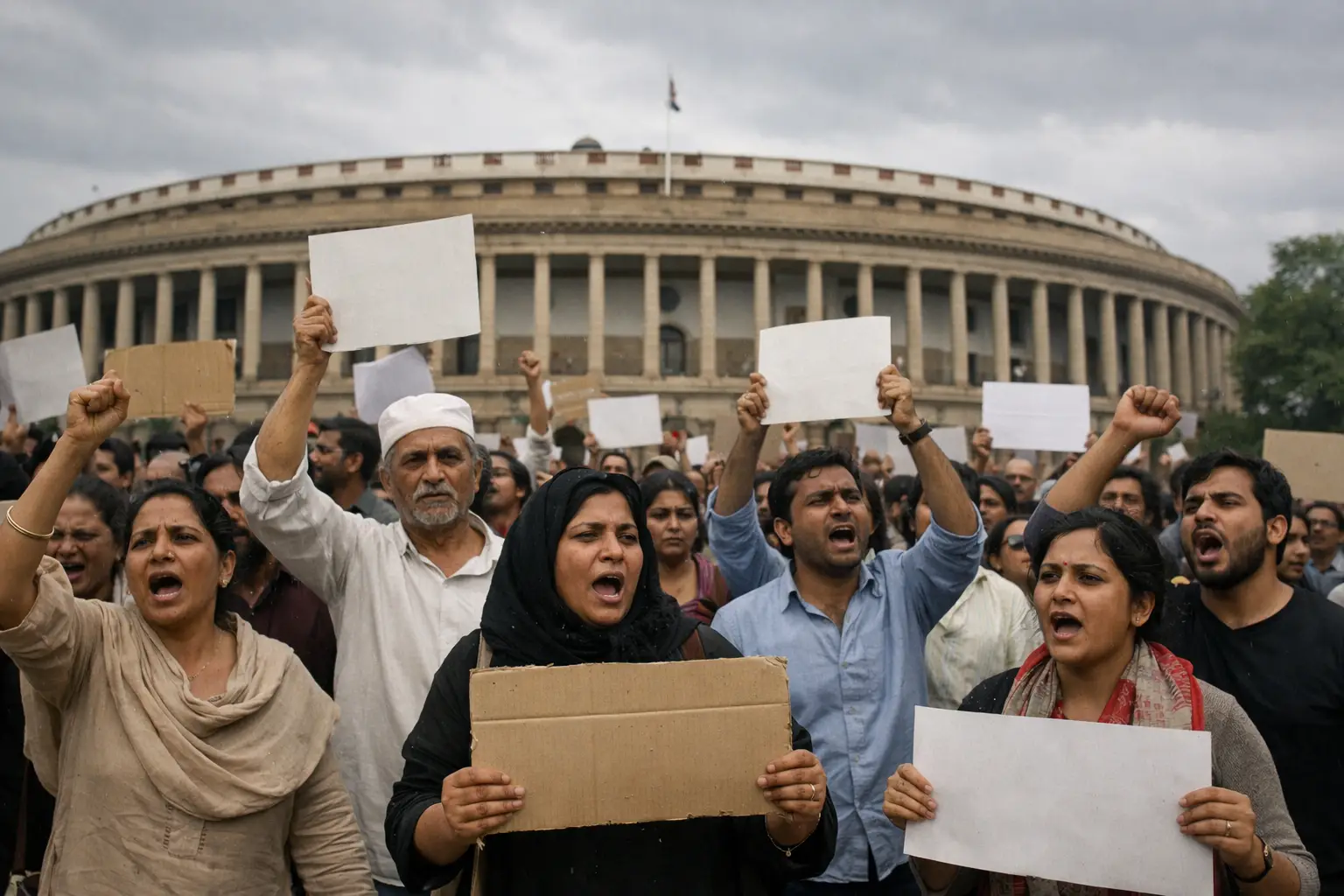
Opposition protests escalate across India, with multiple parties and regional formations stepping up street demonstrations and public meetings aimed at pressing the central administration for responses on governance and economic concerns. Key opposition groups, notably Congress and several state-level alliances, have called for heightened scrutiny of policy priorities and for parliamentary debate on pressing social and economic issues. The Government of India faces increased public attention as demonstrations spread from state capitals to urban centres.
Organisers have focused on a range of themes that resonate broadly with voters: cost of living pressures, employment opportunities and questions about institutional checks and balances. Protests have unfolded in public spaces and near administrative buildings, and leaders have demanded clear timelines for relief measures and legislative action. The mobilisation reflects coordination between national and regional actors seeking to convert public discontent into political leverage ahead of key legislative sittings.
The heightened protest activity places strategic choices before Narendra Modi and the ruling Bharatiya Janata Party. Opposition pressure can influence the parliamentary agenda by forcing debates, prompting the government to bring forward measures, or shaping media and public attention. For the governing party, managing dissent involves responding to immediate grievances while sustaining broader policy commitments; for opposition formations, sustained demonstrations are a way to maintain momentum and to showcase alternative priorities to voters.
Official reactions have emphasized governance achievements and invited institutional dialogue, while opposition leaders signal intent to continue public mobilisation until they secure clearer government responses. Observers note that ongoing demonstrations will be watched closely by businesses, civil society and international audiences for indications of political stability and policy direction. As protests evolve, their immediate effect will be measured in whether they bring forward concrete legislative action or sustained political negotiations between the government and its challengers.


