

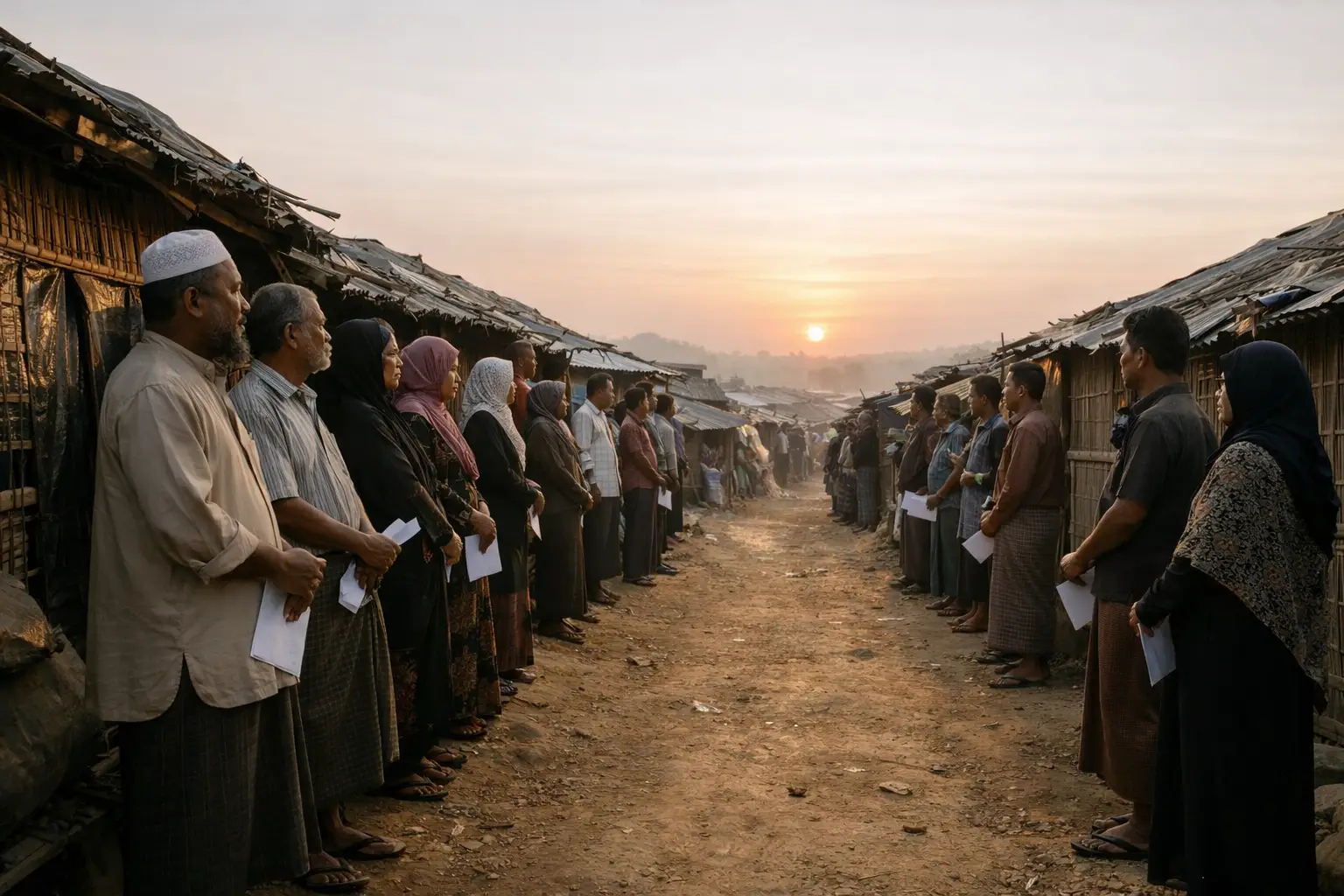
For Rohingya refugees, the ruling by the International Court of Justice has become more than a legal milestone. After nearly a decade in overcrowded camps, many members of the Rohingya community see the decision as a rare moment of formal recognition in a crisis that has left them displaced, stateless and dependent on humanitarian assistance.
The legal process does not immediately change daily life in the camps, where families have spent years waiting for a durable solution. Its significance lies in the international weight attached to a court ruling in proceedings linked to the treatment of the Rohingya in Myanmar. For a community whose demands have often centered on recognition, accountability and safety, the judgment strengthens the belief that their suffering has not been ignored by global institutions.
Hope, however, remains tied to action beyond the courtroom. Refugees are looking for steps that could make return possible in practice, not only in principle. Any meaningful path home would require conditions that address personal security, basic rights and protection from renewed persecution. Without such guarantees, a return would remain an aspiration rather than a realistic solution for people who have already endured prolonged displacement.
The ruling also places renewed attention on the responsibilities of states and international bodies involved in responding to the crisis. The situation of the Rohingya is not only a humanitarian emergency but also a test of whether international justice can influence outcomes for displaced populations. For agencies working with refugees, the decision may reinforce calls for sustained support while longer-term political and legal questions remain unresolved.
For those still living in crowded camps, the impact of the ruling is measured in cautious expectations. It offers a sense of progress after years of uncertainty, but it does not by itself deliver safety, citizenship or return. The next stage will determine whether the legal recognition now associated with the Rohingya case can be translated into concrete measures capable of restoring a future in their homeland.


