

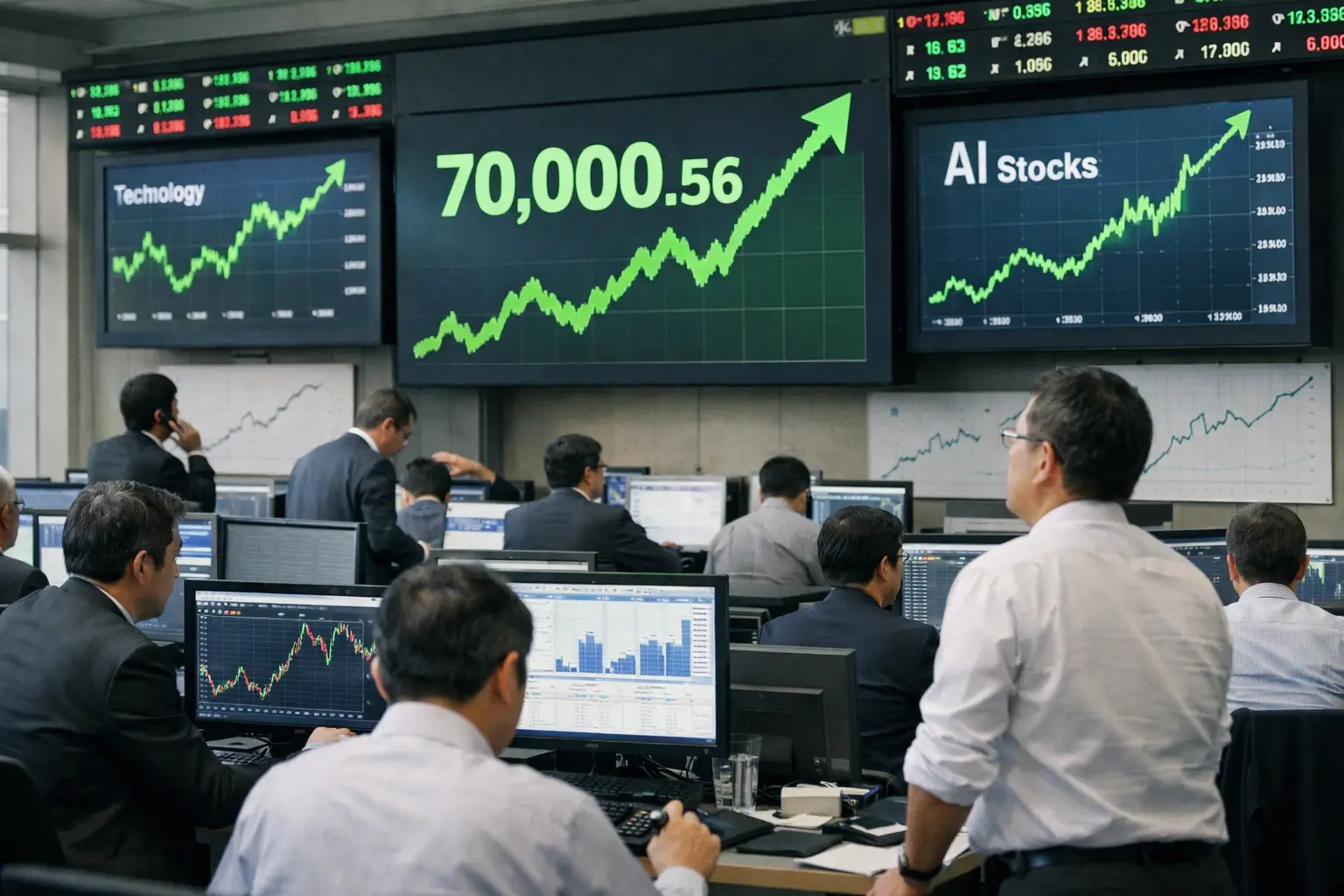
Japan’s Nikkei average reclaimed the 70,000 mark amid a fresh wave of optimism around artificial intelligence, lifting sentiment across Tokyo’s market. The advance reflected concentrated buying in technology-related sectors, where investors appeared to reward companies perceived as beneficiaries of accelerating AI investment. The move marked a return of risk appetite after a period of caution, with trading activity showing a bias toward large-cap names tied to software, semiconductors and digital services. Market participants linked the rebound to renewed momentum in AI narratives rather than broad macro surprises.
Buying interest was most visible in shares associated with AI deployment and semiconductor supply chains, helping to carry the benchmark higher. Currency and policy considerations remained part of the backdrop: monetary policy signals and yield dynamics continued to shape cross-asset flows, while corporate earnings calendars will test whether gains extend beyond a handful of headline names. Observers also noted that foreign investor positioning and sector rotation contributed to the pattern of returns, as money managers rebalanced toward growth-oriented industries.
The market’s reaction in Tokyo echoed developments in other major bourses where technology stocks have led rallies as confidence in AI use cases has grown. Analysts say the persistence of the rally will depend on corporate results and tangible signs of revenue capture tied to AI projects. At the same time, central bank communications and broader economic data will influence investor horizons. The Bank of Japan and other policy setters remain watched closely for guidance that could affect both equity valuations and currency moves.
Looking ahead, market attention is likely to focus on upcoming earnings reports, sector-specific announcements and any shifts in liquidity that could either sustain or temper the advance. If investor focus broadens beyond a concentrated group of technology leaders, the rally may gain depth; conversely, narrowing participation would raise questions about durability. For now, the return of AI-driven buying has re-centered Tokyo’s equity market narrative on innovation and the companies positioned to capitalise on it, with implications for investors and corporate strategists alike. Japan and AI will remain central themes to monitor.


