

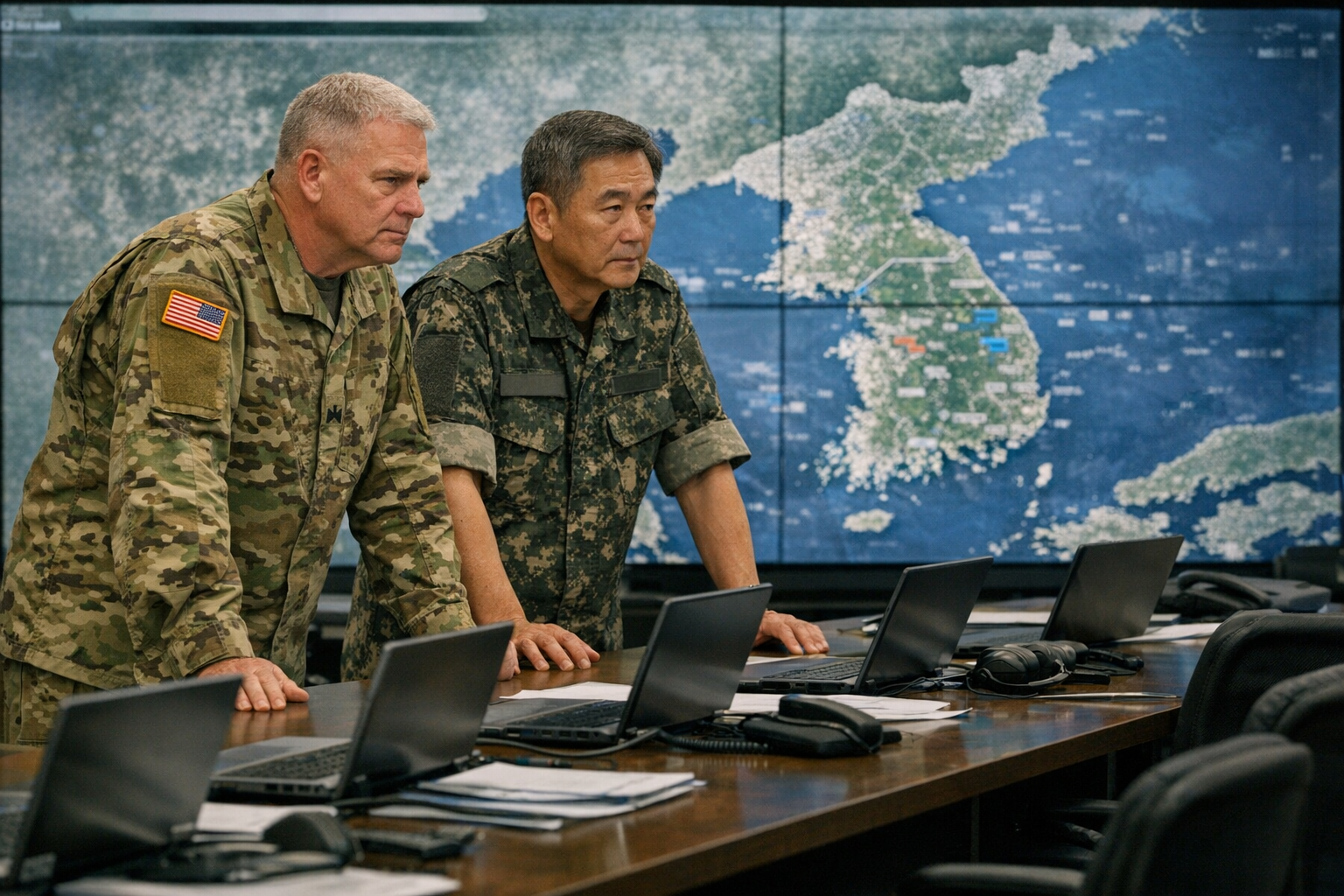
Trump’s last-minute order to scale back the annual Ulchi Freedom Shield exercise has reignited debate over how political decisions can affect allied deterrence. The modification, issued shortly before planned maneuvers, does not appear to have caused an immediate operational breakdown. Yet officials and observers argue the more significant outcome may be the precedent it sets for using routine training events as leverage in diplomatic exchanges.
The Ulchi series is a long-standing, predominantly command-post exercise run jointly by the United States and South Korea to rehearse command-and-control, crisis coordination and interoperability. Over decades it has been adjusted in scope and format in response to evolving threats and political circumstances. This latest scaling back altered the planned schedule and scope of activities, prompting allied planners to reassess calendar contingencies and coordination procedures for future drills.
In military terms the decision is widely seen as having a limited short-term effect on force capability: many of the drills’ core planning, communications tests and staff training elements can be preserved or rescheduled. However, the timing and unilateral nature of the change have produced unease within the U.S.-South Korea alliance, where predictability of training is a key component of collective readiness. Partners rely on regular exercises to maintain interoperability; sudden changes complicate planning cycles and political signaling among alliance capitals.
Beyond immediate training concerns, the action raises broader strategic questions. Recurrent last-minute adjustments risk normalizing a practice whereby political negotiations can directly alter military routines, potentially undermining deterrence by making allied readiness contingent on short-term bargaining. For Seoul and Washington, preserving clear protocols for how exercises are scheduled and modified could be important to prevent routine readiness from becoming a transactional tool. As both militaries digest the operational implications, the policy debate will likely focus on institutional safeguards that keep training reliable while allowing necessary flexibility for diplomacy.


