

Japan will join the largest military exercises hosted by the Philippines and the United States for the first time as an active participant, deploying around 1,400 combat troops and introducing its Type 88 surface-to-ship missile system along with an array of weaponry as part of the drills, signaling deepening cooperation among allies seeking to uphold stability in the region.
The annual Balikatan military exercises between the longtime treaty allies —which have expanded from bilateral to multilateral drills— are set from April 20 to May 8, with over 17,000 troops taking part in one of the largest and most complex iterations yet. Other than Japan, this year’s exercises will include combat troops from Australia, Canada, France and New Zealand, which have signed visiting forces agreements with Manila. An additional 17 countries will join as observers.
“There’s a desire among participating partners to expand participation. They see the importance of stability in the region,”
US Balikatan spokesperson Col. Robert Bunn said in a press briefing on Tuesday, April 14.
Japan’s participation will mark the first time Tokyo is sending combat troops to Philippine soil since World War II, and the first deployment under the reciprocal access agreement with Manila that took effect last year. Prior to this year’s Balikatan, Japan had only sent a small number of observers to humanitarian assistance and disaster response exercises. More recently, it has expanded its participation by deploying ships and aircraft for bilateral and multilateral maritime patrols.
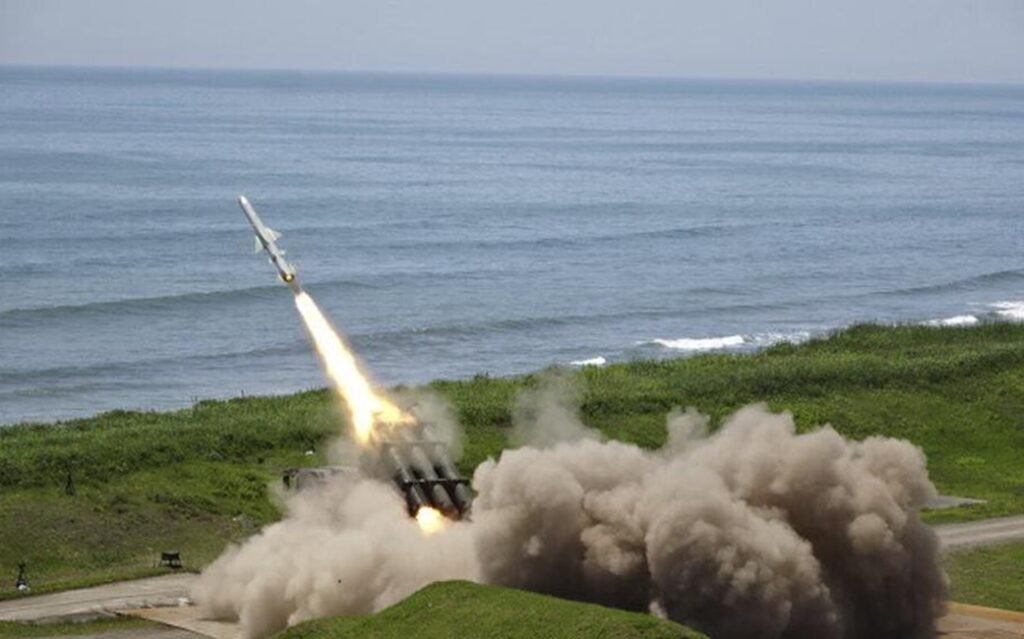
Tokyo will deploy its Type 88 surface-to-ship missile system, which has an operational range of approximately 100 kilometers, in a maritime strike exercise that will involve sinking a decommissioned vessel near the South China Sea and Taiwan. Japan’s Defense Minister Shinjiro Koizumi will observe the event, Philippine Balikatan spokesperson Col. Dennis Hernandez said.
Japan will also send one of its largest warships, the helicopter-class destroyer JS Ise, along with landing ship JS Shimokita and destroyer JDS Ikazuchi, as well as C-130H transport aircraft and US-2 amphibious search and rescue aircraft, according to a statement from Japan’s Ministry of Defense.
Tokyo will take part in exercises across air, land, sea, and cyberspace domains, including maritime strike operations, counter-landing live-fire exercises, integrated air and missile defense, medical operations, and airfield runway repair. The drills will be held across the country, although only key exercises facing the South China Sea and Taiwan have been so far publicly identified.
The exercises come as regional tensions simmer in the region over China’s activities in the East China Sea, around Taiwan and in the South China Sea. Both the Philippines and Japan are US allies and form part of the First Island Chain, considered a vital line of defense for containing Chinese maritime expansion.
The Philippines, US and Japan have been recently shoring up deterrence around Taiwan, which China claims as its territory. In February, their militaries conducted joint drills near the Bashi Channel, the strategic waterway separating Manila and Taipei.
The exercises are also taking place as Washington is engaged in conflict in the Middle East. The US military has yet to detail the new advanced weaponry it will deploy for the Balikatan drills, but Bunn said Tomahawk missiles are a “potential” option.
Meanwhile, France announced it is scaling down its participation, citing a shift in deployment due to the Middle East crisis.
Source:
www.navalnews.com


