

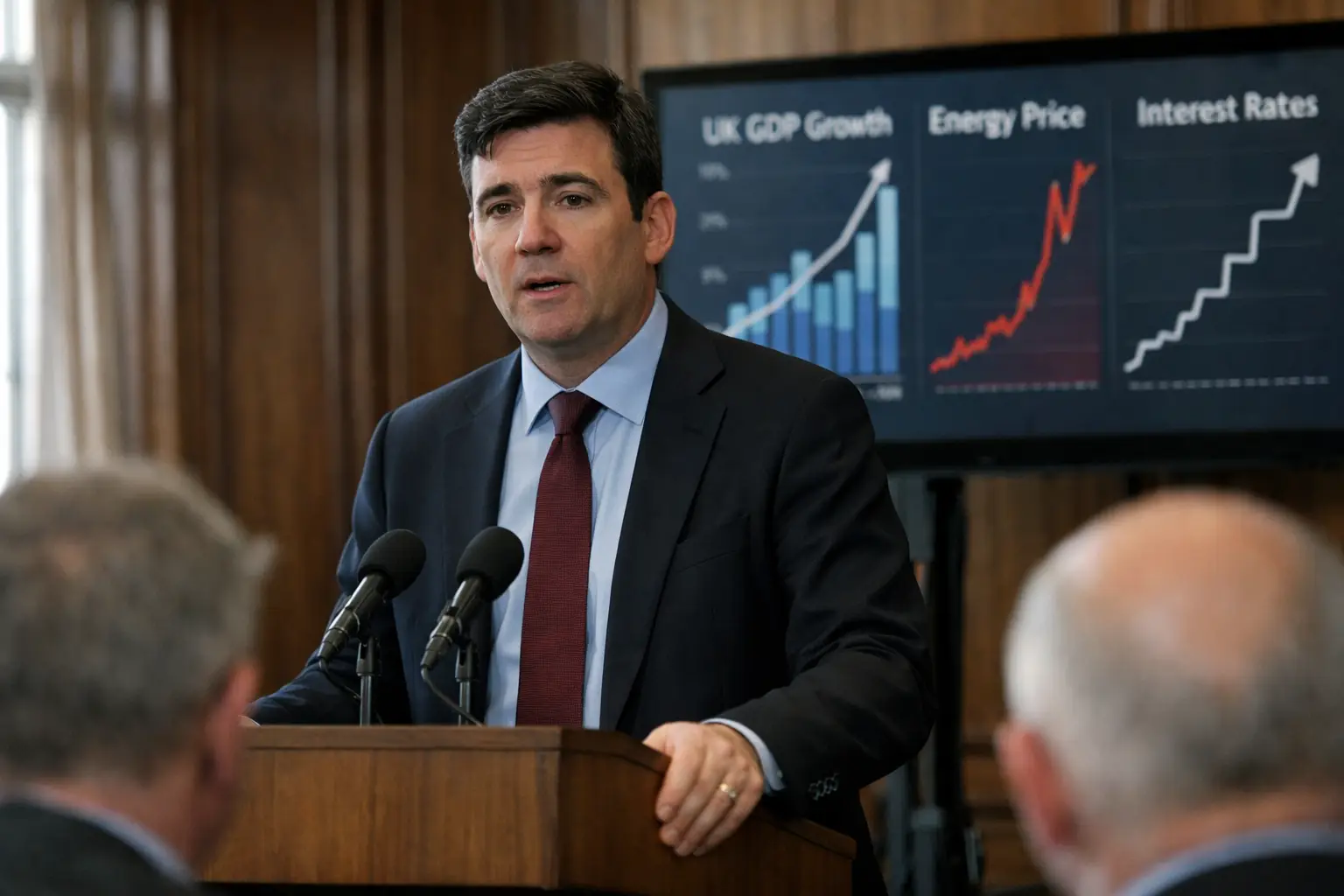
Growth outlook lifted by the IMF, the report revises the near-term forecast for the UK upward while warning that rising energy prices and higher interest rates are likely to depress activity in 2027. The timing of the publication coincides with final preparations for the first Budget under Prime Minister Andy Burham, creating a narrow window for the government to weigh the IMF’s outlook against domestic priorities.
The IMF’s change in stance offers a reminder that short-term momentum can coexist with medium-term fragility. Improved growth projections can ease immediate fiscal pressures and influence decisions on public spending or tax measures, but the institution’s forecast also signals a reversal of fortune if external energy costs and financing conditions worsen in 2027. That dual message complicates the framing of Budget choices set to be announced in the coming days.
For households and businesses the report highlights concrete channels of strain. Higher energy bills would push up living costs, while elevated interest rates increase borrowing costs for mortgages and firms, eroding disposable income and corporate investment capacity. Those effects can feed through to lower consumer demand and weaker tax receipts, tightening the operating environment for policy-makers focused on stabilising public finances while addressing cost-of-living pressures.
The government’s immediate task is to translate the IMF’s assessment into actionable fiscal settings in the Budget without sacrificing broader economic resilience. Ministers must balance support measures for vulnerable groups with the need to maintain market confidence over the medium term. As the Budget process concludes, the IMF’s warning on 2027 adds a layer of urgency to decisions about contingency planning, reserve buffers and the sequencing of any measures announced by the Treasury.


