

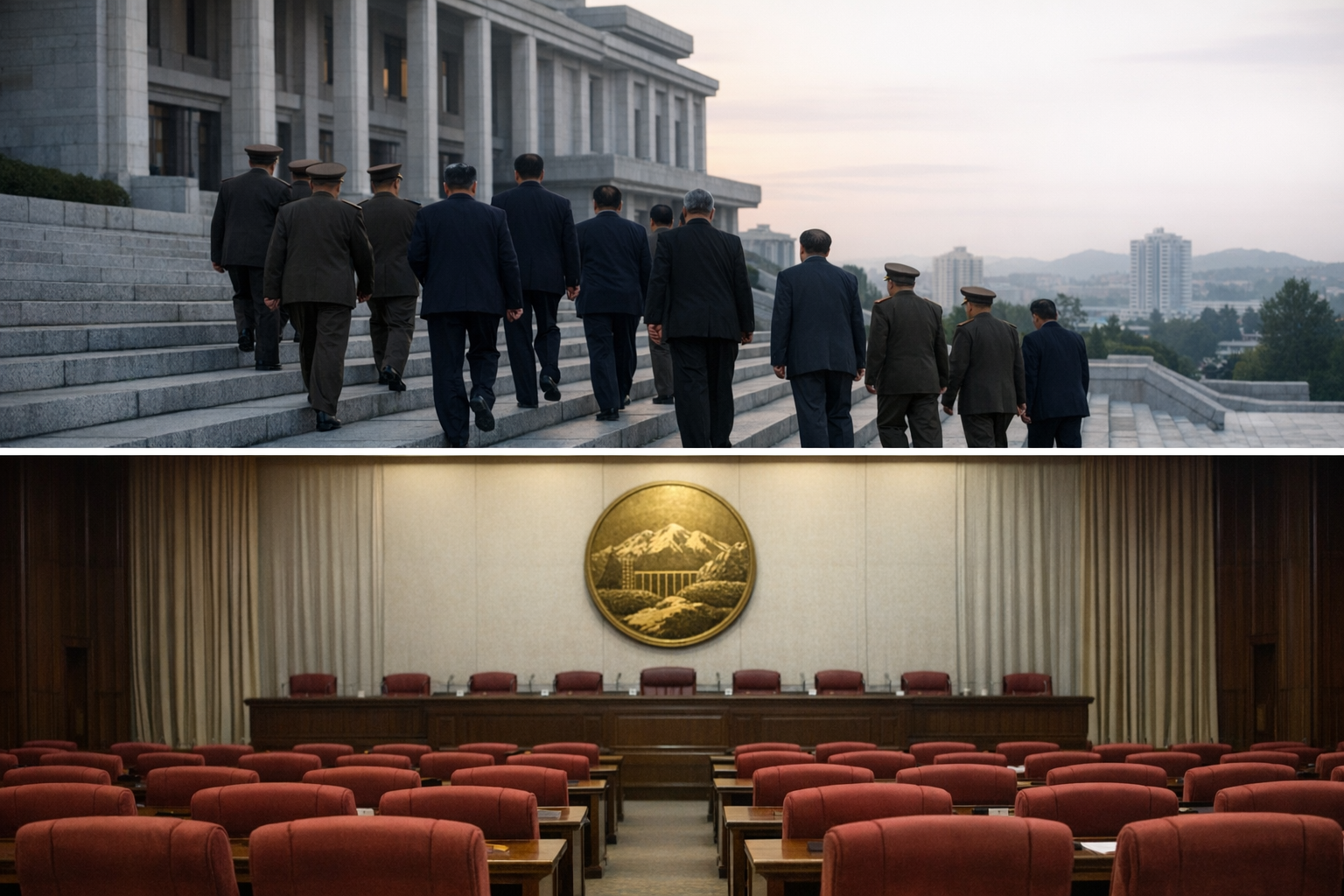
Expert assessment reveals an interpretative framework offered by Jieun Baek that focuses on the behaviour of North Korea‘s ruling elite as a mirror of the regime’s capacity to manage stress. Baek treats personnel management, patronage and the choreography of public power as deliberate instruments the leadership uses to sustain cohesion. Rather than presenting a binary of stability versus collapse, her work reads patterns of circulation, promotion and purge as diagnostic signals that help distinguish consolidation from disarray.
In her analysis, Baek maps recurring signals within elite politics: the use of rapid appointments to bind loyalty, selective demotions to discipline potential rivals, and overlapping institutional roles to limit independent power bases. She highlights how controlled information flows and visible public rituals of authority contribute to the regime’s performance of unity. At the same time, Baek cautions that some indicators commonly interpreted as strength—such as frequent reshuffles—can mask underlying vulnerabilities when they reflect reactive management rather than planned renewal.
The implications of this reading extend beyond academic debate. For analysts and policymakers, monitoring elite-level moves offers a more nuanced barometer of internal pressures than singular economic or military indicators. Observations about elite cohesion or fragmentation can inform diplomatic posture, sanctions calibration and contingency planning, while avoiding premature conclusions about imminent systemic change. Regional capitals tracking developments will find value in integrating personnel-analysis into broader threat assessments and engagement strategies.
Baek’s contribution underscores the need for sustained, granular observation of decision-making circles inside Pyongyang and for cross-disciplinary methods that combine political, social and informational indicators. Her approach does not forecast specific outcomes, but it does encourage a disciplined interpretation of elite behaviour as an early-warning mechanism. Continued research along these lines can refine how governments and institutions interpret signals from the regime and adapt policies accordingly.


