

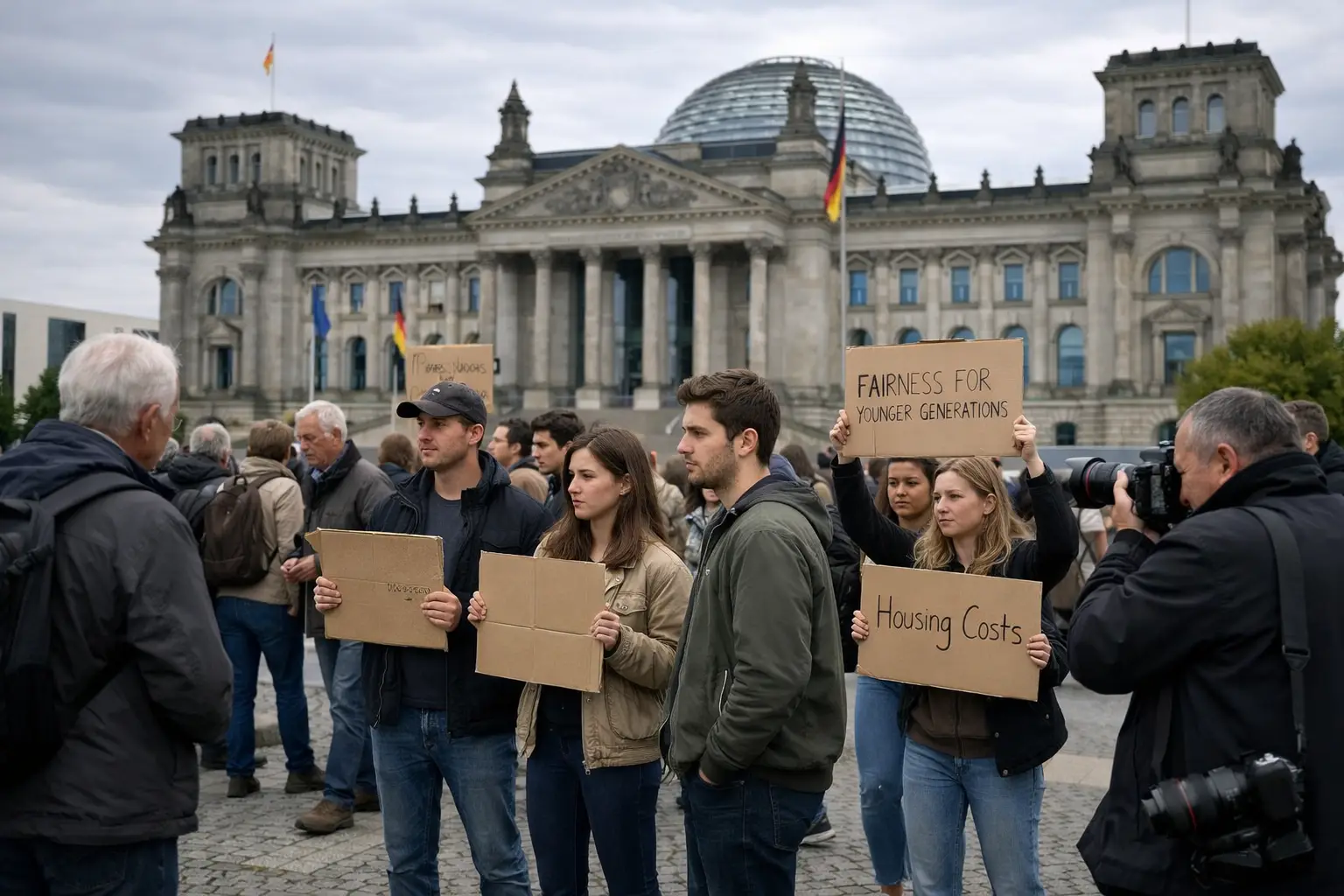
Germany’s young protesters have brought an old political question back into public view: are today’s younger generations facing a more uncertain future than the Baby Boomers did in the 1980s and 1990s? A data check by Deutsche Welle has framed the debate around evidence rather than nostalgia, at a moment when Gen Z activism is drawing renewed attention in Germany.
The comparison is politically sensitive because it touches on work, security, social mobility and trust in the future. For many young people, protest is a way to make visible concerns that are often discussed in abstract terms. For older generations, the same debate can sound like a challenge to their own memories of economic pressure, social change and political uncertainty. The value of a data-based approach lies in separating personal experience from broader generational patterns.
The question is not simply whether one generation “had it better” than another. It is whether the conditions that shaped adulthood for young Germans decades ago can be meaningfully compared with those confronting young people today. The 1980s and 1990s belong to a different political and economic landscape, while current youth movements are developing in a public sphere transformed by digital communication and faster mobilisation. That makes simple comparisons appealing, but also risky.
The renewed focus on protests also points to a possible overlap between generations. The issue is often presented as a conflict between young people demanding change and older citizens defending the status quo. Yet the central question raised by the debate is whether both groups might share enough concerns about the future to act together. Framing the discussion only as a generational contest can obscure common interests and policy challenges that affect society as a whole.
For German politics, the significance of the debate lies in its timing and its tone. When young people question whether the future remains open to them, the response cannot rely solely on reassurance or comparisons with the past. Evidence can clarify what has changed and what has not, but it also highlights the limits of memory as a guide to public policy. The discussion around Gen Z protests is therefore less about declaring winners between generations than about understanding how expectations of security, opportunity and participation are being renegotiated.


